|
Is Homeschooling Legal? Getting Approval to Home Educate in Australia
© Beverley Paine
Please note: all information is opinion supplied on this website is provided by a lay-person, untrained in law, and is offered in good faith: it may not be accurate or up-to-date and you are strongly urged to seek legal advice from a qualified practitioner for your particular situation.
Home education is legal in all states of Australia, however, laws and regulations differ from state to state. You will need to obtain a copy of the relevant Act for your state, and find out about local conditions and regulations or policies that may apply. Homeschooling networks can help you with legal information, but check for yourself: although well-meaning, information from these sources may not be accurate or up-to-date.
Please download a copy of the relevant section of the Act in your state and read it. If you are in doubt as to the interpretation, join a homeschooling group and get some feedback, but make up your own mind. If you need further clarification seek out legal aid or a lawyer. Many homeschoolers have done this and in some situations it has truncated unnecessary interference in their homeschooling provision.
The Acts governing education provision in Australia may be found at the General Index for all Australian legislation http://www.austlii.edu.au/databases.html
Please also see: 'Where to Apply for Registration as a Home Educator in each State of Australia', last updated Dec 2008.
Not all homeschoolers agree with the way state educational authoritys interpret the laws and regulations regarding education and homeschooling. Some people feel that the conditions imposed on them by bureaucracy are fair and reasonable, but others argue they have no basis in law, infringe on basic human and parenting rights, are discriminatory and inequitable. You will need to think carefully about your own philosophical and moral position, and become clear in your own mind about your role and the role of the educational authority administering the Act and regulations.
Principle 7 of The United Nations Convention on the Rights of the Child contains information relevant to home education. Although Australia is a signatory to this Convention relevant legislation to enforce the principles have not been introduced uniformly across the country by Federal or State governments.
For the two decades we homeschooled our children it was our experience that generally speaking, parents are required to submit to the following:
- Prepare a learning program for the children, which includes learning in the same curriculum areas as state schools;
- Provide adequate access for social interaction with peers;
- States how educational progress will be monitored.
- Submit to an initial interview to assess suitability of the learning program, family home and parents' ability to educate the children;
- Submit to a regular review, including interview, in some states on an annual basis, in other every two years.
This process is variously known as 'registration', 'dispensation', and 'obtaining exemption'. Applications are assessed by an officer of the educational authority, a process that usually takes less than a month and includes at least one interview. Interviews can be conducted other than in the family home if desired.
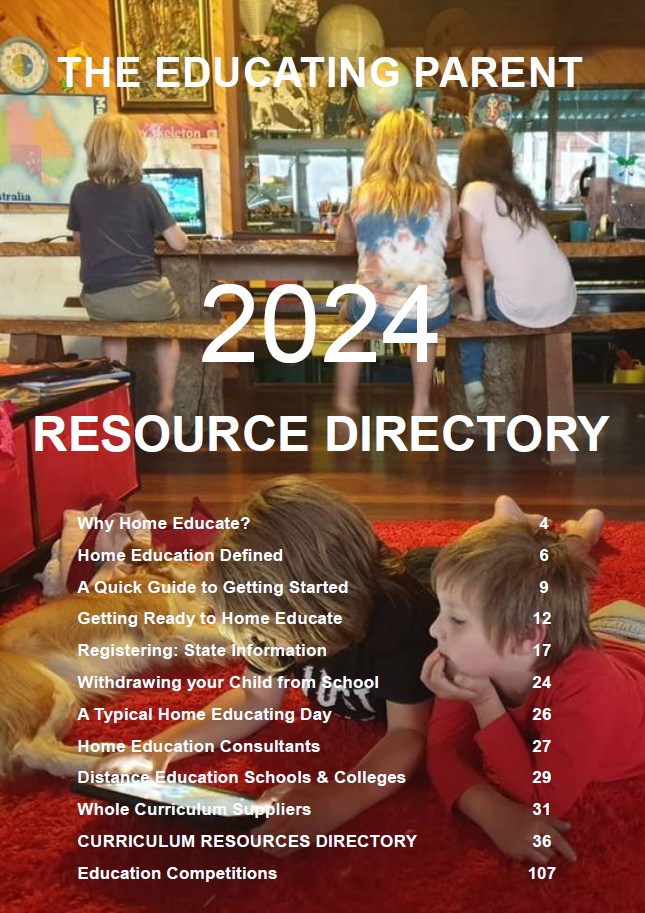
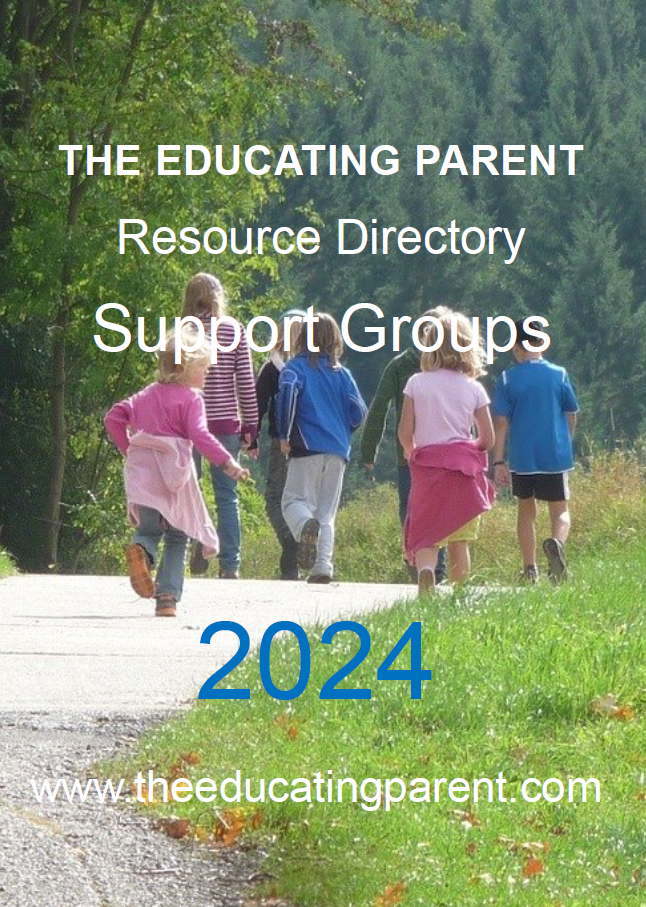
Homeschooling families work together for form supportive networks, catering to the educational and social needs of their members. Informal and formal networks exist in both metropolitan and country areas. It is advisable to contact a local network and find out about the current requirements in your area before you complete your application. The Educating Parent Support Groups Resource Directory maintains a list of contacts for each state, including state and regional homeschooling organisations, groups and newsletters.
At all times read all paper work very carefully, and never sign anything with which you are not entirely happy. Where possible state your case in your own writing, using your own words, rather than simply signing forms presented to you. Be careful not to sign away present or future rights to resources, assistance or help for your children as homeschooling students.
Keep records of any communication with authority officials, including tape recordings or transcripts of telephone conversations [please note: if you intend to do this you must inform the person on the other end of the phone that you are recording the conversation for your records before you begin].
This professional and responsible approach offers you confidence in further dealings.
In addition, insist of written clarification of telephone communications. It is a good idea to ask before the interview for an outline of what will be discussed and dealt with during the interview to be sent to you at least a week before so that you can adequately prepare.
Many families have found it useful to gain access to the reports written about them by the Education Department. To do this you can apply through the Freedom of Information Act. Once you have located your state office, phone and ask for a request for access under the Freedom for Information Act. They will send you the application.
Keep all records until the child is past compulsory schooling age.
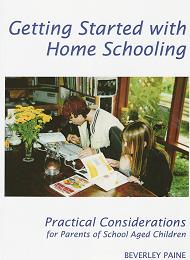
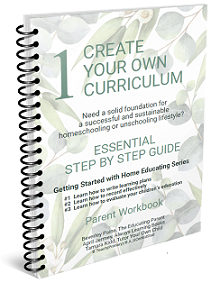
The type of information sought by educational authorities in the process of approving homeschools varies considerably, but the focus should always be on the quality of the proposed learning program and learning environment. A comprehensive guide to establishing learning programs can be found in the Australian homeschooling manual Getting Started with Homeschooling: Practical Considerations.
Most authorities require a proposed learning program containing a broad outline of work for each child for the coming year. This consists of a brief statement on the curriculum areas to be studied, including short and long term objectives, a list of resources to be used and a brief description of the proposed teaching methods. In Australia the curriculum includes the subjects English; Languages other than English; Mathematics; Society and Environment Studies; Health, Physical and Personal Development; Science; The Arts; and Technology and Enterprise. It is possible to devise your own subject headings, for example Physical Development, History, Cultural Studies, Music, Geography, Physics, etc. The aim is to offer a broad and balanced curriculum over time.
One family obtained the following advice from their lawyer regarding the interview process - it's worth considering, but if in doubt seek your own legal advice from a qualified practitioner:
"Our legal advice has been that if they have seen your home once they have no need to do it again and that all future interviews should be done at a convenient place outside the home and a third person should be present because if you invite someone into your home a lot of your legal protection disappears because of the "consent" implied in saying "come in..." You need to ensure that the third person is not a physical third person, such as a mother, husband or direct relative, etc, but a person who is not affected by any decision making on either side and who can take notes to support memory at a later date. You will need to inform the authorities a third person is present to take notes and help you remember the important points of the meeting."
This family were also advised to keep an attendance record of their children's homeschooling:
"The attendance diary should just be a very small week at a glance diary (my children's is about 10cm by 4 cm). Sign it each morning or at the end of the homeschool day. It is a legal record that on that day you did school work. If there are doctor's appointments for the individual child include a note about that, or if they were ill and didn't work say why. It's also a good idea to note when the children participate in social activities. This is the only record you need to show that the children have worked for a minimum of 200 days per year. It's good because if you need to present that diary to the department or a court you are only providing information relevant to the home education program and not your personal or family life."
Be firm and assert that it is the learning program that is under consideration - not the children's current educational abilities and understandings. As the approved home educator it is your, not the interviewing officer's or the office giving permission for you to home educate, responsibility to monitor the progress of your child.
At the review interview you will be required to demonstrate educational progress of the children. This necessitates some degree of record keeping, an essential element of a sound educational program. See Getting Started with Homeschooling - Practical Considerations for ideas you can use.
Never give away original documents or children's work. If samples are required photocopy and forward them later.
In most cases a simple annual report prepared by you should suffice. When working through the review simply write brief summaries of what the children have done during the year, and then a brief outline of the next year's program. If you are feeling less than confident get help - many experienced homeschoolers are happy to assist or be present at interviews as observers.
Focus is always placed on socialisation and adequate provision for contact with peers. It is a myth that homeschooled children are less socialised than school children. In most situations, homeschooling broadens the children's social sphere by removing them from school. Social activities includes regular interaction with people from all age groups. Families list cultural, religious, sport and personal interest social activities, as well as participation in homeschooling group activities. Tell the educational authorities that you are in contact with local or state based homeschooling groups for support, advice and social opportunities.
Withdrawing your child from school
Although the process is different in each state it makes sense for parents to give plenty of notice when withdrawing your child from school. Private schools usually require payment of fees in advance and withdrawing may incur a financial penalty. It is possible to withdraw a child from a public school at any time, however, it is advisable to notify the prinicple about your intentions to hopefully forestall potential contact with truancy officers.
Plan ahead if you can. Get your curriculum materials ready, prepare work areas and set up any necessary record keeping regime. Many families chose the school holidays as a time to do this.
If you have the time, don't rush through this preparation stage. Make sure all your planning and setting up is done before telling the school anything.
Instruct your children about the family decision and anyone else you feel is necessary, but stress upon them that you wish to announce your decision publicly and to the school and teachers in your own time.
Some schools are considerate and understanding, some offer resouces and help, but most react with varying degrees of hostility. Being prepared for any outcome is useful. Talking to other homeschoolers experiences, especially those who live in your general area is advised.
If you are advising the school in person, some families find it less intimidating to have both parents, or a third party present. Always follow up any verbal conversation with a written record. Inform the principal that your children won't be coming back and ask for their names to be removed from the school roll, if this is applicable in the state in which you live.
Make a clean break: choose a date and make that your target. On the day collect any books and materials that belong to your child from his or her locker and classroom. Return all school property, library books, class sets, sport gear and so on. This is not the time to get into protracted conversations with teachers, staff and other parents about your decision.
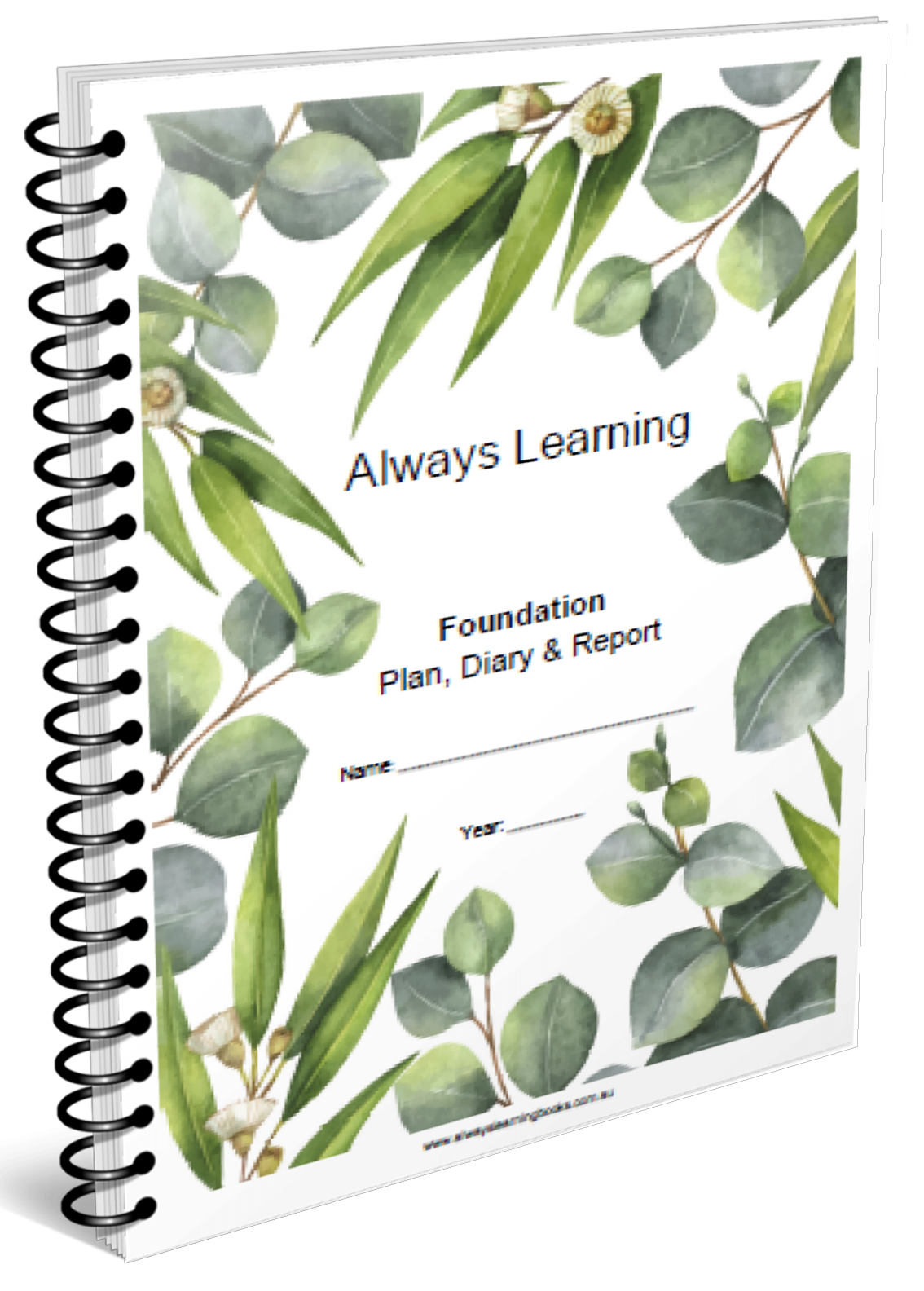
Record in your homeschooling diary that you have commenced homeschooling on the day that your children are withdrawn from school. Continue recording each day's homeschooling as per the legal requirements of your state.
Withdrawal from a public school may be followed by contact from the Education Department. If you receive a phone call, express your agreement with the importance of the matter, but nothing else, and ask the person to set their concerns out in a letter.
If you receive a visit, once again express agreement of importance, and ask for their concerns in writing. You are not required to let them enter your home unless they have a warrant. Ask them to contact you by letter to make an appointment to visit. They already have your address.
The information and advice on this page may seem onerous and, in places, overbearing and unnecessary, but by following it closely you may avoid some of the hassles that a few homeschooling families are forced to endure. Diligence and preparation will pay dividends as you prepare to home educate. This approach will also bolster your confidence at this crucial time.
Please also see the related articles:
Beverley Paine is a mother of three home educating adults now home educating their children, and a prolific writer of homeschooling articles and has published several titles. More articles and essays can be found in her books, available from the Always Learning Books online bookstore.

Was this article helpful? Was it worth $1.00 to you?
Your gift of $1 or more helps to keep this site operating
offering encouragement
and reassurance to families
wanting
better outcomes for their children.

Beverley Paine with her children, and their home educated children, relaxing at home.
Together with the support of my family, my aim is to help parents educate their children in stress-free, nurturing environments. In addition to building and maintaing this website, I continue to create and manage local and national home educating networks, help to organise conferences and camps, as well as write for, edit and produce newsletters, resource directories and magazines. I am an active supporter of national, state, regional and local home education groups.
"You've been an inspiration to me, I love the way
you really listen to people." Vanessa
"Whenever I read your writing I always come away
with increased confidence in my ability to provide and
share a wonderful learning journey with my family!" Davina
"Your guidance, understanding, support and words of
wisdom changed our lives. We now offer support and
organise many homeschooling events for others." Lesley
"Thank you once again for your prompt and friendly service.
I am convinced that your books are going to add
quality and peace of mind to my journey of teaching my kids
at home! Just from studying your website, until almost
2am
in the morning, I 've been encouraged!" Louisa
"Thank you for all your many,many reassuring words
over many, many years. You probably don't know exactly how
valuable you are to the Australian Home Education community.
I've been reading your stuff for maybe 8 years or more now.
And I'm very grateful." Gythaa

CLICK HERE
if you want to learn
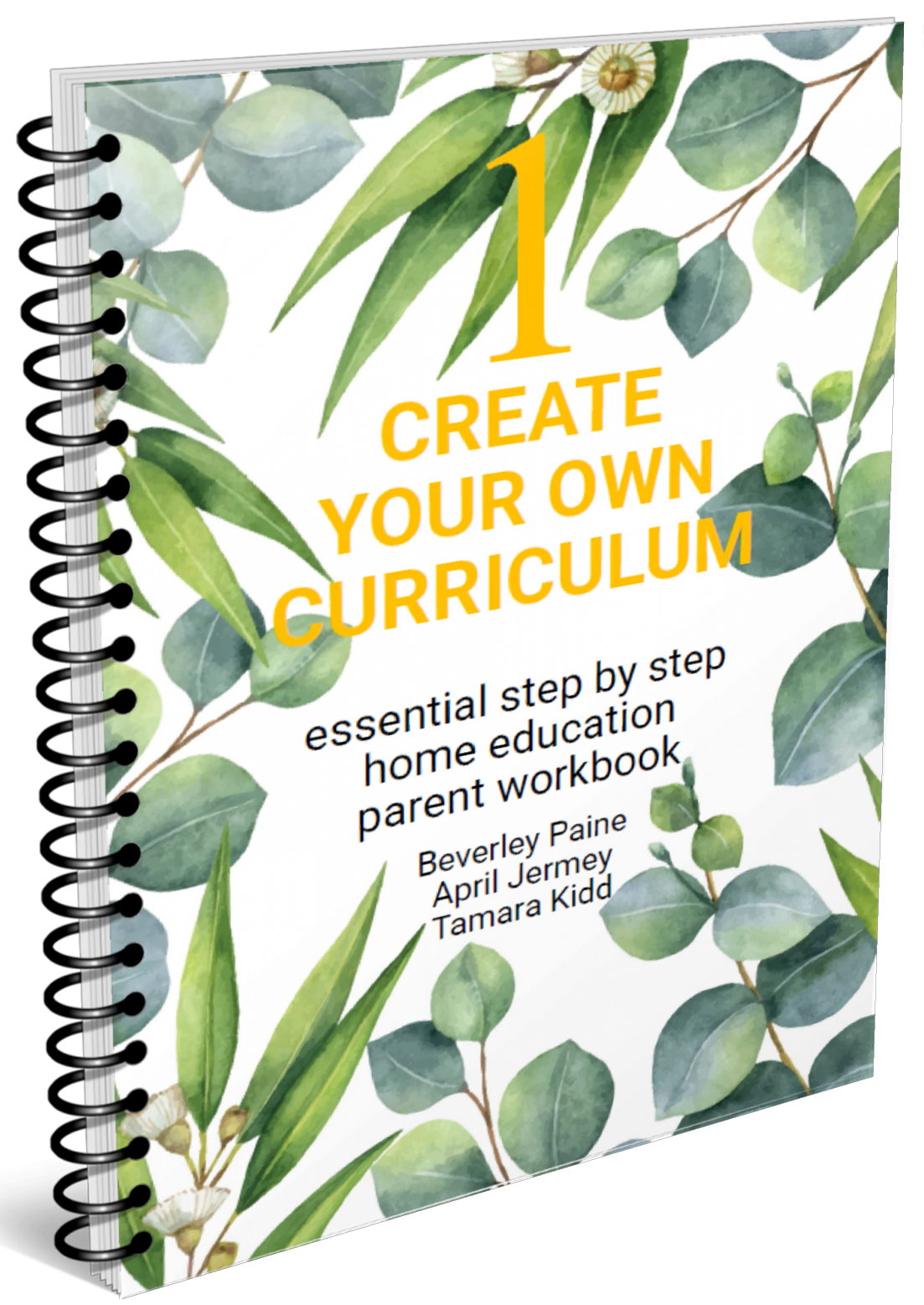
how to write your own education plans
to suit
your unique children's
individual learning needs?
Or you are looking for quality curriculum and teaching tips...
|
 About
About

















 Thank you for visiting!