The Benefits of Home Schooling: an Educator Survey
© Beverley Paine, 2005
I completed the following survey conducted by a year 12 student in August 2005. If you are looking for a more extensive list of benefits from home education please read the following articles:
You might like to read some of the articles on our Teens and Beyond page as it has articles by adults who were home educated.
How long has your family has been Home schooling?
Aa total of 18 years
What support do you get from within your family, circle of friends, and Home schooling community in regards to your choice to Home school?
Initially, when I was teaching my older two children at home beginning in 1986, I had very little support and knew no one, however I did receive a homeschooling newsletter from Victoria every couple of months that I drew inspiration and comfort from. Eventually I met some other families, but they lived in different corners of SA!
On the suggestion of one of these friends I started a support group and a newsletter (in 1989) which is still going today! Most of my friends and family weren't too sure about homeschooling. I tended to stay away from people who were overly negative as they knocked my wobbly confidence in the early days. Once the relatives saw that the children were learning, and had much better social and cooperative skills than their schooled counterparts they began to accept our decision, although still were reluctant to support or approve of it in principle.
All of the hands-on support and encouragement came from, and in fact, continues to come from, other homeschooling families. We've been homeschooling for 18 years, with a little part-time and full-time school experience thrown in for good measure.
Reasons for Home schooling
Initially we couldn't stand the thought of being parted from our little girl and wanted to be much more personally involved in her education in much the same way as we had been allowed at her Kindergarten. Our plan was to travel around Australia and, encouraged by the kindy teacher, teach April ourselves. On a 'trial' trip we met some homeschoolers and realised that this is what we wanted. The local school was a small community school of 65 students but didn't allow parents to do anything but read to the children, fundraise and help in the canteen. That wasn't parent participation to our way of thinking. It's good that most schools have moved on from that situation.
As we continued homeschooling the benefits grew and grew. The one that is the most important is the closeness within the family, the respect for one another, the tolerance, compassion and cooperative spirit, the fact that as adults we are all still friends and close. Every year life seemed to get better. We weathered some hard times together as a family and because we supported one another (we had to - living this closely means you have to sort out problems as they come up) we pulled through much stronger than before.
We quickly learned that the most efficient method of learning was following our passions, interests and expressing our creativity in whatever way suited us in the moment. Planning and goal setting became a natural process, as did evaluation, and every day we celebrate our learning journeys, sharing our insights and discoveries with each other.
As young adults the children don't really know what they want to do with the rest of their lives but they know who they are, what their strengths and weaknesses are, what they like and don't like. They are critical thinkers and can resist group pressure to conform. They are very independent, diligent workers (especially when what they are doing is related to an area of personal interest or to help someone else - they are all very generous people.) My children learned at a young age that learning is life-long and that is no particular hurry to learn as you can learn something at any age if you are passionate and determined enough.
I've met schooled children who've turned out similarly - I think parenting has much more to do with it than 'schoolwork'.
What approach do you take to learning at home?
We have used a mixture of the following - as teenagers the children accessed distance education subjects/courses. In the early days I did more 'teaching' but as we progressed we mostly immersed ourselves in what they needed to know - either from their development progress (emotional, intellectually, physical, moral, etc) or from their immediate and on-going interests.
We use computers everyday (not in the early years of homeschooling as personal computers weren't readily available back then!). We have never really accessed 'curriculum' material from them - the computer is a tool, much like a spade or a hammer - we use it to get a job done, or for entertainment - it's all learning anyway!
Regarding part time attendance at school - we tried this for several years, with and without success. April chose to complete her education at school and went to university for a while until she decided to get a job; Roger quit school altogether at age 13, and Thomas has never really gone, except when accompanying me. I used to go to school with them (alternative primary school class) as a classroom volunteer every day.
The following are some of the approaches we've taken to home education.
- Some 'lessons', with particular attention to the acquisition of basic literacy and numeracy skills, tailored around the individual learning styles, interests, abilities, etc of each child.
- An eclectic approach, drawing from whatever curriculum resources and approaches suit the moment.
- Learning from everyday experiences and following personal, family and community interests.
- An educational correspondence course.
- Combination of home school and part-time attendance at a traditional school.
What 'extracurricular' activities do the children have access to?
They've had a variety of different activities, both with schooled and homeschooled children. These include:
- Dance
- Camps
- Performing in pageants, ars and community festivals, and community events
- Musical (instrument and singing) performances
- Model Solar Car Competition (2 years)
- LAN Parties
- Tree Planting for Trees For Life and private revegetation projects
- Involvement in organised H/S Field Trips/Excursions/Camps/Gatherings
- Trees For Life boxing day volunteers
- Participation in Agricultural Show Competitions
- Participation in Concert/Drama Performances
- Music lessons - guitar and keyboard
- Producing and publishing newsletters
- Friends of the South Australian Museum Club (3 years - monthly attendance)
- Bushwalking
- Playing competitive Table Tennis
- Had own market stalls at community and country Shows, local monthly market
- Plus work experience - landscaping, gardening, nursery work, retail, shed and fence erection
- Computer trouble shooting, upgrade and repair for local community members
What are your views on the government school system and private/ denominational schools?
They're okay for most parents as most parents either don't want to hang out with their kids all day, or don't have the time and are happy to delegate the responsibility of the education of their children to schools. I think schools can do a LOT better with the resources they get from the taxpayer - they are incredibly inefficient. And I'd like to see a lot more accountability, especially when teachers aren't getting results for the students. It's time to stop blaming the students and the parents and home life and evaluate teachers' performances more closely and sack the ones that should be doing something else with their lives. I've seen too many slack teachers in the system - and nothing has changed since I started school 40 years ago!
I'd like to see ideas properly evaluated before new teaching fads take over. Too many kids are failed by the system. I feel for these kids, their futures, and the future of the planet as a result.
What is it about home schooling that works best for you?
Being with my best friends all day. The freedom to pursue learning in whatever form it takes - not having to do something because someone ten thousand kilometres away and forty or more years ago said it was good for us. Having control over our own educational processes. Knowing that my children respect me as a learner too. Not having an educational hierarchy within the family. I'm not a teacher; I help them find them learn because I'm more experienced and I'm enthusiastic. More often than not I learn from them. Kids know so much instinctively before we brainwash them into believing they are stupid and have to be taught how to 'learn' or 'think'.
In your opinion, what are the benefits of being home schooled?
I've pretty well mentioned them above, but my heart swells with happiness when I see a child who was really stressed and physically ill because of garbage that was happening at school finally get well. I've seen 'ADHD' kids become normal happy kids, with huge attention spans and cooperative calm behaviour within two weeks of being home.
I've seen frustrated teenagers going nowhere at school who know what they want to do but have to do as they are told at school suddenly find their feet and take off in the direction of their passion - launching themselves into animal care, writing, learning to be a chef, etc.
I've seen parents suddenly start looking at their children as if they were people, not just kids, and start respect them in the same way they would their best friend. That's a hard thing to do. Homeschooling kind of forces you to do that. It takes time but it happens. Adults respecting young people is what this world really needs, urgently.
Do you believe there are any disadvantages of Home Schooling? If yes, what are they and why are they disadvantages?
We don't get any funding or tax breaks and we can't access Austudy for our over 16s like schools and school kids do. We're refused student prices because our children don't have student cards. We get asked questions by strangers all the time and have to reply politely, even when we're in a rush. Sometimes our kids get told off for being out of school by total strangers, and I know one child who was 'picked up' by a policeman as a suspected truant. The policeman didn't believe he was legitimately homeschooled. That's sad.
We can't access kids who are in school to play with them during the week - that limits our social activity heaps and sucks. Sometimes we're refused into school grounds to see publicly funded performances, or even access to school libraries (our kids are students too, although the way the education department sees it you wouldn't think so).
We usually have to forgo one wage as one parent has to stay home so life has to be pretty frugal. That makes us more creative and ingenious and we really get into recycling, but it hurts when you can't take a budding trapeze artist to see the best circus show on earth. Or catch the latest touring exhibition at the Art Gallery because we don't have the family admission price this week.
As you can see, most of the disadvantages aren't related to education or curriculum or even socialisation. Those things tend to take care of themselves.
As a student were you schooled: Traditionally, in a Home School environment or did you experience both? Would you have rather been schooled in a different method, why?
Both parents were schooled, public school, and we've both been to tertiary education, but didn't finish our respective courses. I'd rather all families could choose the most appropriate form of education for each of their children - public, private, small community, alternative, home education, distance ed, online learning, whatever. It's the way of the future - we're just meeting it sooner than most.
Beverley Paine is a mother of three young adults and a prolific writer of homeschooling articles. More articles and essays can be found in her books, available from the
Always Learning Books online bookstore.
Was this article helpful? Was it worth $1.00 to you?
Your gift of $1 or more helps to keep this site operating
offering encouragement
and reassurance to families
wanting
better outcomes for their children.
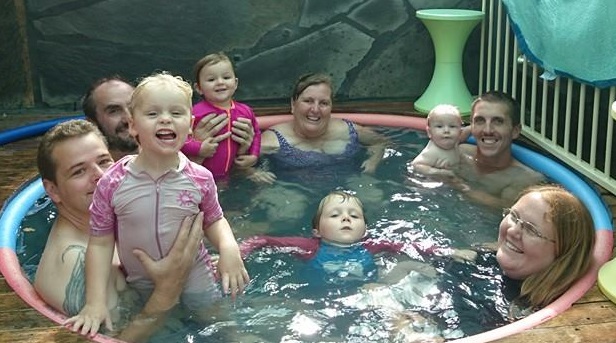
Beverley Paine with her children, and their home educated children, relaxing at home.
Together with the support of my family, my aim is to help parents educate their children in stress-free, nurturing environments. In addition to building and maintaing this website, I continue to create and manage local and national home educating networks, help to organise conferences and camps, as well as write for, edit and produce newsletters, resource directories and magazines. I am an active supporter of national, state, regional and local home education groups.
 About
About










 Thank you for visiting!