|
A Typical Day in Paine Family Life Taken from 1994
by Beverley Paine, 2004
I rarely record our homeschooling life any more - after nine years, who would? Records are useful and have their place, especially in the early years of home education. I'm just not disciplined enough to keep a regular diary. As a result, this 'typical' day is a composite from my memory, and hopefully resembles something like the truth.
Everyone rises when they are rested enough, except April, now fourteen, who has to get ready for school. The rest of us are home-bodies. We all get our own breakfast, anytime from 7 a.m. to 10 a.m. Sometimes the boys start playing before they eat, and get around to it later rather than earlier! Our home honours everyone's differing biological needs as much as possible. I think it's important to encourage the children to 'listen' to their bodies, to know when they are hungry or thirsty, or to work out which part really hurts and perhaps why. This might sound like a recipe for chaos around meal times, but things have a way of working out if everyone takes personal responsibility seriously. The end result seems to be increased cooperation - an unexpected but welcome surprise. The children have been sorting out their own breakfasts and lunches since they were toddlers, and I feel confident their nutritional needs are met so long as I have a range of yummy food in the house.
Robin, husband and dad, holds the home together in a practical sense. I hold it together in a relationship sense, making sure that people get on with each other, that this fits here, and that everything eventually gets done. He and I are typical gender stereotypes, something I tend to worry about. Each morning Robin makes the coffee, eats a bit of breakfast, does last night's dishes, puts the laundry on, (doesn't sound stereotypical, does it?) and then disappears outside to do whatever exciting or mundane work he does out there. Generally it involves injuring his back, like finishing building our house or landscaping our four and a half acres, all of it on a fairly steep slope. Sometimes he fiddles with the car or maintains tools, or the alternative power system. I love him dearly because he does all that, and more!
April showers and eats a little, and makes her lunch. In a disgusted tone she relates how most of her school friends' mothers make their lunches. She'd never give up the right to choose her own food for the day! She then feeds the animals. Dozens of guinea pigs, an assortment of chickens and a couple of ducks make up our 'farmyard'. April has grown up caring for her small furry and feathered friends. She spends a little over an hour each day looking after them, which is a fair commitment for a girl of her age.
I forgot to mention that before she gets out of bed she sneaks in some reading. She's an avid reader, and despite her pets, school and homework, still manages to spend a considerable time reading in the evenings. At 8.30 a.m. she disappears down the hill to school a few hundred metres away - we live that close. She started part-time high school earlier this year, of her volition. April was always the oldest homeschooler she knew, and the only one girl her age. She decided to try school to have access to a greater range of children, not being the type to play sport or go to Church - the only social activities for young people in the small country town where we live. She likes school because she's able to pick the subjects she wants to do. Going to school on a voluntary basis seems to make a considerable difference to her attitude, which is strikingly different from some of her classmates who have no choice.
Roger, just turned thirteen, also showers in the morning, usually after April. The children seem to have worked out a strict order for use of the bathroom. Thomas, the youngest at almost eight years of age, spends the first moments of his day sleepily climbing down from his bunk, and jumps into bed with me for a cuddle. I don't get out of bed until we've finished this morning ritual - the day never feels quite the same. Thomas waits for Roger, who nearly always sleeps in to past 8 a.m. , and then they usually have their breakfast together.
Sometimes, not often, I ask the boys to do some 'book work' for an hour or so in the morning, but only if they haven't started playing a game yet. Thomas still struggles with learning to read and I've prepared some simple exercises in a book to edge the process along, mostly to reassure myself that he is progressing, albeit slowly. Anything to keep my nagging critic at bay, and I feel this little bit of pressure to perform doesn't do a lot of damage if Thomas is compliant. Roger is working his way through 7Plus , a year seven maths book that April whizzed through the year before last. Sometimes he learns something new, but most of the time he already knows how to do the sums, almost magically. I've found that all the children learn best from living a busy life, but every so often I like to 'test' them by asking them to do some exercises from the few maths and language books I've bought. Once they've 'proven' their ability on paper I'm reassured and we get on with our regular projects and activities and I stop worrying about the learning process.
Years ago I used to make them do 'book work', but it's not worth the hassle. 'Learning' soon became synonymous with 'work'. an unpleasant chore. Now, if the children are happy to do it, we work together. If not, we put it away and get on with something else. Most of the time I give them my whole attention while they are doing school-type work: I've found this to be by far the most efficient method. Even when Thomas was a baby and Roger just four years of age, when we first began homeschooling, I found it convenient to have them grouped around the table where I can give them individual attention with ease.
Sometimes Robin will sit with Roger and they will work on Roger's correspondence course in Personal Computer repairs. I am really impressed with the way in which Roger applies himself maturely to this study. A year ago he would not even think of working in this way. I'm glad we homeschool because we're able to notice the subtle signs of transition throughout childhood: Roger is moving in a new and exciting phase of life, adolescence.
Helping the children with their 'lessons' seems to occupy very little of our time, giving us the rest of the day to pursue our own interests. For the boys, this means playing outside if the weather is inviting. Climbing trees, playing on the rope swing, building cubbies, pushing their growing bodies to the limit, stretching their imaginations with games, investigating the natural world - they keep themselves busy. I often take their observational and physical skills for granted, until they have friends come to visit, and I see them acting as natural leaders, mentors and tutors.
Inside the house they are dedicated to their LEGO. A vast Lego collection, spanning at least fifteen years, usually lies strewn across two bedroom floors. Occasionally it's stored neatly on shelves. but not for long. All my doubts about the value of play in education have been dispelled by this plastic 'toy'. Not long ago a friend argued that such toys restrict the development of imagination, but it's our experience that LEGO has actually enhanced and encouraged this ability. Roger taught himself to read using LEGO catalogues, and both boys have mastered budgeting, saving pocket money for their favourite 'toy'. Visitors are impressed with Roger's ability to look at any real object and reproduce it with his LEGO bricks without following instructions. He's even attempted to draw sets of instructions for models he's designed and built.
Thomas is Roger's admiring apprentice, if somewhat frustrated by his lack of ability. I often have to reassure him, telling him Roger has had four years more of Lego practice and play. It is hard being the youngest sometimes.
The boys are allowed forty-five minutes of time on our computer each day. The time restriction is necessary because we generate our own power from solar photovoltaic panels. Sometimes I'd like them to have more access, so they can explore this learning tool further, but on the other hand we don't have 'game junkies'. All three children seem to have a natural ability on the computer.
On Saturday mornings we do the chores and rotate jobs between us. Invariably I clean the bathroom though! They get involved in our gardening work, including growing and planting hundreds of trees. If we ask the children to do something they are usually happy to help out, but still need someone alongside to keep them motivated and on task. That's okay by us as we can see a strong work ethic slowly growing as their confidence and ability grows.
Most of the time the children are left to do whatever they want, so long as it doesn't hurt or upset anyone or anything, and they remember to stay safe. We come together to prepare the evening meal, and good conversation and having a good time. We share a lot, sharing our experiences, talking openly and honestly.
I love to write, and spend a lot of time on my computer. If I am not writing for the local homeschooling group, I am writing fiction, or working on my homeschooling book which I hope to have published in a year or two. I began writing seriously earlier this year, after trying to give myself permission for twenty years! For some reason I didn't see it as legitimate 'work' for a stay-at-home mum. Housework, on the other hand, doesn't seem to need permission to get done; it usually nags and nags at me until finally I can ignore it no longer!
In the evenings, I avoid the television as it seems to drain my energy levels for the next day, and so I read, catching up on books I bought when the children were tiny. Robin often does computer 'housekeeping', which Roger watches attentively and offers advice and information. April turns on The Simpsons and the boys gravitate to the sound and join her. Sometimes they'll watch the next show, sometimes she watches alone. We were never big on watching television but love videos - no adverts! Sometimes we will all play a board game, but I think they turn into bored games if played too frequently.
Life changes its focus regularly, and is often dependant on season: beach in summer for example, tree planting in autumn, gardening in spring. It's a good life, and we wouldn't trade it for any other. We are masters of our own universe at present, and we love it.

Was this article helpful? Was it worth $1.00 to you?
Your gift of $1 or more helps to keep this site operating
offering encouragement
and reassurance to families
wanting
better outcomes for their children.
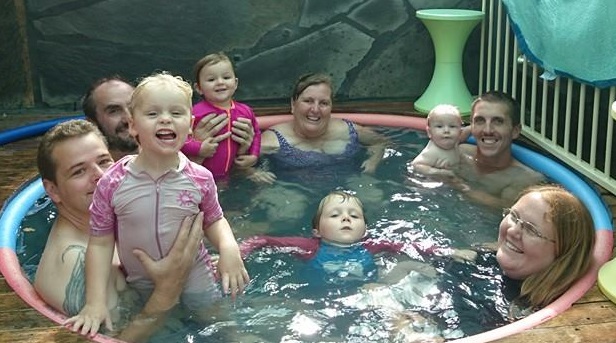
Beverley Paine with her children, and their home educated children, relaxing at home.
Together with the support of my family, my aim is to help parents educate their children in stress-free, nurturing environments. In addition to building and maintaing this website, I continue to create and manage local and national home educating networks, help to organise conferences and camps, as well as write for, edit and produce newsletters, resource directories and magazines. I am an active supporter of national, state, regional and local home education groups.
"You've been an inspiration to me, I love the way
you really listen to people." Vanessa
"Whenever I read your writing I always come away
with increased confidence in my ability to provide and
share a wonderful learning journey with my family!" Davina
"Your guidance, understanding, support and words of
wisdom changed our lives. We now offer support and
organise many homeschooling events for others." Lesley
"Thank you once again for your prompt and friendly service.
I am convinced that your books are going to add
quality and peace of mind to my journey of teaching my kids
at home! Just from studying your website, until almost
2am
in the morning, I 've been encouraged!" Louisa
"Thank you for all your many,many reassuring words
over many, many years. You probably don't know exactly how
valuable you are to the Australian Home Education community.
I've been reading your stuff for maybe 8 years or more now.
And I'm very grateful." Gythaa


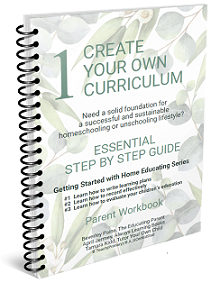
Want to learn how to write your own education plans
to suit your unique children's individual learning needs?
Or you are looking for quality curriculum and teaching tips...
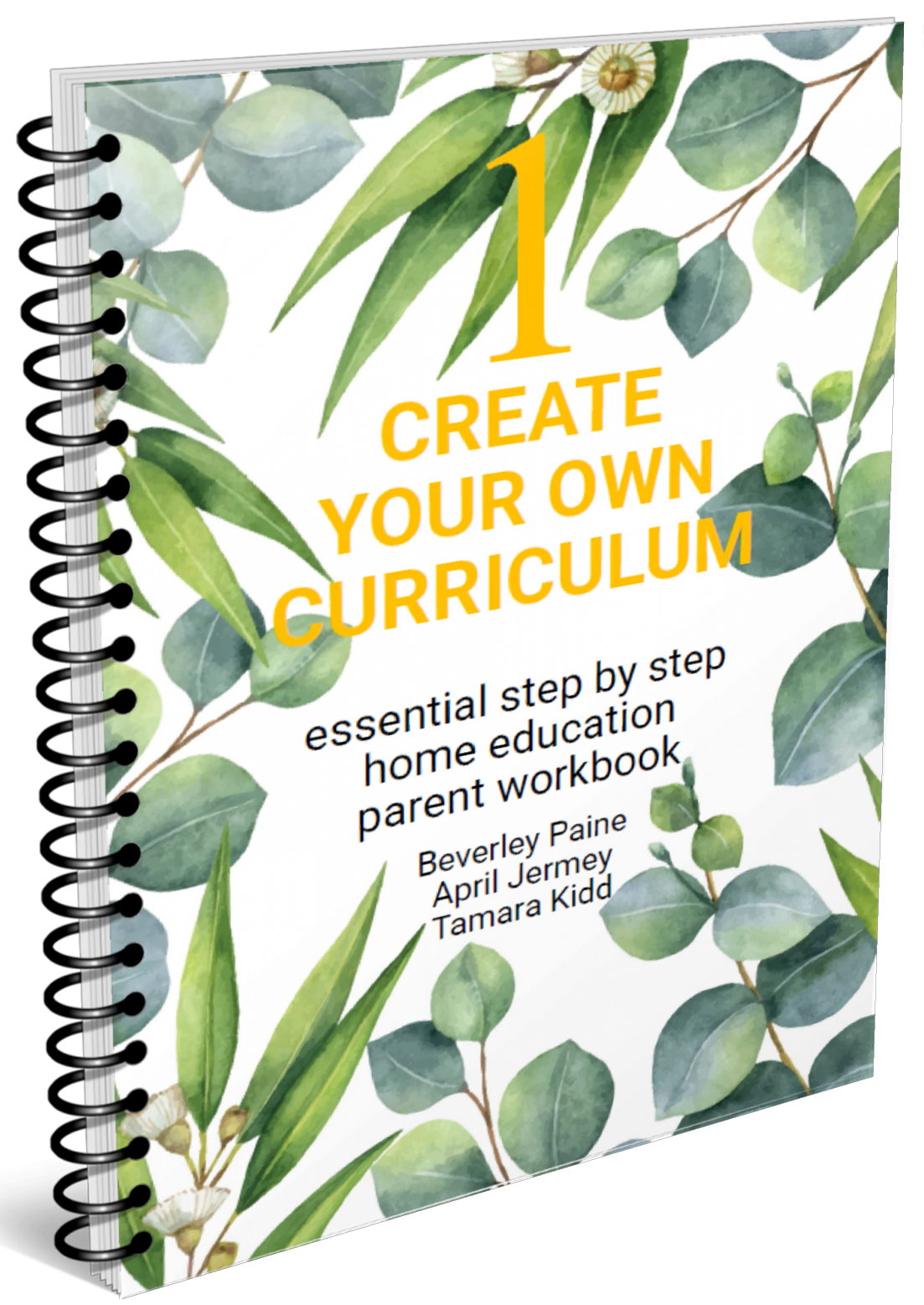
Comprehensive 3 workbook 'how to home ed' course
covering the essential skills you need
successfully home educate your children
|
|
Welcome to the World of Home Education
and Learning without School!
We began educating our children in 1985, when our eldest was five. In truth, we had helped them learn what they need to learn since they were born. I am a passionate advocate of allowing children to learn unhindered by unnecessary stress and competition, meeting developmental needs in ways that suit their individual learning styles and preferences. Ours was a homeschooling, unschooling and natural learning family! There are hundreds of articles on this site to help you build confidence as a home educating family. We hope that your home educating adventure is as satisfying as ours was! Beverley Paine
3 ESSENTIAL STEP BY STEP GUIDES
Let experienced home educators Beverley, Tamara and April walk you through HOW to create a learning plan that builds on solid foundations that works for YOUR family AND ticks all the boxes for home educaton registration!
|
Tap into Beverley's
experience
through her books
"Your books, your blogs helped me beyond words... they helped me to find comfort in knowing it is ok to choose exactly what is best for my family." Nisha
"Your books and information are mind blowing and already I am feeling good about this new experience." Diane
"Your guidance, understanding, support & words of wisdom changed our lives." Leslie
"I feel specially inspired by Beverley's words and, the more I read her comments, the more inspired I feel, since my need for support, respect for different parenting styles, and information are fully met." Marijo
|
 |
|

The information on this website is of a general nature only and is not intended as personal or professional advice. This site merges and incorporates 'Homeschool Australia' and 'Unschool Australia'.
The Educating Parent acknowledges the Traditional Aboriginal and Torres Strait Islander Owners, the Custodians of Australia, and pay our respects to Elders past and present and extend that respect to Aboriginal and Torres Strait Islander people viewing this website.
Advertise on this site.






Home education is a legal alternative
to school education in Australia.
State and Territory governments are responsible
for regulating home education and have different
requirements, however home educating families
are able to develop curriculum and learning programs
to suit the individual needs of their children.

Without revenue from advertising
by educational suppliers and Google Ads
we could not continue to provide information
to home educators. Please support us by letting
our advertisers know that you found them on
The Educating Parent. Thanks!
|
 About
About
 Thank you for visiting!