|
How NOT To Teach Science
© Teresa Bondora-Revere
Most schools and textbooks approach the teaching and learning of science in a way that creates confusion for the student. At the elementary level it is approached in the right way by teaching each year, most of the sciences, at a basic level. The problem is that the material is "dumbed down". Children are not taught chemistry or introduced to the periodic table of elements. Concepts of motion and physics aren't taught. Correct terminology isn't used, processes that involve a series of steps are glossed over. At the middle school level it gets worse. Instead of continuing to teach all sciences they are parted out and a student then learns only one science a year. They are now taught say, biology, without having had the basics of chemistry. Without chemistry, many processes in biology that are vital to understanding how living things work, cannot be taught. So the material must be dumbed down yet again.
Science is not like math, which is progressive. In math we teach the simple concepts and then progress through simple operations, fractions, etc. We expect that very young children will learn to memorize their multiplication tables but cannot learn simple rules of chemistry or physics. When they have grasped these basic math concepts, we can begin the ideas of algebra. But in science, there is no linear progression. Science is web-like. All parts are interconnected. To answer one question in biology, we must use chemistry. To understand why in chemistry, we can use biology. Physics is dependent on the biology of the body to explain motion in humans.
At the college level, students who major in any science field are counseled to take chemistry first then biology, physics, earth sciences. But at this point it is assumed they have the basics necessary to know where to put the advanced knowledge gained in these classrooms. Sadly, many don't and so they struggle through and are discouraged from the sciences and the many fields and careers to which it may lead.
So how should we teach our children science?
Most of you who home school do not doubt the abilities of your children to master this material. But have you helped to show your child that these concepts are simple to learn? If you have skipped chemistry and physics until they are older you are sending the message that these subjects are hard and cannot be attempted until later. These subjects maintain a mystique and fear that is easily connected to them.
I teach a workshop on teaching science and it's via the internet. This will be for adults only and by donation after the course is finished. I love science and I hope to help us all teach our children how easy and fun science can be. I also hope to dispel the myths that surround the "harder" sciences, thus paving the way for our children to pursue their dreams of being doctors, dentists, veterinarians, wildlife and marine biologists, astronauts, anything they want to be!

Teresa Bondora-Revere is a homeschool mother of two. She lives in Mobile, Alabama, USA where she is working on a book on How To Teach Science. She hosts an on-line workshop on How To Teach Science. You can visit her on-line at www.steelcreek.com

Was this article helpful? Was it worth $1.00 to you?
Your gift of $1 or more helps to keep this site operating
offering encouragement
and reassurance to families
wanting
better outcomes for their children.
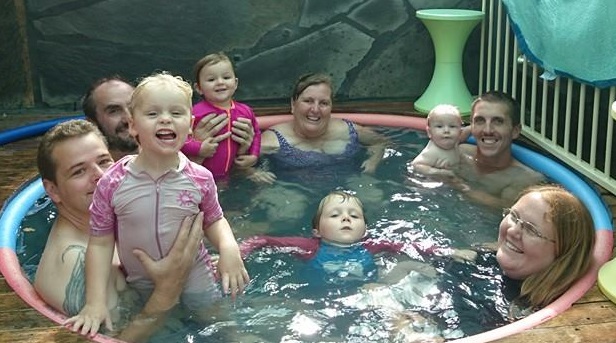
Beverley Paine with her children, and their home educated children, relaxing at home.
Together with the support of my family, my aim is to help parents educate their children in stress-free, nurturing environments. In addition to building and maintaing this website, I continue to create and manage local and national home educating networks, help to organise conferences and camps, as well as write for, edit and produce newsletters, resource directories and magazines. I am an active supporter of national, state, regional and local home education groups.
"You've been an inspiration to me, I love the way
you really listen to people." Vanessa
"Whenever I read your writing I always come away
with increased confidence in my ability to provide and
share a wonderful learning journey with my family!" Davina
"Your guidance, understanding, support and words of
wisdom changed our lives. We now offer support and
organise many homeschooling events for others." Lesley
"Thank you once again for your prompt and friendly service.
I am convinced that your books are going to add
quality and peace of mind to my journey of teaching my kids
at home! Just from studying your website, until almost
2am
in the morning, I 've been encouraged!" Louisa
"Thank you for all your many,many reassuring words
over many, many years. You probably don't know exactly how
valuable you are to the Australian Home Education community.
I've been reading your stuff for maybe 8 years or more now.
And I'm very grateful." Gythaa


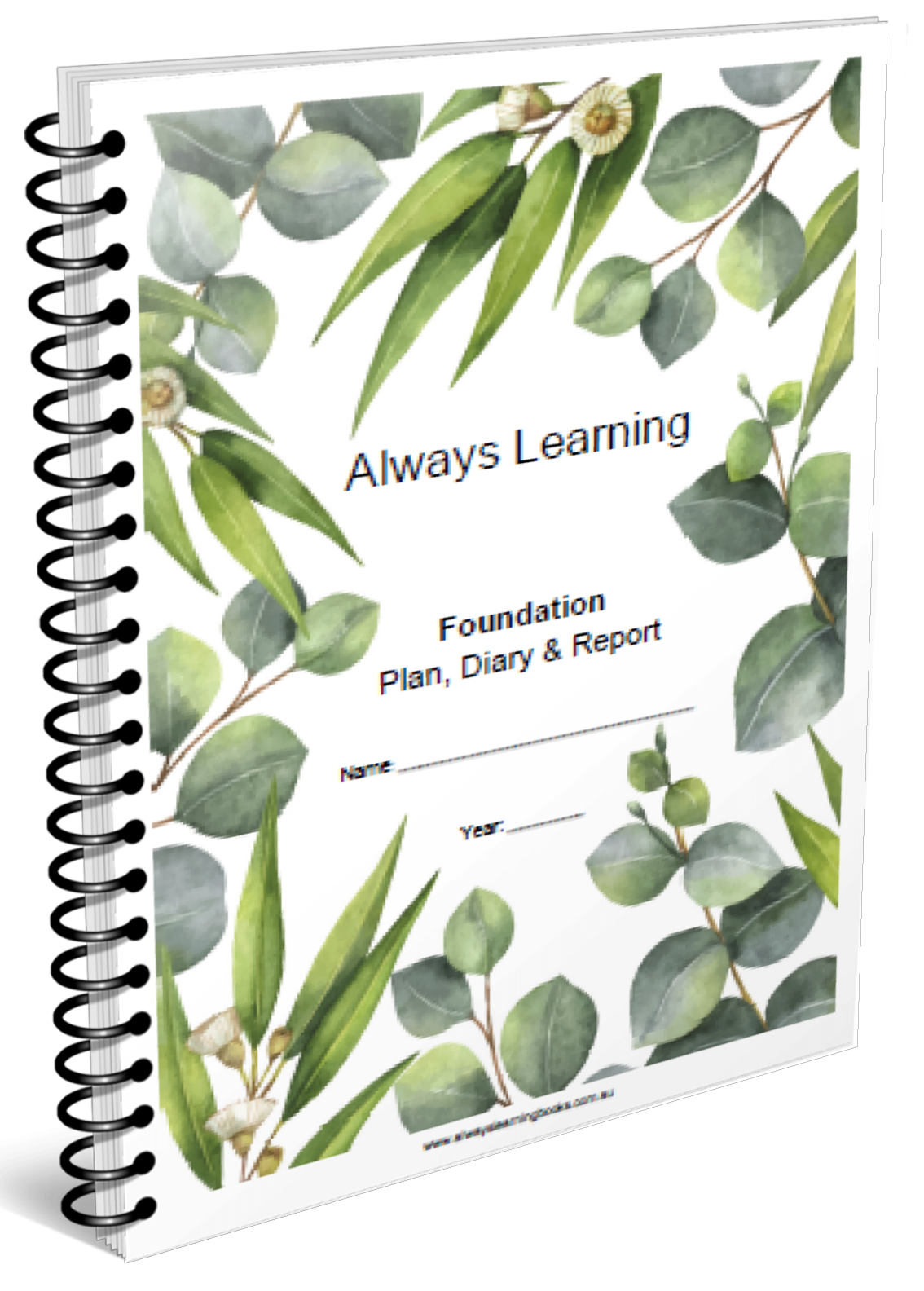
Want to learn how to write your own education plans
to suit your unique children's individual learning needs?
Or you are looking for quality curriculum and teaching tips...
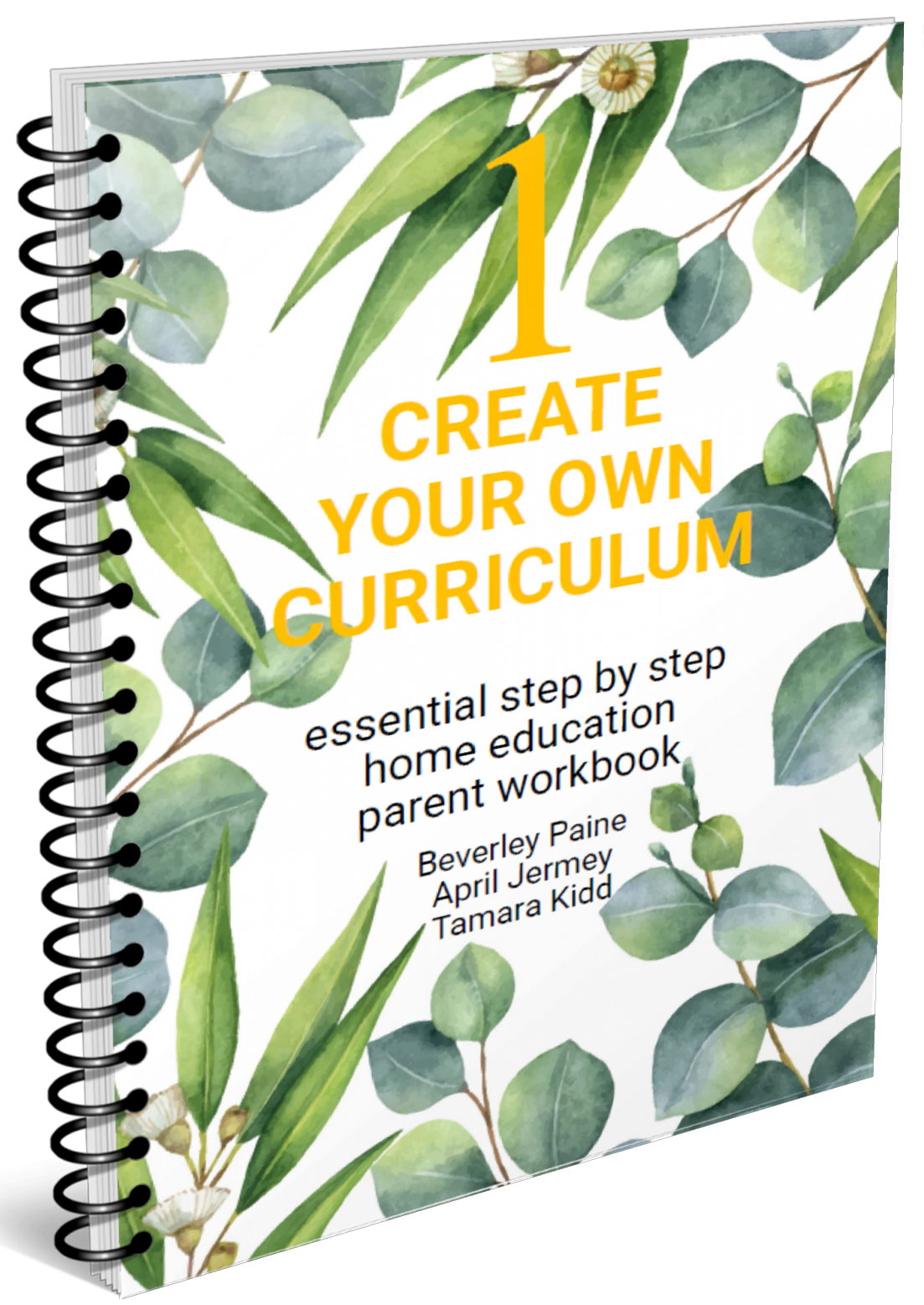
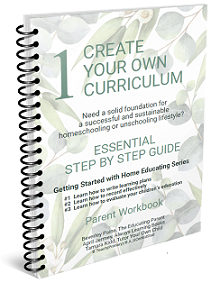
Comprehensive 3 workbook 'how to home ed' course
covering the essential skills you need
successfully home educate your children
|
|
Welcome to the World of Home Education
and Learning without School!
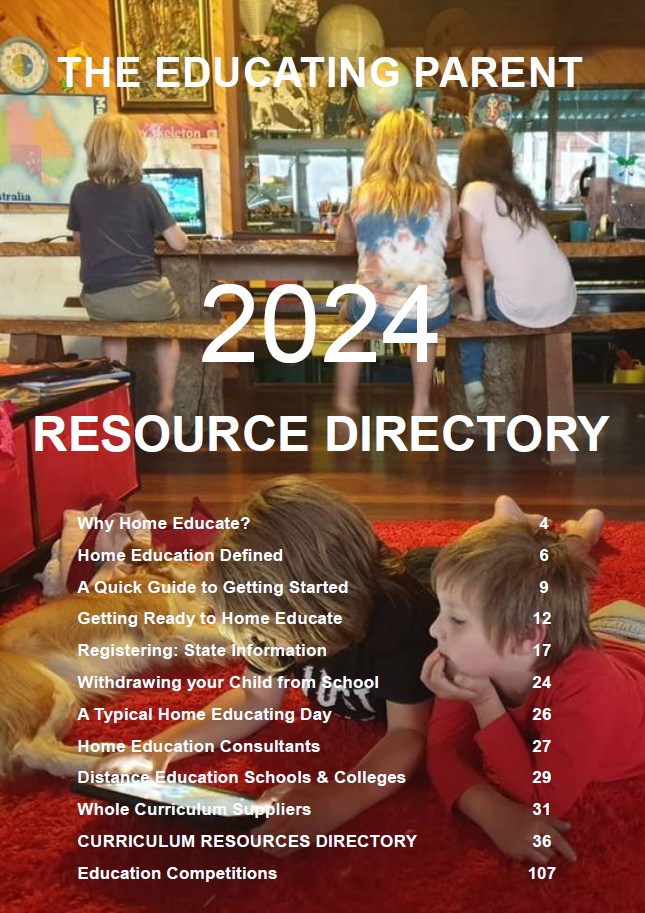
We began educating our children in 1985, when our eldest was five. In truth, we had helped them learn what they need to learn since they were born. I am a passionate advocate of allowing children to learn unhindered by unnecessary stress and competition, meeting developmental needs in ways that suit their individual learning styles and preferences. Ours was a homeschooling, unschooling and natural learning family! There are hundreds of articles on this site to help you build confidence as a home educating family. We hope that your home educating adventure is as satisfying as ours was! Beverley Paine
3 ESSENTIAL STEP BY STEP GUIDES
Let experienced home educators Beverley, Tamara and April walk you through HOW to create a learning plan that builds on solid foundations that works for YOUR family AND ticks all the boxes for home educaton registration!
|
Tap into Beverley's
experience
through her books
"Your books, your blogs helped me beyond words... they helped me to find comfort in knowing it is ok to choose exactly what is best for my family." Nisha
"Your books and information are mind blowing and already I am feeling good about this new experience." Diane
"Your guidance, understanding, support & words of wisdom changed our lives." Leslie
"I feel specially inspired by Beverley's words and, the more I read her comments, the more inspired I feel, since my need for support, respect for different parenting styles, and information are fully met." Marijo
|
 |
|

The information on this website is of a general nature only and is not intended as personal or professional advice. This site merges and incorporates 'Homeschool Australia' and 'Unschool Australia'.
The Educating Parent acknowledges the Traditional Aboriginal and Torres Strait Islander Owners, the Custodians of Australia, and pay our respects to Elders past and present and extend that respect to Aboriginal and Torres Strait Islander people viewing this website.
Advertise on this site.


Home education is a legal alternative
to school education in Australia.
State and Territory governments are responsible
for regulating home education and have different
requirements, however home educating families
are able to develop curriculum and learning programs
to suit the individual needs of their children.

Without revenue from advertising
by educational suppliers and Google Ads
we could not continue to provide information
to home educators. Please support us by letting
our advertisers know that you found them on
The Educating Parent. Thanks!
|
 About
About
 Thank you for visiting!