|
The Importance of Recording in Learning Science
by Beverley Paine, Nov 2004
Encouraging a scientific mind is the essence of studying science in the homeschool. To do this we need to show our children how to work and think using the scientific method, which includes thinking up interesting questions, formulating hypotheses and theories of our own and then testing them. Equally as important is the recording of children's ideas, thoughts, experiments and results. Recording is an absolutely essential element to the success of thinking scientifically.
Some people may ask why do we need to think scientifically at all? Few people associate science with all the things that happen in their lives, and few realise just how important it is or how it underpins modern life. Usually most people think of science as something they learned about in school, many years ago, or something exclusively for the boffins in white coats in laboratories, or for the politicians to exploit and generally end up damaging the world we live in. But science is not something we can separate out from our lives. Children are born inquisitive scientists in their own right, and are always trying to make sense of the their experiences in a natural scientific way. As homeschooling parents we can build on this.
Science is about learning how to think methodically, logically and rationally. The trick is to facilitate a balanced approach to teaching science and allowing it to naturally happen. It can help parents to understanding the scientific method of explaining and discovering the world, and to understand the rationale for including children's recordings as part of this process. In many cases the act of recording in itself can lead to new discoveries, experiments and explorations. The advantages of fostering children's recordings are many, and to begin an examination of these it is useful to consider the types of recording children can make. These can be divided into four broad categories: on-task recording; publications of learnings; integrated (with other areas of learning, for example in other subjects) recordings; self-evaluation and involve recording via several media.
The recordings children do when engaged in a learning activity, whether spontaneous or structured, are an inherent part of the process involved in the learning activity. Examples can include tallying, using tables, charts and graphs, graphs, writing letters, creating designs and concept maps, flow charts, plans and models, writing instructions, field notes, recording labels, using audio and video tape. It is easy to see the vast amount of mathematical learning that can be acquired through recording science learnings and how these can be a springboard for much mathematical learning as well in a very natural way.
In adult life all science findings are written up, published and reported to peers and others in the community. In the home most of the scientific learning our children do is celebrated or noted only momentarily, but exploring the sharing of information gleaned is rewarding in itself from time to time, and offers up opportunities for cross curriculum learning. 'Publications' include individual or shared work that display the learning outcomes of an activity, series of activities, or explorations. Mostly these include informal publications, but they can go much further, especially as children grow and move into the community more. Publications can include displays, collections, projects, reports, reviews, summaries, brief and complex descriptions, articles for publications such as newsletters, the internet and magazines, collages and murals, and also by photograph or by film. The scope for learning in all areas is great, and science recordings often become an impetus for exploring new ways of expressing and displaying information and language development.
Science and technology learnings often enhance learning in the area of language development. With some creativity and ingenuity a parent can easily incorporate creative expression into the scientific recordings their children make. Children can explore their thoughts and feelings about their discoveries and explorations in a number of ways, including stories, poems, artwork, mime and drama, craft and model building.
It is possible, and desirable, for children's recordings of their scientific learnings and findings to be can be self-evaluative. Teaching children how to critically analyse their own progress and learning development enhances their education generally, and allows them to gradually take more responsibility for their learning. Parents can encourage children to notice or ask questions about their emerging abilities such as "what I can do....."; or their preferences - "what I like...."; their goals and objectives in the activity they are doing - "what I would like to do... or find out"; and to reflect on their existing learnings - "what do I know now..."; and how they feel about the activity, their involvement, other's involvement and so on.
After an activity is finished parents and children can review the whole exploration - what happened, how it happened, did it work well, did it answer the questions, what new questions came out of the activity, were the resources adequate or appropriate, what would we do different next time? Sometimes this can be recorded, but generally it is good to just chat about these things. Keeping in mind the importance of such reflective and evaluative conversation is an important aspect of the home learning program.
Beginning a collection of such recordings in science, either in a scrap book or student portfolio is generally a must in every homeschool. Far from just being a record of work done by a child, these collections demonstrate a growing development of scientific method within the child - they are as much a part of the learning process as the activities themselves, and should not be seen simply as the outcome or product. All too often recording children's learnings in homeschools is seen as 'proof' of learning occuring, rather than an inherent and important aspect of that learning.
To help children develop recording skills parents need to take the time to organise themselves and their children and to demonstrate recording methods and to explain the validity and necessity for it. When a child brings a question to the parent it will either be answered immediately, or the pair might go off and begin to look for answers. Jotting down questions on a scrap of paper at this time is useful. Thus begins the recording process. Other questions, clarifying the first, or seeking existing levels of understanding or abilities could be jotted down as well. From these a rough plan can be drawn for action - for a series of activities to find the answers. This might involve setting up an impromptu experiment, heading for the bookshelf, asking another person, making a date to visit a particular resource.
Often the recordings that parents help children to do can facilitate a feeling of "ownership" of the learnings involved in the activity by the children, especially if they discover the relationships resultant from the recordings. In addition recordings can form the basis of an on-going reference resource related to that topic, for example, collated to form a book which can become part of the child's reference library and up-dated with new information occasionally.
It is important children's recordings remain in context and that the parent has a clear understanding of the purpose of the recording. Scientific recording has definite purposes related to the task, exploration or investigation under way. An "honest" interest in science by the parents reinforces and sustains children's curiosity. Unnecessary recording may result in the "deadening" effect and too much emphasis, especially in early childhood, can be detrimental to the enjoyment and spontaneity of the learning in progress. However, if the children are allowed to be involved in making decisions about how and when recording becomes a part of the activity, they can learn to value it and even enjoy the process.
Collecting children's recordings and displaying them is a way of celebrating their learning outcomes. This further re-inforces the children's sense of owning their work, and can lead to further explorations. It is good to discuss with them the purpose of recording and having their interest and co-operation leads to commitment, and encourages them to use their recordings for self evaluation, especially as they grow older. Records used for evaluative reasons in a home learning program should be dated, and selected to indicate the quality and scope of the children's work It is helpful to keep on file with the samples a brief description relating to the nature of the activity or learning the recording reflects, and any references to the learning outcomes realised, and is best completed either during or immediately following or as soon as possible after the related activity.
Work samples can also reveal insights into the children's learning processes which can be missed during the activities, and hence become useful reflective learning tools. Because they are related to an activity and are thus useful and in context, children's recordings are excellent for memory retention of learning outcomes. In this way they serve an important function in building skills related to memory in young children. Most important of all children's recordings allow parents another window into their worlds, how they perceive life happening around them, and can be used in the planning of individual programs tailored for the learning needs of each child. This, after all, is the essence of evaluation, not to focus on what has been achieved, but how we can use it to move forward. This is the essential purpose of children's recordings.

Was this article helpful? Was it worth $1.00 to you?
Your gift of $1 or more helps to keep this site operating
offering encouragement
and reassurance to families
wanting
better outcomes for their children.
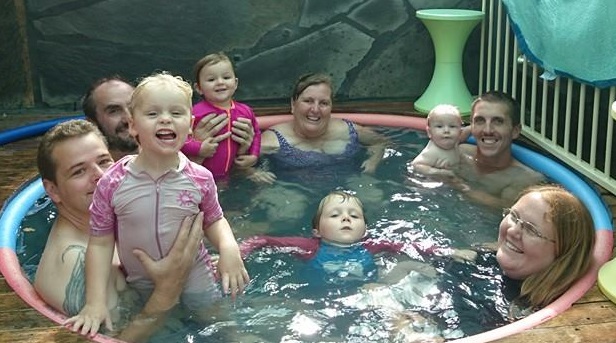
Beverley Paine with her children, and their home educated children, relaxing at home.
Together with the support of my family, my aim is to help parents educate their children in stress-free, nurturing environments. In addition to building and maintaing this website, I continue to create and manage local and national home educating networks, help to organise conferences and camps, as well as write for, edit and produce newsletters, resource directories and magazines. I am an active supporter of national, state, regional and local home education groups.
"You've been an inspiration to me, I love the way
you really listen to people." Vanessa
"Whenever I read your writing I always come away
with increased confidence in my ability to provide and
share a wonderful learning journey with my family!" Davina
"Your guidance, understanding, support and words of
wisdom changed our lives. We now offer support and
organise many homeschooling events for others." Lesley
"Thank you once again for your prompt and friendly service.
I am convinced that your books are going to add
quality and peace of mind to my journey of teaching my kids
at home! Just from studying your website, until almost
2am
in the morning, I 've been encouraged!" Louisa
"Thank you for all your many,many reassuring words
over many, many years. You probably don't know exactly how
valuable you are to the Australian Home Education community.
I've been reading your stuff for maybe 8 years or more now.
And I'm very grateful." Gythaa


Want to learn how to write your own education plans
to suit your unique children's individual learning needs?
Or you are looking for quality curriculum and teaching tips...
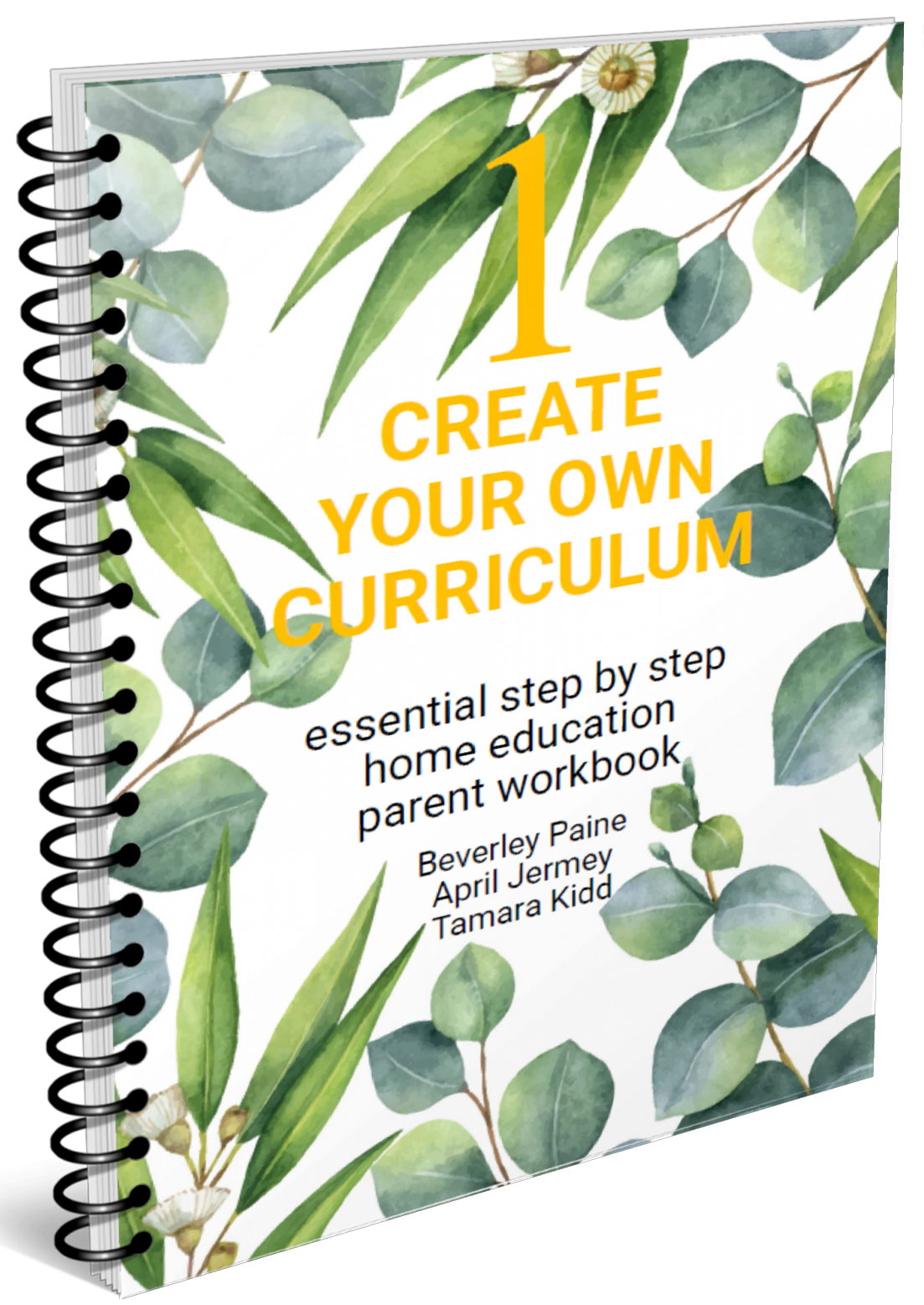
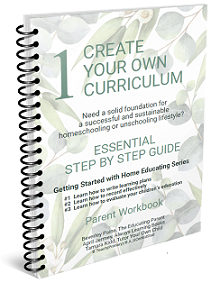
Comprehensive 3 workbook 'how to home ed' course
covering the essential skills you need
successfully home educate your children
|
|
Welcome to the World of Home Education
and Learning without School!
We began educating our children in 1985, when our eldest was five. In truth, we had helped them learn what they need to learn since they were born. I am a passionate advocate of allowing children to learn unhindered by unnecessary stress and competition, meeting developmental needs in ways that suit their individual learning styles and preferences. Ours was a homeschooling, unschooling and natural learning family! There are hundreds of articles on this site to help you build confidence as a home educating family. We hope that your home educating adventure is as satisfying as ours was! Beverley Paine
3 ESSENTIAL STEP BY STEP GUIDES
Let experienced home educators Beverley, Tamara and April walk you through HOW to create a learning plan that builds on solid foundations that works for YOUR family AND ticks all the boxes for home educaton registration!
|
Tap into Beverley's
experience
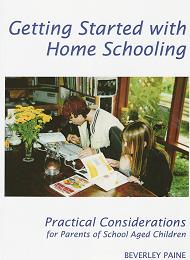
through her books
"Your books, your blogs helped me beyond words... they helped me to find comfort in knowing it is ok to choose exactly what is best for my family." Nisha
"Your books and information are mind blowing and already I am feeling good about this new experience." Diane
"Your guidance, understanding, support & words of wisdom changed our lives." Leslie
"I feel specially inspired by Beverley's words and, the more I read her comments, the more inspired I feel, since my need for support, respect for different parenting styles, and information are fully met." Marijo
|
 |
|

The information on this website is of a general nature only and is not intended as personal or professional advice. This site merges and incorporates 'Homeschool Australia' and 'Unschool Australia'.
The Educating Parent acknowledges the Traditional Aboriginal and Torres Strait Islander Owners, the Custodians of Australia, and pay our respects to Elders past and present and extend that respect to Aboriginal and Torres Strait Islander people viewing this website.
Advertise on this site.




Home education is a legal alternative
to school education in Australia.
State and Territory governments are responsible
for regulating home education and have different
requirements, however home educating families
are able to develop curriculum and learning programs
to suit the individual needs of their children.

Without revenue from advertising
by educational suppliers and Google Ads
we could not continue to provide information
to home educators. Please support us by letting
our advertisers know that you found them on
The Educating Parent. Thanks!
|
 About
About
 Thank you for visiting!