|
How to Create an Unschooling Learning Plan to Meet Registration Requirements
by Tamara Kidd, Nov 2013
The following is a response by Tamara to a request for help by an unschooling parent who had been given 6 months registration and who was experiencing difficulty meeting the recording requirements.
I'm a home educating parent to a daughter working through Stage 4 (year 7) in New South Wales at the moment. I follow her interest in drawing and 'wrap the curriculum' around that. It takes a little bit of effort for me to observe the outcomes being covered, making observational notes, but it means she doesn't have to do boring 'school work'.
I keep a sample portfolio of work and it's very thin: mostly what they really want is 'boxes ticked' to say you've done work. They certainly don't have time to see all the work the child has actually done. I have a cardboard box with a lid and point to it saying "all the work is in there, and here (in this nice shiney plastic folder) is a sample of her work". The box gets pretty full after a year but that's me keeping everything!
People can contact me if they'd like a copy of MS Word documents of the proformas for the new NSW syllabus I've prepared and am happy to share. In NSW we don't do PDHPE or LOTE as they are not compulsory - we only have to do 6 out of the 8 subjects.
Anytime my daughter does anything that looks like one of the outcomes on the NSW syllabus I write down what activity she is doing and the date. That way I'm documenting her activities and dating them and that satisfies the record keeping and matches her activities to their outcomes.
Sometimes I write down an activity and simply write 'Week of 28/10/2013' as I made a note at the start of the week and it was an ongoing project.
Anything and everything can be written down: for example, so say you're at the shops and you look at cans of tuna that's been caught in 'Dolphin friendly nets' and you talk about people wanting Tuna cheaply, using old fishing practices, and how in the past people didn't care so much, not even caring about the impact on the environment and then how now people do care so saying it's 'Dolphin Friendly' is a good advertisement strategy... Well, that would cover Science SC4.2VA, "shows a willingness to engage in finding solutions to science-related personal, social and global issues, including shaping sustainable futures". It could also be History HT4.7 "identifies and describes different contexts, perspectives and interpretations of the past". And also Technology 4.1.2 "describes factors influencing design in the areas of study of Built Environments, Products, and Information and Communications", as well as 4.6.2 "identifies and explains ethical, social, environmental and sustainability considerations related to design projects".
The conversation can be two minutes long: for example, "hey notice how it's all 'Dolphin friendly' and those cans are more expensive than those that don't have 'Dolphin friendly on them?' And if the conversation happens where you know she's learning something then go through the different subjects and have a guess - like "hmm she had to use maths for that so I wonder if a maths outcome matches that" and low and behold, comparing prices of Tuna is covered in Maths MA4.2WM "applies appropriate mathematical techniques to solve problems"!
So now you've got five outcomes covered and it took a few minutes of a spontaneous conversation while walking past Tuna!
I'd record that as "Discussed in detail historical, ethical, scientific commercial and economic implications of Tuna farming and 'Dolphin friendly fishing".
This is one example and I'm sure you could come up dozens like this every day. It's all about working out what outcome matches those conversations or activities your daughter does. It takes practice.
You can also googling phrases or wods, such as "applies appropriate mathematical techniques to solve problems" - this will result in being taken to curriculum links with what's called 'indicators' or 'objectives' next to them. They are example 'lessons' or 'activities', or sometimes it's just a more detailed explanation. For example, a maths outcome the objective might be:
"Students:
- develop understanding and fluency in mathematics through inquiry, exploring and connecting mathematical concepts, choosing and applying problem-solving skills and mathematical techniques, communication and reasoning"
Which is also known as: talked about the price differences of the tuna can and looked at how much per 100gs to see what was the cheapest/most expensive etc!
At the end of a day when you think about what your daughter has done, have a go working out what outcome was covered and show her the filled out proformas, so she can see that the 'school stuff' doesn't have to feel like 'school stuff', and that the outcomes they want you to cover are learnt from the real world but in class they have no choice but to manufacture 'lessons' and worksheets... like the Tuna example would take a whole hour with note taking, worksheets, trying to make people interested, maybe a lecture to begin with and it would be boring in a whole class situation for at least some or most of the class (maybe even all?)
Australian home educating parent, Tamara Kidd
began tutoryourownchild.com, a web based consulting business, in 2007, turning something she had been doing for free, at that stage for about 10 years, into a 'stay at home business'.

Was this article helpful? Was it worth $1.00 to you?
Your gift of $1 or more helps to keep this site operating
offering encouragement
and reassurance to families
wanting
better outcomes for their children.
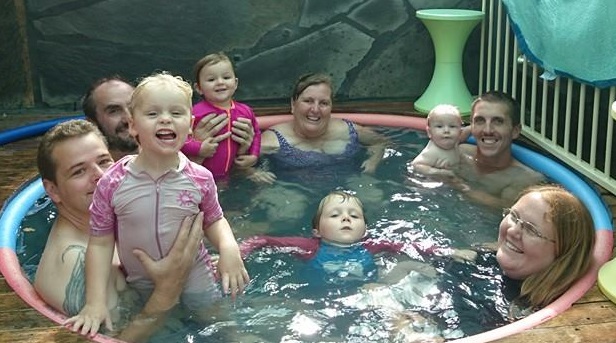
Beverley Paine with her children, and their home educated children, relaxing at home.
Together with the support of my family, my aim is to help parents educate their children in stress-free, nurturing environments. In addition to building and maintaing this website, I continue to create and manage local and national home educating networks, help to organise conferences and camps, as well as write for, edit and produce newsletters, resource directories and magazines. I am an active supporter of national, state, regional and local home education groups.
"You've been an inspiration to me, I love the way
you really listen to people." Vanessa
"Whenever I read your writing I always come away
with increased confidence in my ability to provide and
share a wonderful learning journey with my family!" Davina
"Your guidance, understanding, support and words of
wisdom changed our lives. We now offer support and
organise many homeschooling events for others." Lesley
"Thank you once again for your prompt and friendly service.
I am convinced that your books are going to add
quality and peace of mind to my journey of teaching my kids
at home! Just from studying your website, until almost
2am
in the morning, I 've been encouraged!" Louisa
"Thank you for all your many,many reassuring words
over many, many years. You probably don't know exactly how
valuable you are to the Australian Home Education community.
I've been reading your stuff for maybe 8 years or more now.
And I'm very grateful." Gythaa

CLICK HERE
if you want to learn
how to write your own education plans
to suit
your unique children's
individual learning needs?
Or you are looking for quality curriculum and teaching tips...
|
|
Welcome to the World of Home Education
and Learning without School!
We began educating our children in 1985, when our eldest was five. In truth, we had helped them learn what they need to learn since they were born. I am a passionate advocate of allowing children to learn unhindered by unnecessary stress and competition, meeting developmental needs in ways that suit their individual learning styles and preferences. Ours was a homeschooling, unschooling and natural learning family! There are hundreds of articles on this site to help you build confidence as a home educating family. We hope that your home educating adventure is as satisfying as ours was! Beverley Paine
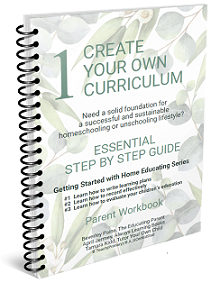
3 ESSENTIAL STEP BY STEP GUIDES
Let experienced home educators Beverley, Tamara and April walk you through HOW to create a learning plan that builds on solid foundations that works for YOUR family AND ticks all the boxes for home educaton registration!
|
Tap into Beverley's
experience
through her books
"Your books, your blogs helped me beyond words... they helped me to find comfort in knowing it is ok to choose exactly what is best for my family." Nisha
"Your books and information are mind blowing and already I am feeling good about this new experience." Diane
"Your guidance, understanding, support & words of wisdom changed our lives." Leslie
"I feel specially inspired by Beverley's words and, the more I read her comments, the more inspired I feel, since my need for support, respect for different parenting styles, and information are fully met." Marijo
|
 |
|

The information on this website is of a general nature only and is not intended as personal or professional advice. This site merges and incorporates 'Homeschool Australia' and 'Unschool Australia'.
The Educating Parent acknowledges the Traditional Aboriginal and Torres Strait Islander Owners, the Custodians of Australia, and pay our respects to Elders past and present and extend that respect to Aboriginal and Torres Strait Islander people viewing this website.
Advertise on this site.





Australia's premier online annual conferences, lifetime access to video and audio recordings, freebies, notes and associated resource guides.
EVERY SUMMIT IS UNIQUE!
$29 each  2023 2023  2022 2021 2022 2021
$25 each 2020 2019 2017
"Biggest and best Aussie homeschool event of the year!"
Home education is a legal alternative
to school education in Australia.
State and Territory governments are responsible
for regulating home education and have different
requirements, however home educating families
are able to develop curriculum and learning programs
to suit the individual needs of their children.

Without revenue from advertising
by educational suppliers and Google Ads
we could not continue to provide information
to home educators. Please support us by letting
our advertisers know that you found them on
The Educating Parent. Thanks!
|
 About
About

 Thank you for visiting!