|
I'm Not Going to Let my Child Fall Behind
by Beverley Paine
"Falling behind"... so many of us worry about our children not keeping up with their peers in school.
Think about it for a minute though. When we were at school, was everyone in the class learning at the same level? No. Did they all understand the work being done? No. Were some far ahead and some trailing behind? Yes. And what happened? Those that were ahead stayed ahead and those that fell behind never caught up. And that is just as true of today's classrooms as it was back then.
Our child may slot into a classroom of his or her same age peers if returned to school (for whatever reason) ahead in some areas of understanding, ability and knowledge and behind in others compared to his or her peers. As would a child moving from interstate or overseas. And it's been like this as long as there have been classrooms full of children. The difference is that the home educated child will be supported by his or her parents, and especially to feel confident that he or she will quickly catch up and learn whatever is needed to be learned in that environment in order to continue to progress. Home educated children also have another advantage: they are usually more self-directed and self-motivated than schooled children, although this may not always be apparent to the parent!
At home that child won't have to play the catch up game because he or she will be too busy learning what is important to him or her, filling in any gaps when and if the need arises (which it often doesn't). And over time, he or she will be surprised to discover that it's almost impossible to not to obtain a comprehensive education simply living and playing in the world, doing what needs to be done when it needs to be done, as well as exploring, discovering, investigating, inventing, creating and playing.
"Falling behind" is a concept we rarely come across in adult life: once we leave schools behind we stop worrying about this sense of "falling behind." As adults when we want to learn something we simply learn it, at a pace that suits our needs and circumstances. Even if we set a schedule or a deadline for completion we don't say we're "falling behind": we either adjust our behaviour or the schedule.
And we can only be "falling behind" if we've set both a goal and a schedule and have some idea what completion will look like. And that's the purpose of a curriculum. As home educators we can set our own goals, our own schedules and describe what completion will look like. At the beginning of our home education adventure, after thinking carefully about what education meant to us, we wrote a series of statements that stood true and guided us as home educators for the next 18 years: http://theeducatingparent.com/curriculum/sampleprograms/painephilosophy.html.
Although we may need to reference state or national curricula when applying or renewing registration as home educators, we follow the personal 'curriculum' we develop to suit our individual children's and families' needs. My guiding statements kept me thinking about why we'd chosen to home educate our children, especially during those times when I'd start worrying about "doing enough", or if my children were "falling behind". It would remind me that I had until my children reached late adolescence, not next week or the end of this year, to achieve those nagging goals. That, instead of ticking a series of sets of skill or specific knowledge off a list that may or may not be appropriate to whatever area of life my young adult would explore next, we were focusing on building values, character, a sense of identify, confidence, tolerance and self-awareness.

Was this article helpful? Was it worth $1.00 to you?
Your gift of $1 or more helps to keep this site operating
offering encouragement
and reassurance to families
wanting
better outcomes for their children.
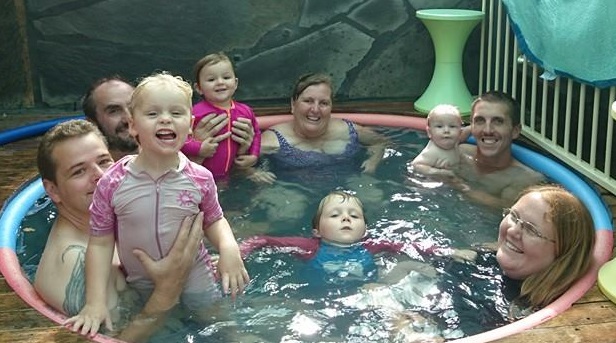
Beverley Paine with her children, and their home educated children, relaxing at home.
Together with the support of my family, my aim is to help parents educate their children in stress-free, nurturing environments. In addition to building and maintaing this website, I continue to create and manage local and national home educating networks, help to organise conferences and camps, as well as write for, edit and produce newsletters, resource directories and magazines. I am an active supporter of national, state, regional and local home education groups.
"You've been an inspiration to me, I love the way
you really listen to people." Vanessa
"Whenever I read your writing I always come away
with increased confidence in my ability to provide and
share a wonderful learning journey with my family!" Davina
"Your guidance, understanding, support and words of
wisdom changed our lives. We now offer support and
organise many homeschooling events for others." Lesley
"Thank you once again for your prompt and friendly service.
I am convinced that your books are going to add
quality and peace of mind to my journey of teaching my kids
at home! Just from studying your website, until almost
2am
in the morning, I 've been encouraged!" Louisa
"Thank you for all your many,many reassuring words
over many, many years. You probably don't know exactly how
valuable you are to the Australian Home Education community.
I've been reading your stuff for maybe 8 years or more now.
And I'm very grateful." Gythaa


Want to learn how to write your own education plans
to suit your unique children's individual learning needs?
Or you are looking for quality curriculum and teaching tips...
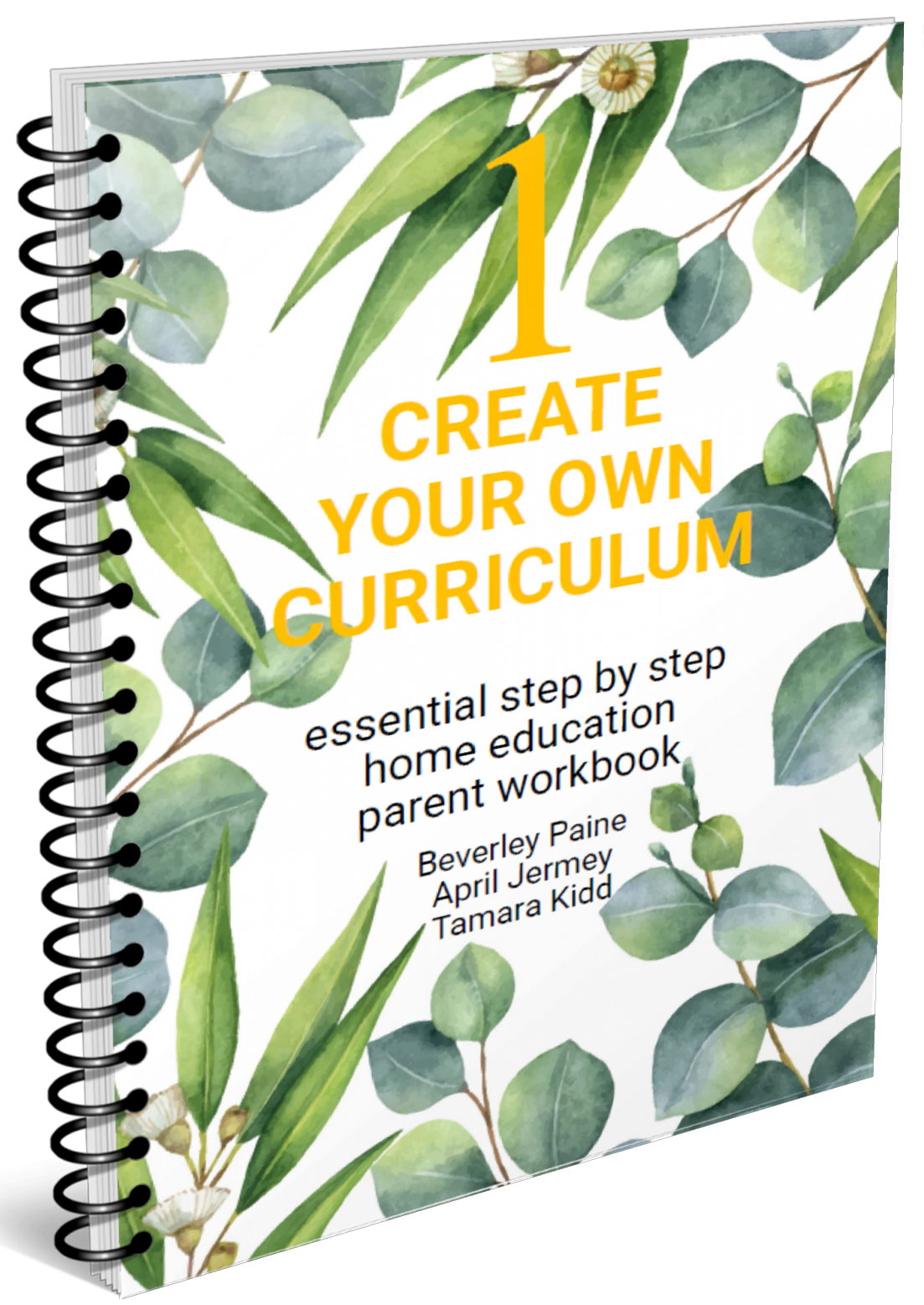
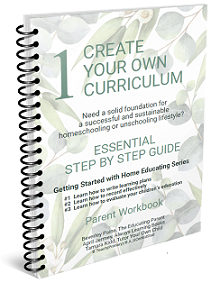
Comprehensive 3 workbook 'how to home ed' course
covering the essential skills you need
successfully home educate your children
|
|
Welcome to the World of Home Education
and Learning without School!
We began educating our children in 1985, when our eldest was five. In truth, we had helped them learn what they need to learn since they were born. I am a passionate advocate of allowing children to learn unhindered by unnecessary stress and competition, meeting developmental needs in ways that suit their individual learning styles and preferences. Ours was a homeschooling, unschooling and natural learning family! There are hundreds of articles on this site to help you build confidence as a home educating family. We hope that your home educating adventure is as satisfying as ours was! Beverley Paine
3 ESSENTIAL STEP BY STEP GUIDES
Let experienced home educators Beverley, Tamara and April walk you through HOW to create a learning plan that builds on solid foundations that works for YOUR family AND ticks all the boxes for home educaton registration!
|
Tap into Beverley's
experience
through her books
"Your books, your blogs helped me beyond words... they helped me to find comfort in knowing it is ok to choose exactly what is best for my family." Nisha
"Your books and information are mind blowing and already I am feeling good about this new experience." Diane
"Your guidance, understanding, support & words of wisdom changed our lives." Leslie
"I feel specially inspired by Beverley's words and, the more I read her comments, the more inspired I feel, since my need for support, respect for different parenting styles, and information are fully met." Marijo
|
 |
|

The information on this website is of a general nature only and is not intended as personal or professional advice. This site merges and incorporates 'Homeschool Australia' and 'Unschool Australia'.
The Educating Parent acknowledges the Traditional Aboriginal and Torres Strait Islander Owners, the Custodians of Australia, and pay our respects to Elders past and present and extend that respect to Aboriginal and Torres Strait Islander people viewing this website.
Advertise on this site.



Home education is a legal alternative
to school education in Australia.
State and Territory governments are responsible
for regulating home education and have different
requirements, however home educating families
are able to develop curriculum and learning programs
to suit the individual needs of their children.

Without revenue from advertising
by educational suppliers and Google Ads
we could not continue to provide information
to home educators. Please support us by letting
our advertisers know that you found them on
The Educating Parent. Thanks!
|
 About
About
 Thank you for visiting!