|
Specific Areas To Consider In The Evaluation Process
© Beverley Paine
Evaluating your learning program and the various activities you provide for children means considering, in some detail, the following aspects:
- relationships,
- attitudes,
- the actual learning process,
- resources,
- the frequency of specific evaluation techniques such as assessments and tests,
- and how feedback from the evaluation process will be acted upon.
Evaluation that doesn't form part of a continuous process of planning, action and reflection, can become meaningless and a waste of time.
If you are recording and evaluating to satisfy educational authorities only, then you and your children will soon become cynical about the entire learning process, and cease to enjoy it. You may quickly learn to resent recording your children's progress and may even stop recording altogether. Although this may seem satisfying in the short term I have seen many instances where families lose track of what they children have learned. Sometimes this leads to repeating 'lessons', which is boring for the children and quickly turns them off learning atogether. It also has the effect of eroding confidence that home education is successful.
Relationships include communication, respect, trust, values, attitudes, discipline and responsibility. These areas come up frequently in daily home life, although if ignored can become overwhelming issues of conflict affecting the smooth operation of home schooling. This can cause much unnecessary stress, frustration and possible 'burn out'. Relationships take conscious effort to work well, and relationships within families should never be taken for granted, especially in home schools.
Work out before commencing any learning activities who will be taking responsibility for what aspects of each activity, and what role each person is to play. There is no need for the parent to always be the person directing the learning, or organising the materials or timing of activities. Children enjoy taking responsibility if encouraged.
Evaluate each of the above aspects of relationships and seek ways to continuously improve how individual members of the family relate to each other, and also to the wider community in general.
The learning process includes all aspects of learning happening for your children; their sensorial learning, active and experiential learning, learning through discovery and exploration of new things and concepts, and learning with mentors, tutors, including working as 'apprentices'. These reflect the intellectual, social, emotional, spiritual and physical growth of your children.
When evaluating learning processes you need to reflect on whether you have set realistic goals based on the individual needs of each child, if you are flexible enough, if you are allowing the children to work at a reasonable pace based on their overall development or allowing them to set their own pace, and if the activities are meaningful to each individual child. It is useful to consider if the learning processes are creative ones, leading onto other learning opportunities.
When looking at resources you need to consider their appropriateness, effectiveness, safety, if there are enough for everyone's needs, if they are of good quality, and if there is sufficient variety to meet individual needs. Don't forget to assess the general environment, and people accessed in the learning process. These are resources too. There is more information on evaluating resources in Evaluating Materials for Home Education.
One of the most useful things you can do is to regularly evaluate your own performance as a learning guide for your children. This is often overlooked by home schooling parents, but demonstrates and builds professional educational skills. The following is an excerpt from a parent's week-by-week evaluation note book:
Specific Areas To Consider In The Evaluation Process
© Beverley Paine
Evaluating your learning program and the various activities you provide for children means considering, in some detail, the following aspects:
- relationships,
- attitudes,
- the actual learning process,
- resources,
- the frequency of specific evaluation techniques such as assessments and tests,
- and how feedback from the evaluation process will be acted upon.
Evaluation that doesn't form part of a continuous process of planning, action and reflection, can become meaningless and a waste of time.
If you are recording and evaluating to satisfy educational authorities only, then you and your children will soon become cynical about the entire learning process, and cease to enjoy it. You may quickly learn to resent recording your children's progress and may even stop recording altogether. Although this may seem satisfying in the short term I have seen many instances where families lose track of what they children have learned. Sometimes this leads to repeating 'lessons', which is boring for the children and quickly turns them off learning atogether. It also has the effect of eroding confidence that home education is successful.
Relationships include communication, respect, trust, values, attitudes, discipline and responsibility. These areas come up frequently in daily home life, although if ignored can become overwhelming issues of conflict affecting the smooth operation of home schooling. This can cause much unnecessary stress, frustration and possible 'burn out'. Relationships take conscious effort to work well, and relationships within families should never be taken for granted, especially in home schools.
Work out before commencing any learning activities who will be taking responsibility for what aspects of each activity, and what role each person is to play. There is no need for the parent to always be the person directing the learning, or organising the materials or timing of activities. Children enjoy taking responsibility if encouraged.
Evaluate each of the above aspects of relationships and seek ways to continuously improve how individual members of the family relate to each other, and also to the wider community in general.
The learning process includes all aspects of learning happening for your children; their sensorial learning, active and experiential learning, learning through discovery and exploration of new things and concepts, and learning with mentors, tutors, including working as 'apprentices'. These reflect the intellectual, social, emotional, spiritual and physical growth of your children.
When evaluating learning processes you need to reflect on whether you have set realistic goals based on the individual needs of each child, if you are flexible enough, if you are allowing the children to work at a reasonable pace based on their overall development or allowing them to set their own pace, and if the activities are meaningful to each individual child. It is useful to consider if the learning processes are creative ones, leading onto other learning opportunities.
When looking at resources you need to consider their appropriateness, effectiveness, safety, if there are enough for everyone's needs, if they are of good quality, and if there is sufficient variety to meet individual needs. Don't forget to assess the general environment, and people accessed in the learning process. These are resources too. There is more information on evaluating resources in Evaluating Materials for Home Education.
One of the most useful things you can do is to regularly evaluate your own performance as a learning guide for your children. This is often overlooked by home schooling parents, but demonstrates and builds professional educational skills. The following is an excerpt from a parent's week-by-week evaluation note book:
Week Ending: 28 / 7 / 91 |
Summary of Activities |
Social activity has included swimming with friends, and excursions to school library and Annexe (alternative community school class). Helped Dad at work (landscape yard) one day. Kids got to help drive the tractor,do some weeding and potting up of plants. Investigated functions of cash register. Concentrated on gardening and landscaping at home with the kids involved in a lot of the projects, etc. Lots of effort has gone into our personal development program based on co-operative behaviours and understanding of responsibilities. The children have been very co-operative and I've not concentrated on structured academic activities at all during the week. Lots of outside activity due to perfect weather. Visits to beach in afternoons. |
Evaluation of Processes |
I am becoming increasingly dissatisfied with the day to day aspects of this program. I have consequently contacted other home educators and read additional books to gain insights into the source of my discontent. I feel now I need to adjust the physical environment. It is necessary to change the focus of our program away from the material or hard copy of the children's learning (I am concentrating too much on what we record rather than what we learn!) I am failing to fill out journal pages as I have been too busy myself to think about it. I need to develop an easy format to use. |

Was this article helpful? Was it worth $1.00 to you?
Your gift of $1 or more helps to keep this site operating
offering encouragement
and reassurance to families
wanting
better outcomes for their children.
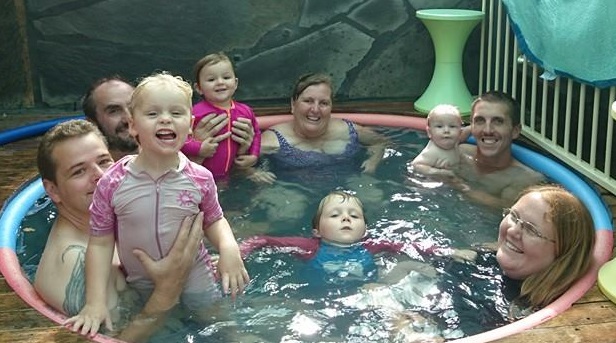
Beverley Paine with her children, and their home educated children, relaxing at home.
Together with the support of my family, my aim is to help parents educate their children in stress-free, nurturing environments. In addition to building and maintaing this website, I continue to create and manage local and national home educating networks, help to organise conferences and camps, as well as write for, edit and produce newsletters, resource directories and magazines. I am an active supporter of national, state, regional and local home education groups.
"You've been an inspiration to me, I love the way
you really listen to people." Vanessa
"Whenever I read your writing I always come away
with increased confidence in my ability to provide and
share a wonderful learning journey with my family!" Davina
"Your guidance, understanding, support and words of
wisdom changed our lives. We now offer support and
organise many homeschooling events for others." Lesley
"Thank you once again for your prompt and friendly service.
I am convinced that your books are going to add
quality and peace of mind to my journey of teaching my kids
at home! Just from studying your website, until almost
2am
in the morning, I 've been encouraged!" Louisa
"Thank you for all your many,many reassuring words
over many, many years. You probably don't know exactly how
valuable you are to the Australian Home Education community.
I've been reading your stuff for maybe 8 years or more now.
And I'm very grateful." Gythaa


Want to learn how to write your own education plans
to suit your unique children's individual learning needs?
Or you are looking for quality curriculum and teaching tips...
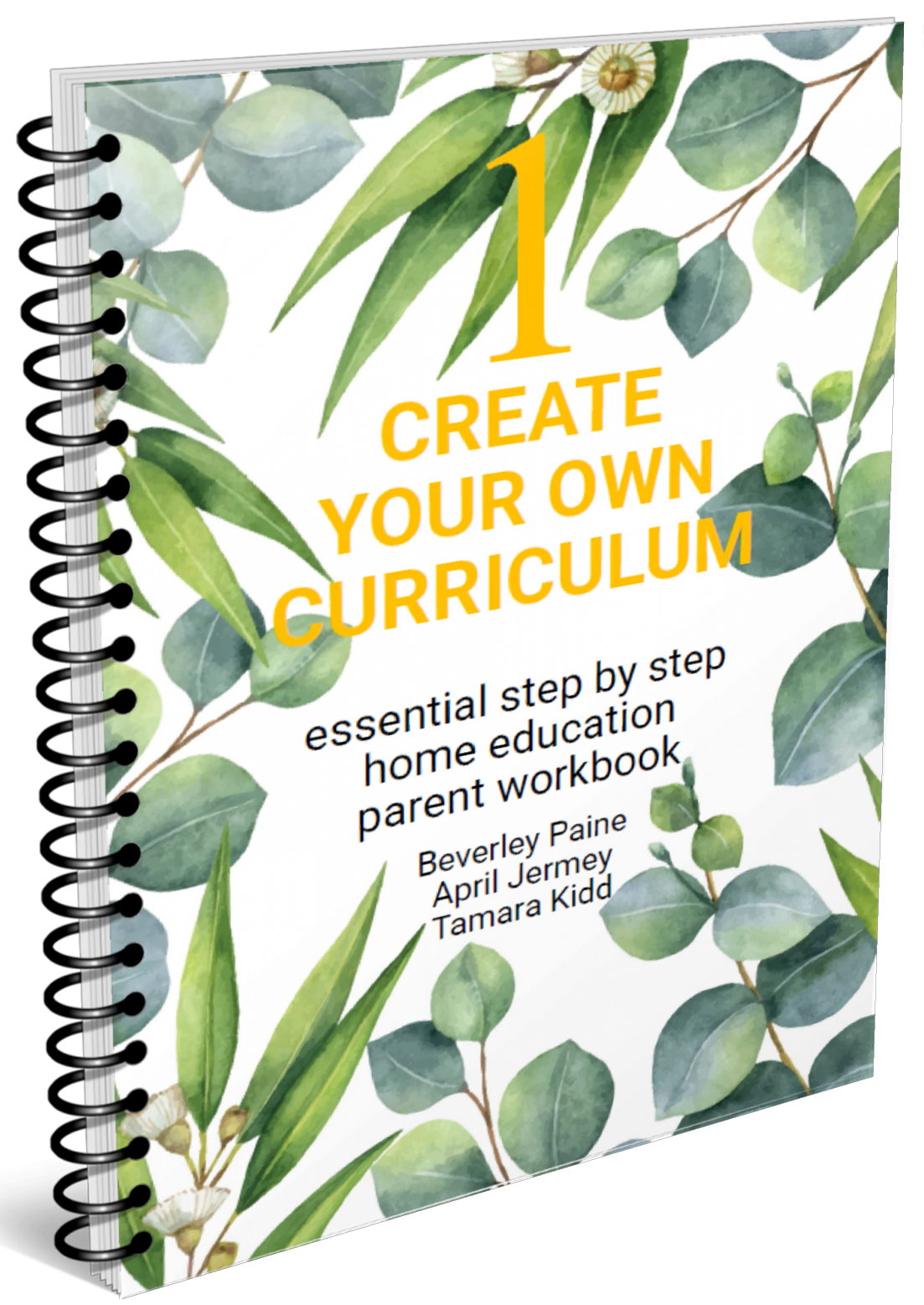
Comprehensive 3 workbook 'how to home ed' course
covering the essential skills you need
successfully home educate your children
|
|
Welcome to the World of Home Education
and Learning without School!
We began educating our children in 1985, when our eldest was five. In truth, we had helped them learn what they need to learn since they were born. I am a passionate advocate of allowing children to learn unhindered by unnecessary stress and competition, meeting developmental needs in ways that suit their individual learning styles and preferences. Ours was a homeschooling, unschooling and natural learning family! There are hundreds of articles on this site to help you build confidence as a home educating family. We hope that your home educating adventure is as satisfying as ours was! Beverley Paine
3 ESSENTIAL STEP BY STEP GUIDES
Let experienced home educators Beverley, Tamara and April walk you through HOW to create a learning plan that builds on solid foundations that works for YOUR family AND ticks all the boxes for home educaton registration!
|
Tap into Beverley's
experience
through her books
"Your books, your blogs helped me beyond words... they helped me to find comfort in knowing it is ok to choose exactly what is best for my family." Nisha
"Your books and information are mind blowing and already I am feeling good about this new experience." Diane
"Your guidance, understanding, support & words of wisdom changed our lives." Leslie
"I feel specially inspired by Beverley's words and, the more I read her comments, the more inspired I feel, since my need for support, respect for different parenting styles, and information are fully met." Marijo
|
 |
|

The information on this website is of a general nature only and is not intended as personal or professional advice. This site merges and incorporates 'Homeschool Australia' and 'Unschool Australia'.
The Educating Parent acknowledges the Traditional Aboriginal and Torres Strait Islander Owners, the Custodians of Australia, and pay our respects to Elders past and present and extend that respect to Aboriginal and Torres Strait Islander people viewing this website.
Advertise on this site.




Home education is a legal alternative
to school education in Australia.
State and Territory governments are responsible
for regulating home education and have different
requirements, however home educating families
are able to develop curriculum and learning programs
to suit the individual needs of their children.

Without revenue from advertising
by educational suppliers and Google Ads
we could not continue to provide information
to home educators. Please support us by letting
our advertisers know that you found them on
The Educating Parent. Thanks!
|
 About
About
 Thank you for visiting!