|
How will I know if my children are learning?
by Beverley Paine, Jan 2015
Children are always learning - they can't help but learn! Just like when they were babies and toddlers, you can discover what they are learning by spending time with them and observing the growth in their understanding of the world. Observation as an assessment (known as `authentic assessment' in educational circles) acknowledges growth in understanding and skill level. Unlike standardized testing, it doesn't give a `snapshot' that attempts to quantify learning at one point in time. It is fluid and flexible and has no preconceived notions about what a child `should' be able to do. You canlook at the whole person and concentrate on what your child knows, instead of what your child does not know.
You will know by listening to them speak, by watching them play, just by being with them. You will know they are leaning at eight years of age the same way you knew they were learning at eighteen months. You will see them use their skills and knowledge. This does take some effort on the part of the parent. The information is not contained on a worksheet or within a report. It is not all neat and tidy, tied up with a grade. It's spread out over the course of the day while the children are living their lives. You have to be tuned into your child. This attentiveness will gradually reward you with a more orderly and cooperative household as you become attuned to the children's developing characters and personalities and can more easily match the educational program to their individual learning styles.
School children are trained to give the 'right' answer - this may not be the correct one, just the one the child thinks the teacher wants to hear or read at this point in time. In school children become answer-centred, learning is focused on knowing or being able to work out the 'right' answer. There is an important distinction between being focused on getting the right answer and knowing which questions to ask to help with the problem solving process. The bulk of work, and especially assessment strategies, are based around getting the correct answers. As children progress through schooling the successful students become adept at developing efficient answer-directed strategies, if only to complete the mind-numbing quantities of busy work they are given.
The stress related to this issue is great: children are less able to think laterally and creatively when pressed for time. More work is not the solution but is often employed to improve failing grades of 'slower' students. These same students, if given the opportunity, would enjoy time to figure things out, play around with ideas, experiment and have a go. But the pressure to perform, to quickly get the right answer so the class can move on, is always present.
Time is a crucial aspect of the creative process. Creativity underpins problem solving ability. Time, and a relatively stress-free space in which to think, is essential to learning.
"In 1840 Charles Darwin began to keep a diary on the activities of his first-born infant son, William. Darwin noted William's early reflexes, contrasting them with subsequently learned behaviours. He examined the child's sensory systems, noting for example that William gazed at a candle on his 9th day, attended to a brightly coloured tassel on his 49th day, and attempted to seize objects on his 132nd day. William's "higher senses", including memory, language, curiosity, and reasoning powers, were also surveyed. Countless parents had made such observations before, but Darwin was perhaps the first to publish his observations, as he did, thirty-seven years later in the second volume of the British journal Mind."
The Unschooled Mind: How Children Think and How Schools Should Teach by Howard Gardner
Darwin isn't the only scientist that meticulously recorded how his children grew. The field of child development, as well as many understandings in psychology, grew from the increasing trend at the turn of the twentieth century to write `baby biographies'. It was from his most detailed accounts of his children's growth that led Piaget to postulate his child development theories, upon which education and parenting heavily relied for many decades.
I kept records of my children's early years, as most parents do, because I didn't want to forget the awe and sense of wonder that I felt at each "milestone". My nostalgia-driven recordings, although nowhere near as meticulous as that of those great minds cited above, served to develop a habit that would offer an increasing level of confidence when I chose to turn my back on convention and educate my children at home. By recording my children's development through noting down their daily learning activities and outcomes I became increasingly convinced that educational success can be achieved in many different ways. And it on that rich collection of diaries, scrapbooks, and lists that much of my published writing has been based, allowing what was once a parental whim to become a professional passion.
A 'portfolio' is a carefully chosen collection of samples of work that represent your child's abilities and which reflect their knowledge, skills, beliefs, and talents. It provides a timeline and is a record of how and what they have accomplished as home educating students. It should also include considerable opportunity for self-reflection by the child about his or her learning process.
Portfolios help to track children's learning and can provide a great deal of reassurance that home educating is meeting the child's educational and developmental needs. As documentary evidence of completed learning they provide educational accountability, not only to the registering authority, but also to the child. As historic documents, our home educating records are also proof that we did conscientiously and to the best of our ability educate our children! In the teenage years portfolios increasingly become important as aides for providing information for applications for tertiary education and employment.
Your child's portfolios could include the following:
- personal reflections on the child's learning in one or all areas, and could provide insight the child's learning style, as well as any difficulty the child had with any aspect of their learning, what help was needed and why, how it was provided, further possible explorations;
- samples of learning, including samples linking learning across all areas of development - these could include photos, documented experiences, anecdotes, reflections, objective statements;
- the child's proposed learning plan, list of resources used, etc;
- documentation of completed work and any evaluative comments - usually concise and brief, containing summaries and pertinent information only (could be similar in nature to a traditional report card);
- any certificates or other acknowledgments of achievement, letters of congratulation, competition results, letters from tutors, etc;
- work experience/volunteer portfolio - tracks hours, job specifications and duties performed, journal of feelings and thoughts, reflections, activities, events, roles, can include feedback from others, clippings and information, thank you notes, references, etc. Focus on attitudes as well as skills;
- the results of any tests or examinations, including learning style identification quizzes, IQ tests, etc;
- home education registration documents

Was this article helpful? Was it worth $1.00 to you?
Your gift of $1 or more helps to keep this site operating
offering encouragement
and reassurance to families
wanting
better outcomes for their children.
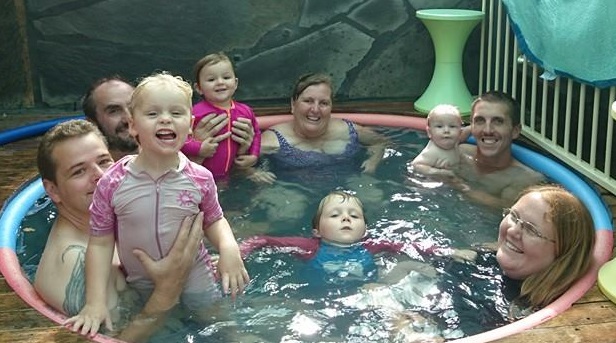
Beverley Paine with her children, and their home educated children, relaxing at home.
Together with the support of my family, my aim is to help parents educate their children in stress-free, nurturing environments. In addition to building and maintaing this website, I continue to create and manage local and national home educating networks, help to organise conferences and camps, as well as write for, edit and produce newsletters, resource directories and magazines. I am an active supporter of national, state, regional and local home education groups.
"You've been an inspiration to me, I love the way
you really listen to people." Vanessa
"Whenever I read your writing I always come away
with increased confidence in my ability to provide and
share a wonderful learning journey with my family!" Davina
"Your guidance, understanding, support and words of
wisdom changed our lives. We now offer support and
organise many homeschooling events for others." Lesley
"Thank you once again for your prompt and friendly service.
I am convinced that your books are going to add
quality and peace of mind to my journey of teaching my kids
at home! Just from studying your website, until almost
2am
in the morning, I 've been encouraged!" Louisa
"Thank you for all your many,many reassuring words
over many, many years. You probably don't know exactly how
valuable you are to the Australian Home Education community.
I've been reading your stuff for maybe 8 years or more now.
And I'm very grateful." Gythaa


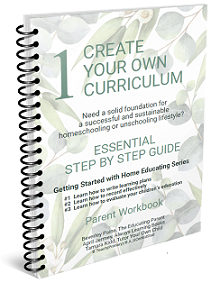
Want to learn how to write your own education plans
to suit your unique children's individual learning needs?
Or you are looking for quality curriculum and teaching tips...
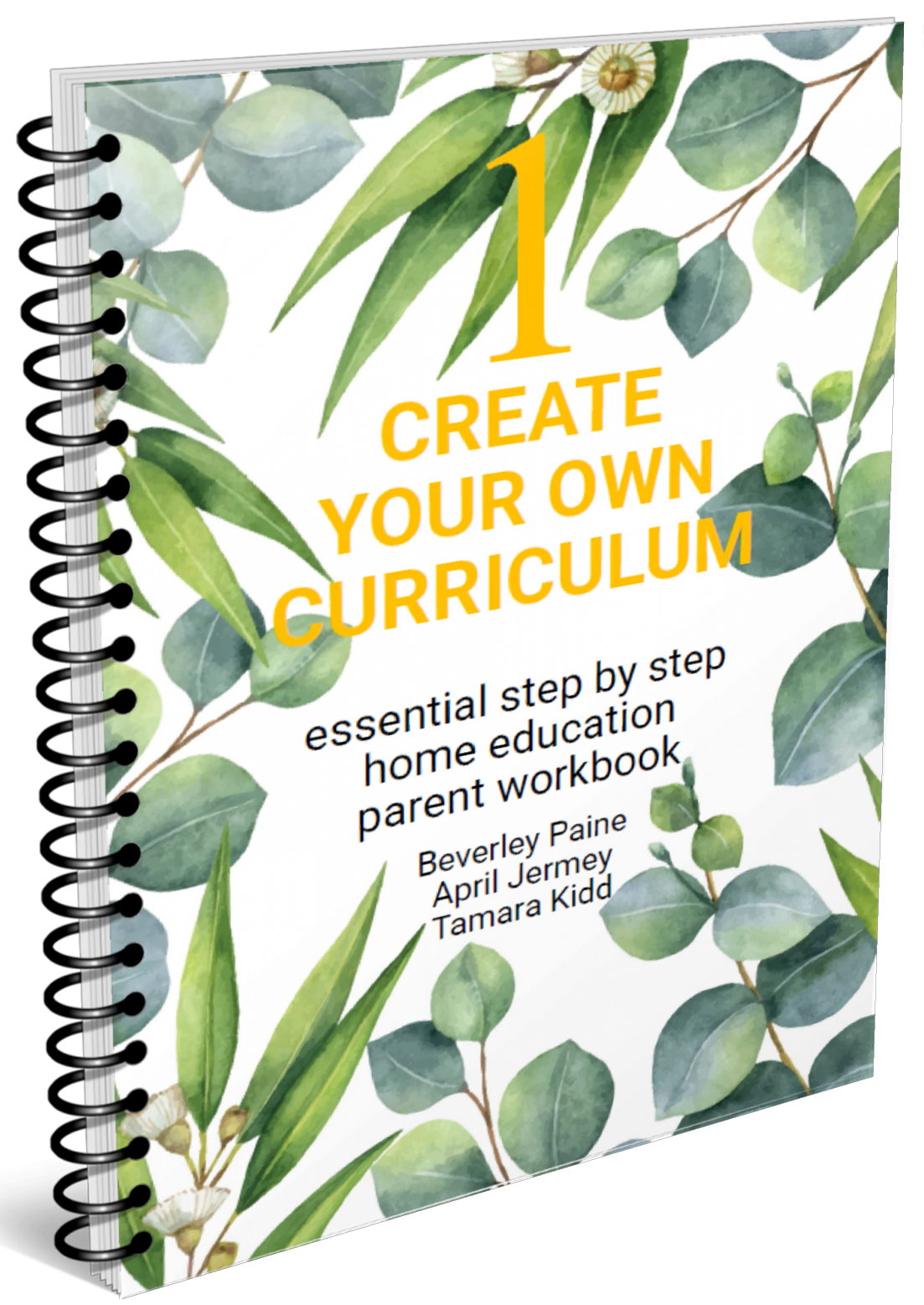
Comprehensive 3 workbook 'how to home ed' course
covering the essential skills you need
successfully home educate your children
|
|
Welcome to the World of Home Education
and Learning without School!
We began educating our children in 1985, when our eldest was five. In truth, we had helped them learn what they need to learn since they were born. I am a passionate advocate of allowing children to learn unhindered by unnecessary stress and competition, meeting developmental needs in ways that suit their individual learning styles and preferences. Ours was a homeschooling, unschooling and natural learning family! There are hundreds of articles on this site to help you build confidence as a home educating family. We hope that your home educating adventure is as satisfying as ours was! Beverley Paine
3 ESSENTIAL STEP BY STEP GUIDES
Let experienced home educators Beverley, Tamara and April walk you through HOW to create a learning plan that builds on solid foundations that works for YOUR family AND ticks all the boxes for home educaton registration!
|
Tap into Beverley's
experience
through her books
"Your books, your blogs helped me beyond words... they helped me to find comfort in knowing it is ok to choose exactly what is best for my family." Nisha
"Your books and information are mind blowing and already I am feeling good about this new experience." Diane
"Your guidance, understanding, support & words of wisdom changed our lives." Leslie
"I feel specially inspired by Beverley's words and, the more I read her comments, the more inspired I feel, since my need for support, respect for different parenting styles, and information are fully met." Marijo
|
 |
|

The information on this website is of a general nature only and is not intended as personal or professional advice. This site merges and incorporates 'Homeschool Australia' and 'Unschool Australia'.
The Educating Parent acknowledges the Traditional Aboriginal and Torres Strait Islander Owners, the Custodians of Australia, and pay our respects to Elders past and present and extend that respect to Aboriginal and Torres Strait Islander people viewing this website.
Advertise on this site.



Home education is a legal alternative
to school education in Australia.
State and Territory governments are responsible
for regulating home education and have different
requirements, however home educating families
are able to develop curriculum and learning programs
to suit the individual needs of their children.

Without revenue from advertising
by educational suppliers and Google Ads
we could not continue to provide information
to home educators. Please support us by letting
our advertisers know that you found them on
The Educating Parent. Thanks!
|
 About
About
 Thank you for visiting!