|
Challenging Assumptions in Education
"If our earth is to survive, we need to take responsibility for what we do. Taking control of our own education is the first step." Heidi Priesnitz
This is how I felt - driven by a need to fix the ailing planet - to save the plants and tress and to promote world peace. I asked, as most teens do, where to start? The answer lay with education, but more than that, with parenting. Even as a teen I knew that the two were somehow connected, yet it wasn't until my daughter had turned five that I realised how, or why.
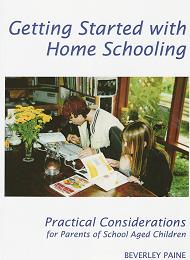
Wendy Priesnitz, in her book, Challenging Assumptions , invites us to see children and childhood differently from how our culture usually defines them. The book opens strongly with Wendy's assertive claim that our education system was designed to fight and win political wars and urges us to "find new ways of working together rather than fighting with each other" and immediately raises the entrenched competitiveness in schools, from spelling bees, organised sports, fundraising efforts, to the insidious practice of comparative grading.
Despite decades of reform schools still operate in much the same way as they did a century ago. Propelled by "a desire to make the world a better place" and disillusioned with her education and teaching experiences, Wendy decided that her daughters "would group up unfettered by many of the assumptions people make about children's subordinate place in the world." I can personally relate to Wendy's ensuing journey, where I questioned all of the assumptions about life I'd taken for granted. Like Wendy, I find myself compelled by an inner voice to use my "skills and talents to create change". But whereas Wendy carefully thought out and planned her children's education, where schooling was "replaced with life-based, self-directed exploration that made the world their classroom", I stumbled along, learning lessons the hard way, by trial and error, and discovered this empowering approach almost by accident.
However, educating her children according to her philosophical beliefs wasn't enough for Wendy. Her aim was to change the world for the better and she questioned if her small personal actions were enough. Wendy became leader of the Green Party of Canada, believing that the "personal is political", that "what we do in our everyday lives affects the lives of all, indeed, the life of the planet."
Back when I had only just begun my homeschooling odyssey Wendy had already discovered that "only when we have truly rejected the top-down model of organising our lives and our organisations, will we be able to concentrate of building sustainable communities ... from these communities will rise political action ... that can provide solutions." It is this optimistic tone that permeates Wendy's writing that encourages me. So many books about homeschooling lapse into lengthy diatribes against the many faults within the school system. It's too easy to be angry, to slide into reactive homeschooling, and I've found it just as to easy to founder. Challenging Assumptions gives us the ethics and philosophical reasons to underpin successful homeschooling life. Wendy insists that the solution to many of the problems facing humanity can be found by challenging the assumptions about how we treat children. This isn't a comfortable process, but it's essential.
Wendy begins her book with the bold claim that "we need do nothing less than dismantle our public education systems and start over from scratch" - "Children have become the justification for the school industry - it's products. In that way, schools need children more than children need schools!" The reason so many educational reformists compare schools to factories is that education is an industry based on hierarchy and coercion - "even the most radical critics of the school system seem not to want to abandon the belief that children must be processed for a life as producers and consumers". Wendy sees the need to change the focus from 'education' to 'learning' - to "give up the hierarchial, coercive, industrial model of education - whether it looks like a public school, a charter school, a private school, or a home school. We must de-school society ... It impedes learning and enslaves children ... with a hodge-podge of information which is fragmented, decontextualised and trivialised."
Although Wendy writes with passion she is never aggressive and thus the book doesn't slip into the 'us and them' paradigm. This book urges us to change the way we think, and thus change the world. True to her grass roots origin, Wendy believes that "change on the scale that is required happens one person at a time." As someone who has spent 15 years promoting home education as a successful alternative to school based education I find her words heartening and nourishing.
Like Wendy, I shy away from describing what I and my children do as 'education': education, Wendy says, is "the process of manipulating children to learn." She discards the notion that learning has to be fun: we learn "because what we learn allows us to to accomplish something. And that accomplishment is sufficient enough reward." For learning to be retained it has to be immediately meaningful to the learner.
Much of what I'm reading is familiar territory to me, but could be liberating someone not used to this way of thinking, perhaps a reluctant relative in need of persuasion of the effectiveness of natural learning...
Challenging Assumptions dismantles, using clear articulate argument, following widely accepted beliefs: that education is something that is done to you; that knowledge belongs to a cult of experts; that others know best what children should learn; that schools provide effective training and have a noble purpose. If you have ever doubted your ability to rear intelligent successful young people at home and in the community this book is for you.
back to Book Review

Was this article helpful? Was it worth $1.00 to you?
Your gift of $1 or more helps to keep this site operating
offering encouragement
and reassurance to families
wanting
better outcomes for their children.
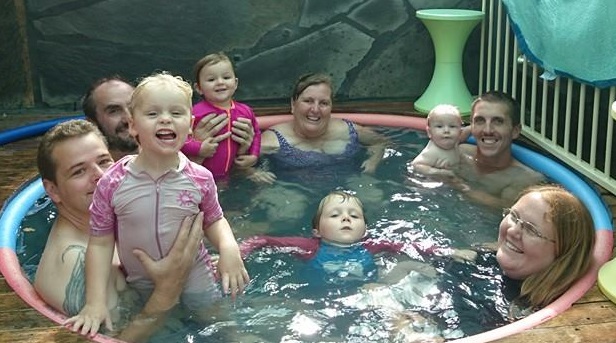
Beverley Paine with her children, and their home educated children, relaxing at home.
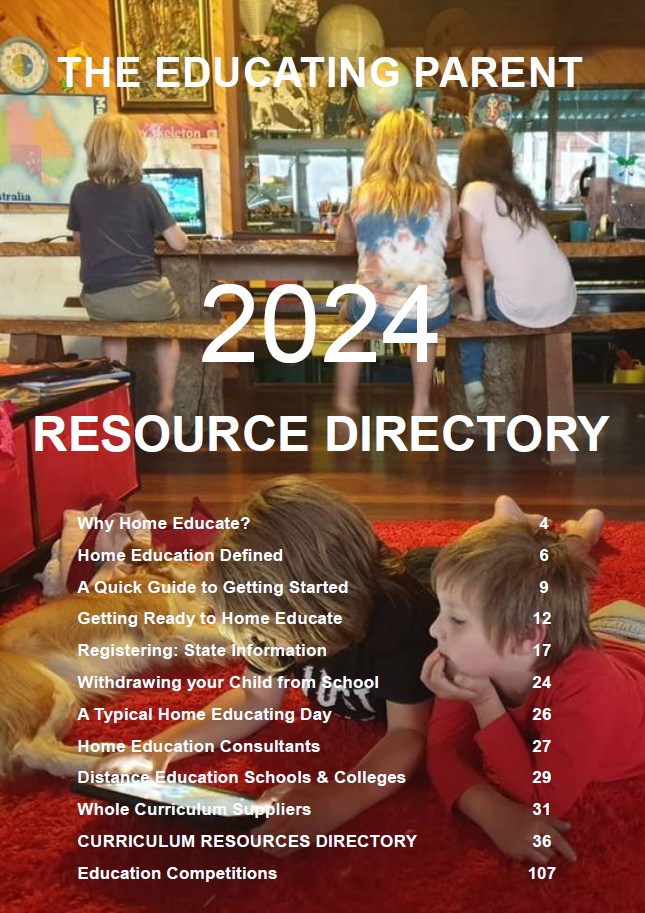
Together with the support of my family, my aim is to help parents educate their children in stress-free, nurturing environments. In addition to building and maintaing this website, I continue to create and manage local and national home educating networks, help to organise conferences and camps, as well as write for, edit and produce newsletters, resource directories and magazines. I am an active supporter of national, state, regional and local home education groups.
"You've been an inspiration to me, I love the way
you really listen to people." Vanessa
"Whenever I read your writing I always come away
with increased confidence in my ability to provide and
share a wonderful learning journey with my family!" Davina
"Your guidance, understanding, support and words of
wisdom changed our lives. We now offer support and
organise many homeschooling events for others." Lesley
"Thank you once again for your prompt and friendly service.
I am convinced that your books are going to add
quality and peace of mind to my journey of teaching my kids
at home! Just from studying your website, until almost
2am
in the morning, I 've been encouraged!" Louisa
"Thank you for all your many,many reassuring words
over many, many years. You probably don't know exactly how
valuable you are to the Australian Home Education community.
I've been reading your stuff for maybe 8 years or more now.
And I'm very grateful." Gythaa

CLICK HERE
if you want to learn
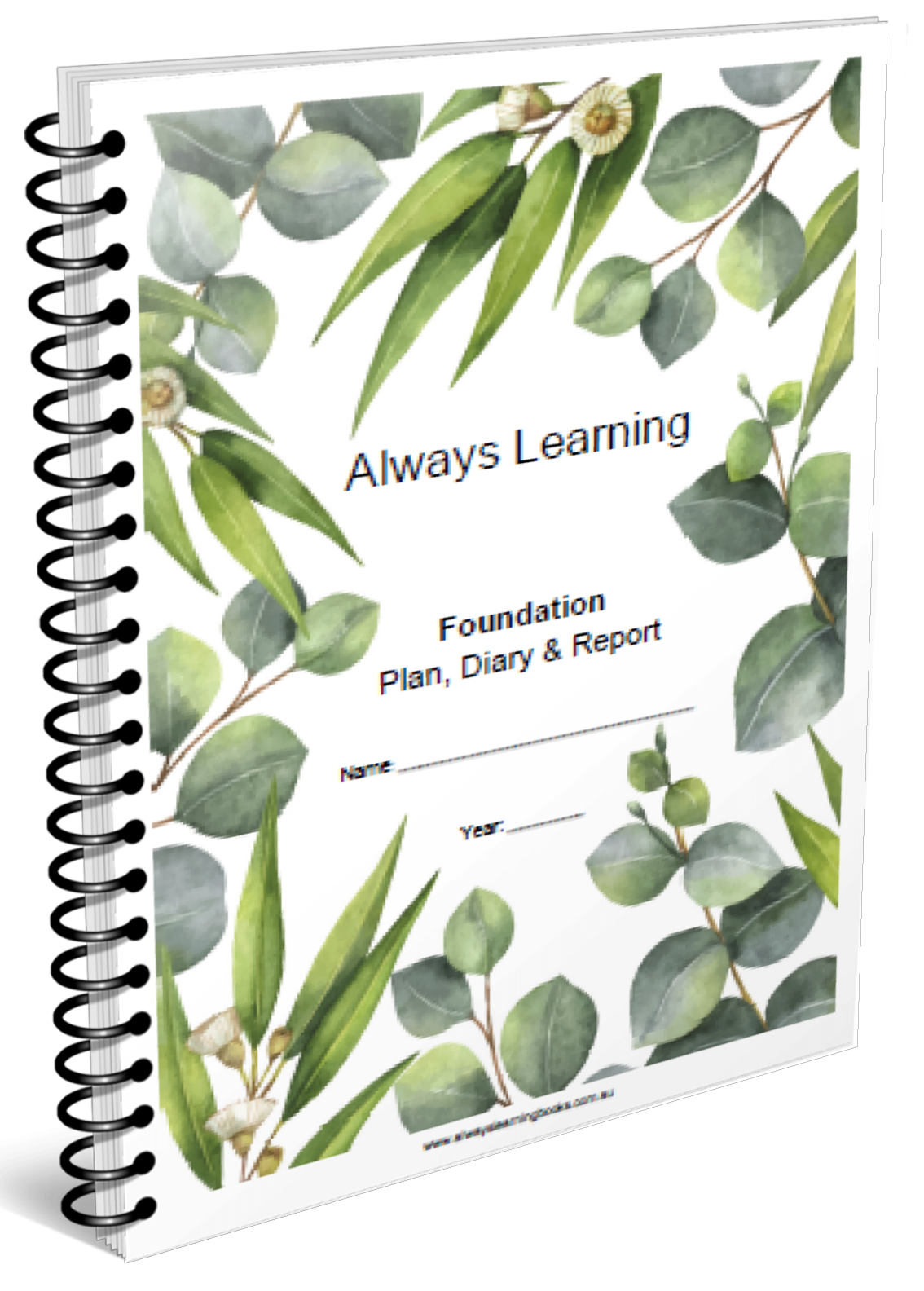
how to write your own education plans
to suit
your unique children's
individual learning needs?
Or you are looking for quality curriculum and teaching tips...
|
|
Welcome to the World of Home Education
and Learning without School!
We began educating our children in 1985, when our eldest was five. In truth, we had helped them learn what they need to learn since they were born. I am a passionate advocate of allowing children to learn unhindered by unnecessary stress and competition, meeting developmental needs in ways that suit their individual learning styles and preferences. Ours was a homeschooling, unschooling and natural learning family! There are hundreds of articles on this site to help you build confidence as a home educating family. We hope that your home educating adventure is as satisfying as ours was! Beverley Paine
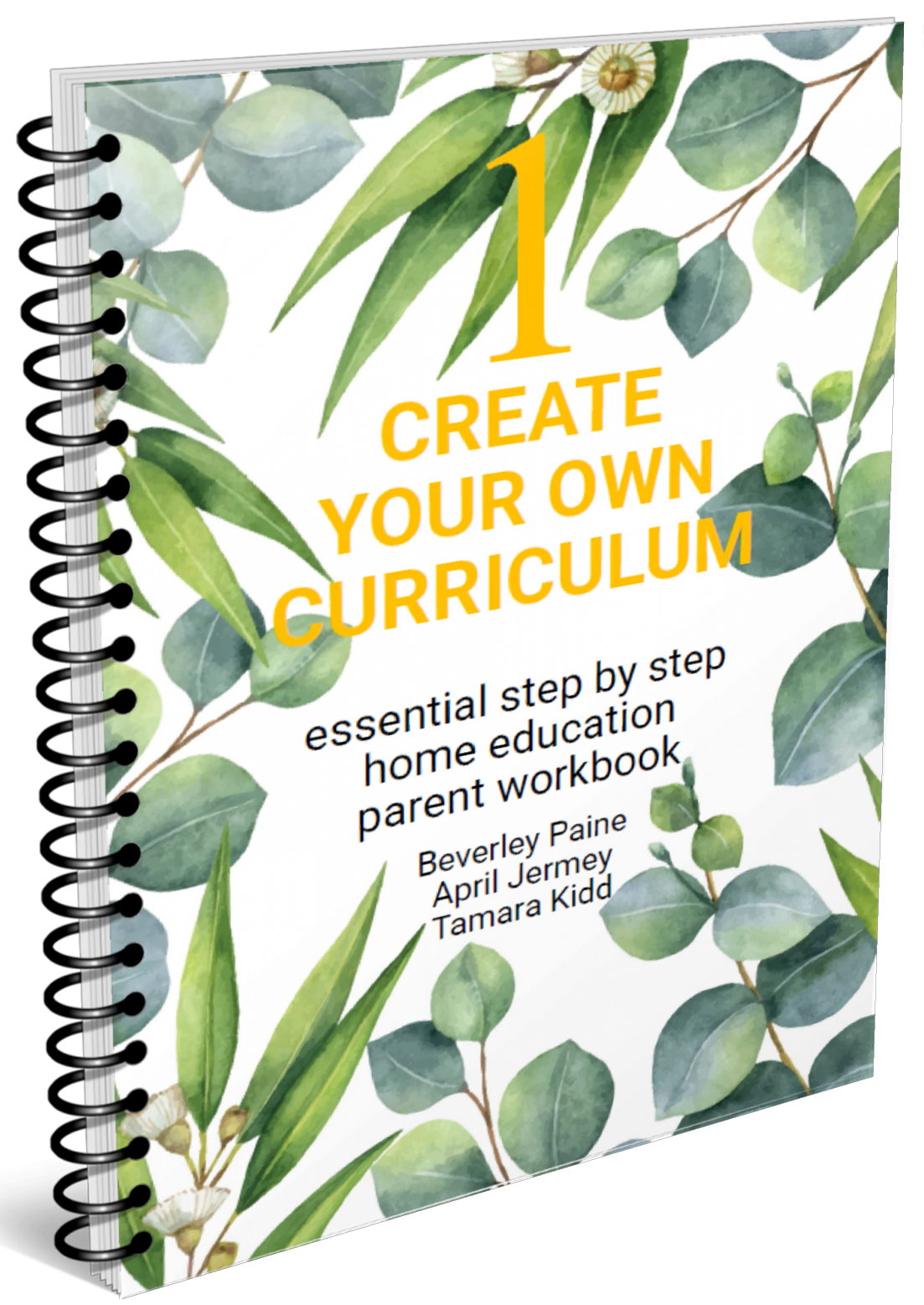
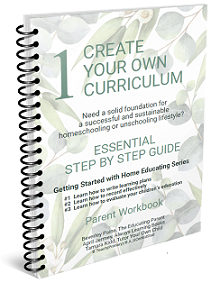
3 ESSENTIAL STEP BY STEP GUIDES
Let experienced home educators Beverley, Tamara and April walk you through HOW to create a learning plan that builds on solid foundations that works for YOUR family AND ticks all the boxes for home educaton registration!
|
Tap into Beverley's
experience
through her books
"Your books, your blogs helped me beyond words... they helped me to find comfort in knowing it is ok to choose exactly what is best for my family." Nisha
"Your books and information are mind blowing and already I am feeling good about this new experience." Diane
"Your guidance, understanding, support & words of wisdom changed our lives." Leslie
"I feel specially inspired by Beverley's words and, the more I read her comments, the more inspired I feel, since my need for support, respect for different parenting styles, and information are fully met." Marijo
|
 |
|

The information on this website is of a general nature only and is not intended as personal or professional advice. This site merges and incorporates 'Homeschool Australia' and 'Unschool Australia'.
The Educating Parent acknowledges the Traditional Aboriginal and Torres Strait Islander Owners, the Custodians of Australia, and pay our respects to Elders past and present and extend that respect to Aboriginal and Torres Strait Islander people viewing this website.
Advertise on this site.



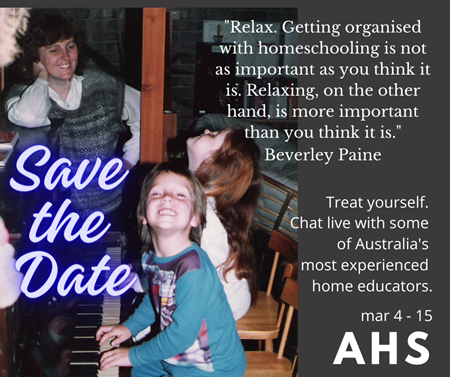
Australia's premier online annual conferences, lifetime access to video and audio recordings, freebies, notes and associated resource guides.
EVERY SUMMIT IS UNIQUE!
$29 each  2023 2023  2022 2021 2022 2021
$25 each 2020 2019 2017
"Biggest and best Aussie homeschool event of the year!"
Home education is a legal alternative
to school education in Australia.
State and Territory governments are responsible
for regulating home education and have different
requirements, however home educating families
are able to develop curriculum and learning programs
to suit the individual needs of their children.

Without revenue from advertising
by educational suppliers and Google Ads
we could not continue to provide information
to home educators. Please support us by letting
our advertisers know that you found them on
The Educating Parent. Thanks!
|
 About
About

 Thank you for visiting!