|
A Three Year Curriculum for a Teenager
by Beverley Paine
A few years ago I brainstormed a list of objectives I'd like my son, Roger, to achieve in his early adolescence. As time went by I realised these reflected a longer growth and development time frame, and added some more objectives as the need arose. It forms a pretty basic curriculum, covering many life skills. To this we added interest generated activities, some that he came up with and ones we developed as a family. These included solar technology, computer upgrade and repairs, modelling using LEGO, medieval weapons, astronomy, circus skills, South Australian historyand many others. A highschool equivalent curriculum for home education doesn't have to follow what schools do very closely. Covering the basics is essential and can be worked out using common sense. I did use the National Curriculum Guidelines in places to help me develop this, and to ensure that I was covering similar material and skills over time.
- Personal Computer Repairs (ICS certificate course)
- Basic First Aid, including CPR
- Nutrition
- what is a good diet for me?
- why do I eat the food I do?
- how healthy is "healthy" food?
- where does my food come from?
- additives to foods - how are foods processed?
- what's my opinion on genetic engineering and food?
- Getting Involved in Community Organisations
- Trees For Life
- Landcare
- Local Exchange Trading System
- Meals on Wheels (Senior Citizens)
- Sport and Recreation
- Wildlife/Conservation
- Overseas Aid/ Human Rights
- Health Promotion
- Youth Issues
- Arts
- Visit Local Council, Parliament
- understand meeting formats and processes, decision making, planning and development locally
- effectiveness, how and why of rules
- how does this all affect me?
- do kids have any power, rights, how do they assert them if they do?
- Understanding of different cultural practices in Australia
- especially related to current affairs
- ways in which different Australians practice and celebrate cultural heritage
- look into historical causes of wars, etc, around the world changing borders, politics, greed, religious, resources
- form some opinions based on fact about Australia's multicultural identity, population control, immigration policies
- Positive thinking practice
- Personal empowerment and assertiveness Regular exercise program, recreation/ sport
- Conflict resolution strategies
- Recognising and managing own stress levels and understanding causative factors
- Camping and survival skills - bushcraft
- Cooking for different occasions
- different groups of people
- balanced, appropriate menus
- preparation, clearing away
- budgeting and shopping
- Maintenance of clothes
- basic sewing skills, laundry, shoe care
- Telephone skills
- answering/making (all types of calls)
- emergency calls
- information accessing
- using the White and Yellow pages
- Staying safe in the community
- peer pressure to conform
- unwanted attention
- invasion of privacy
- safety in the home and environment
- Media awareness
- reading the "bottom line" - how what I am watching, reading, listening to how the media is trying to sell me an idea or message, the techniques used to "sell" ideas , opinions and products (mass manipulation and control through technology and images, small bites of information repeated, etc)
- what do I want, what do I need - really?
- Using multi-media effectively and the Internet
- Computer programming and game making
- Make a useful piece of furniture, a kid's toy, etc.
- using wood/metal/plastics/fibre
- safe use of tools
- care of tools, including power tools
- Experiment with clay - raku firing (figures, sculpture, wind chimes, wall plaques, plates, pots, tiles)
- How has the environment I live in changed in recent past, 50 years, 150 years, 1000 years, 10,000 years, 500 million years?
- what do I think about this?
- how is this environment different from others I know (visit and compare)?
- what is it like in other countries
- how does landscape (and climate) affect how people use the land
- how are "borders" of countries determined
- is colonisation a good/bad thing - is it happening in the world now, where, who were the first colonisers
- what other species of life "colonise" and what effect does this have on the local flora and fauna
- Gardening
- use of plants (food, building, fibre, fuel, aesthetics, etc)
- wild foods, traditional uses across cultures (Aboriginal, herbal remedies)
- use of plants and indigenous plants in the area
- conservation (why, how, where, effectiveness, responsibility)
- grow own food, including harvest, care, composting, chemicals, treatment
- become a Trees For Life grower
- Start recycling and reduce consumption
- Do some simple science experiments in biology, physics, chemistry
- visit Investigator Science Centre, Museum, Natural History Centre
- start a natural history collection - identify and label, sort and classify
- Make something or things to sell at a LETS market stall
- organise your own stall at a market
- Become involved in writing for local publications
- newspapers, local newsletters, magazines, youth publications
- letters to the editor
- responses to articles
- what is good and bad in the area, how things could be better for kids
- creative writing - own poems, short stories, illustrations, puzzles, cartoons, etc
- Begin car maintenance, on own car
- wheel changing, oil and water, basic repairs, trouble shooting, pull bits of engine, car to pieces and rebuild, use of tools, including power tools, visit a mechanics shop, use of petrol/gas bowser, car cleaning and care
- Learn how to drive, and apply for learning permit.
- Open a bank account
- Organise home weekly budget for family or yearly one for self
- Write personal and business letters
- Filling our all sorts of forms
- Personal journal on a regular basis
- Keep own calendar
- Demonstrate (and practice) proficiency in basic maths functions (plus, minus, divide, multiply) to four digits, including decimals
- become familiar with databases and spreadsheet applications.
- times table, fractions and decimals
- using calculator
- be able to estimate with reasonable accuracy
- practice in real life mental calculations (shopping, cooking, making things)
- accurate conversion in measurements (weight, capacity, length - e.g. metres to kilometres)
- use spacial terms (geometric) to describe things (spherical, angle, parallel, etc)
- be able to draw to scale
- read charts, graphs (weather, statistics, in media)
- read and interpret timetables
- read maps, flow charts
- Devise ways to manage own time - stay on task, finish things, avoid distractions, making and meeting contracts and agreements to do things in a time frame (finding out what it is I really want to do)

Was this article helpful? Was it worth $1.00 to you?
Your gift of $1 or more helps to keep this site operating
offering encouragement
and reassurance to families
wanting
better outcomes for their children.
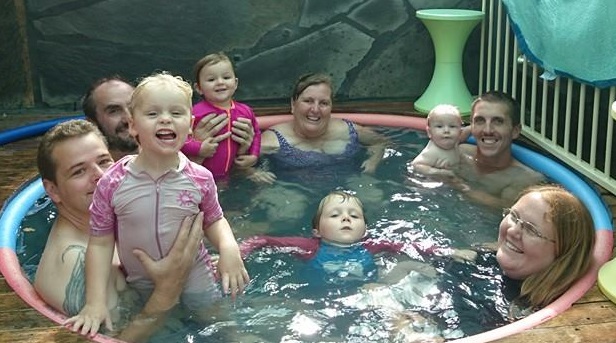
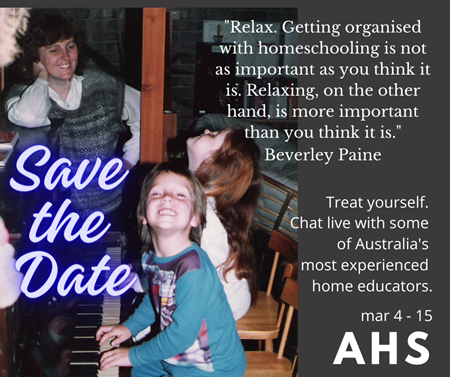
Beverley Paine with her children, and their home educated children, relaxing at home.
Together with the support of my family, my aim is to help parents educate their children in stress-free, nurturing environments. In addition to building and maintaing this website, I continue to create and manage local and national home educating networks, help to organise conferences and camps, as well as write for, edit and produce newsletters, resource directories and magazines. I am an active supporter of national, state, regional and local home education groups.
"You've been an inspiration to me, I love the way
you really listen to people." Vanessa
"Whenever I read your writing I always come away
with increased confidence in my ability to provide and
share a wonderful learning journey with my family!" Davina
"Your guidance, understanding, support and words of
wisdom changed our lives. We now offer support and
organise many homeschooling events for others." Lesley
"Thank you once again for your prompt and friendly service.
I am convinced that your books are going to add
quality and peace of mind to my journey of teaching my kids
at home! Just from studying your website, until almost
2am
in the morning, I 've been encouraged!" Louisa
"Thank you for all your many,many reassuring words
over many, many years. You probably don't know exactly how
valuable you are to the Australian Home Education community.
I've been reading your stuff for maybe 8 years or more now.
And I'm very grateful." Gythaa

CLICK HERE
if you want to learn
how to write your own education plans
to suit
your unique children's
individual learning needs?
Or you are looking for quality curriculum and teaching tips...
|
|
Welcome to the World of Home Education
and Learning without School!
We began educating our children in 1985, when our eldest was five. In truth, we had helped them learn what they need to learn since they were born. I am a passionate advocate of allowing children to learn unhindered by unnecessary stress and competition, meeting developmental needs in ways that suit their individual learning styles and preferences. Ours was a homeschooling, unschooling and natural learning family! There are hundreds of articles on this site to help you build confidence as a home educating family. We hope that your home educating adventure is as satisfying as ours was! Beverley Paine
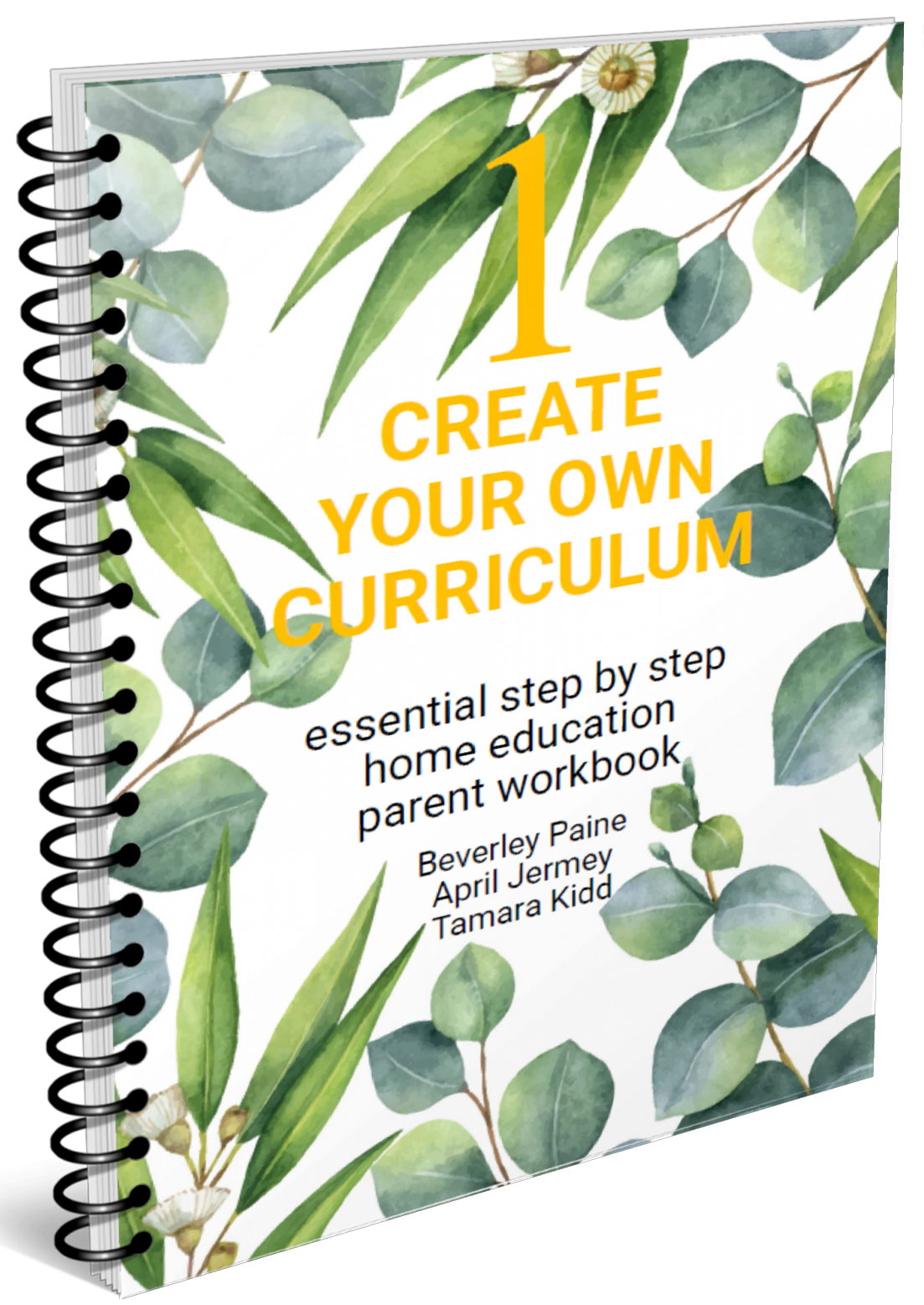
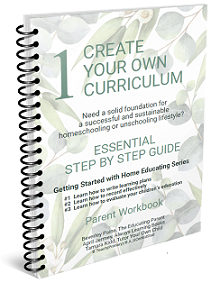
3 ESSENTIAL STEP BY STEP GUIDES
Let experienced home educators Beverley, Tamara and April walk you through HOW to create a learning plan that builds on solid foundations that works for YOUR family AND ticks all the boxes for home educaton registration!
|
Tap into Beverley's
experience
through her books
"Your books, your blogs helped me beyond words... they helped me to find comfort in knowing it is ok to choose exactly what is best for my family." Nisha
"Your books and information are mind blowing and already I am feeling good about this new experience." Diane
"Your guidance, understanding, support & words of wisdom changed our lives." Leslie
"I feel specially inspired by Beverley's words and, the more I read her comments, the more inspired I feel, since my need for support, respect for different parenting styles, and information are fully met." Marijo
|
 |
|

The information on this website is of a general nature only and is not intended as personal or professional advice. This site merges and incorporates 'Homeschool Australia' and 'Unschool Australia'.
The Educating Parent acknowledges the Traditional Aboriginal and Torres Strait Islander Owners, the Custodians of Australia, and pay our respects to Elders past and present and extend that respect to Aboriginal and Torres Strait Islander people viewing this website.
Advertise on this site.




Australia's premier online annual conferences, lifetime access to video and audio recordings, freebies, notes and associated resource guides.
EVERY SUMMIT IS UNIQUE!
$29 each  2023 2023  2022 2021 2022 2021
$25 each 2020 2019 2017
"Biggest and best Aussie homeschool event of the year!"
Home education is a legal alternative
to school education in Australia.
State and Territory governments are responsible
for regulating home education and have different
requirements, however home educating families
are able to develop curriculum and learning programs
to suit the individual needs of their children.

Without revenue from advertising
by educational suppliers and Google Ads
we could not continue to provide information
to home educators. Please support us by letting
our advertisers know that you found them on
The Educating Parent. Thanks!
|
 About
About

 Thank you for visiting!