|
Recording Example: Detailed Day from Our Homeschooling Diary
© Beverley Paine
The following excerpts were taken from our homeschool diary July 28th 1998 and is presented as an example of evaluative and reflective commentary on what and how the children are learning. Although lengthy, this type of anecdotal recording reveals a great deal about the children's overall development. I did not record in this much detail every day but took what I called 'snapshots' every few weeks, or if something noteworthy, such as a milestone or insight, had occured.
Thomas came up with a good solution to a problem the boys found whilst studying their personal computer upgrade and repair course. The problem related to clients losing documentation that comes with the computer, and/or components. Thomas suggested that such documents could be stored, in plastic sleeves, taped to the inside of the computer case.
Last night Thomas invented a game using marbles and the carpet. The inspiration to do this came from glancing through "The Way To Play - Illustrated Encyclopedia of the games of the World", borrowed from the library. Using Paintbrush on the computer he drew a schematic diagram of the game, with the intention of including it in a set of rules. This morning he decided to make the game with my help, and to include a set of rules and making instructions using MS Publisher.
We decided to use some unbleached calico as a base, but it needed to be cut and sewn together in two pieces to make a perfect square. Thomas helped determine how to do this, and did the measuring and calculating. A square was chosen as the game required a number of circles to be drawn. Whilst making up the 'board', Thomas became familiar with the sewing machine, sewing one hemline. He learned what the terms 'seam' and 'hem' mean. We discussed the advantages of ironing the material to press the seam and to make the 'board' flat.
Next came drawing a set of circles on the calico with indelible markers. Thomas suggested using the ruler, making with a pencil a set distance out from the centre in a circular pattern, and then overdrawing with the texta. Circles alternated in green and brown, and resembled a target, with inner circles having small diameters to make the game harder. On each corner a we drew a different coloured square to represent the home base. Thomas labelled each circle with the point value, correcting errors using white out.
After making the 'board' Thomas started the computer and I typed the instructions and rules as dictated by him, discussing how to word them as we went. Several corrections and alterations were made. Thomas then incorporated a revised diagram from Paintbrush and a border.
We then played the game with four players, trying out the board and the new set of rules. Omissions were noted, and included in the revision. The game took all morning to make and involved introduction and practice of a variety of skills.
Searching for a particular computer game Thomas wants to buy, he 'scanned' the whole 'Computer Market' magazine, selecting out the word 'Diablo' in the text and marking the pages. He then asked me to read the surrounding text, and we talked about the merits of the various ways he can purchase the game. I read aloud from the Morris Gleitzman 'Worry Warts', finishing the book, and Thomas began reading the first chapter of 'Frog and Toad All Year' by Arnold Lobel to me. Other activities included sorting and playing with LEGO, playing computer games, and playing the piano.
The day was rainy with rough weather so we stayed inside all day. When putting his chickens away at 5pm Thomas found an echidna inside the chook house. Roger helped to remove it to a more suitable spot where it could find termites. It was very difficult to dislodge it from the hole it was digging with its powerful claws and legs. We discussed whether it was a nocturnal animal, and the fact that echidnas are one of only two monotremes in the world.
After dinner we played poker, then from reading 'New Scientist' a question was raised about if it were possible to view the Atlantic and Pacific Oceans from anywhere except space. Mountains on Costa Rica and Panama were excluded, as were peninsulas on Antarctica , and Cape Horn selected as the only place. This involved searching through the Atlas and looking at the globe and working out how far the horizon is away at varying heights. April and Roger determined that the Caribbean Sea was not the Atlantic , as some answers in 'New Scientist' had concluded.

Was this article helpful? Was it worth $1.00 to you?
Your gift of $1 or more helps to keep this site operating
offering encouragement
and reassurance to families
wanting
better outcomes for their children.
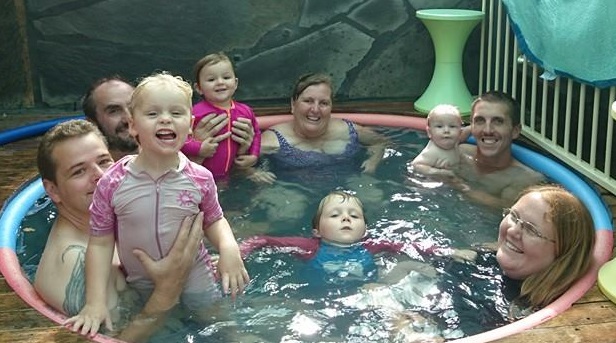
Beverley Paine with her children, and their home educated children, relaxing at home.
Together with the support of my family, my aim is to help parents educate their children in stress-free, nurturing environments. In addition to building and maintaing this website, I continue to create and manage local and national home educating networks, help to organise conferences and camps, as well as write for, edit and produce newsletters, resource directories and magazines. I am an active supporter of national, state, regional and local home education groups.
"You've been an inspiration to me, I love the way
you really listen to people." Vanessa
"Whenever I read your writing I always come away
with increased confidence in my ability to provide and
share a wonderful learning journey with my family!" Davina
"Your guidance, understanding, support and words of
wisdom changed our lives. We now offer support and
organise many homeschooling events for others." Lesley
"Thank you once again for your prompt and friendly service.
I am convinced that your books are going to add
quality and peace of mind to my journey of teaching my kids
at home! Just from studying your website, until almost
2am
in the morning, I 've been encouraged!" Louisa
"Thank you for all your many,many reassuring words
over many, many years. You probably don't know exactly how
valuable you are to the Australian Home Education community.
I've been reading your stuff for maybe 8 years or more now.
And I'm very grateful." Gythaa


Want to learn how to write your own education plans
to suit your unique children's individual learning needs?
Or you are looking for quality curriculum and teaching tips...
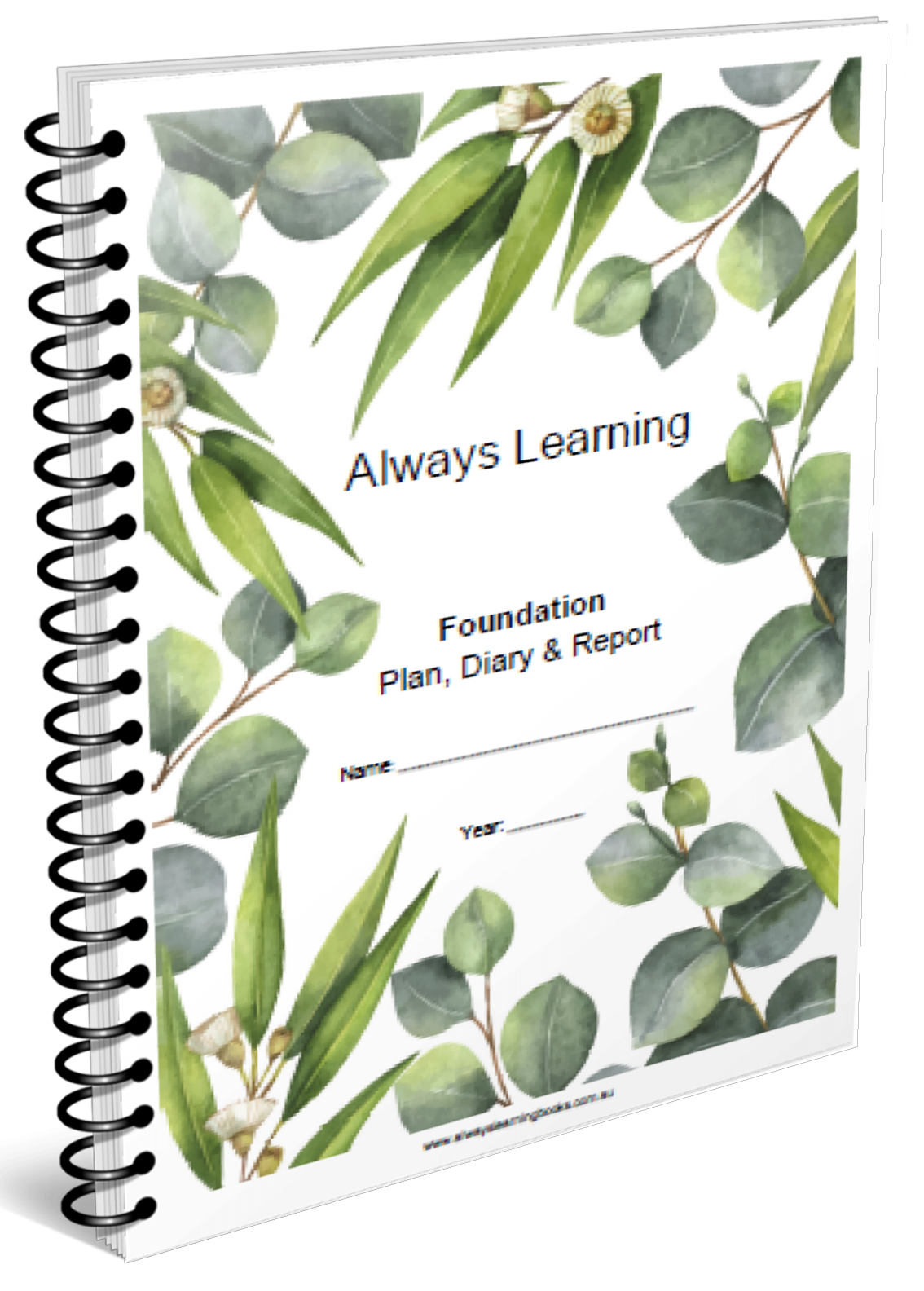
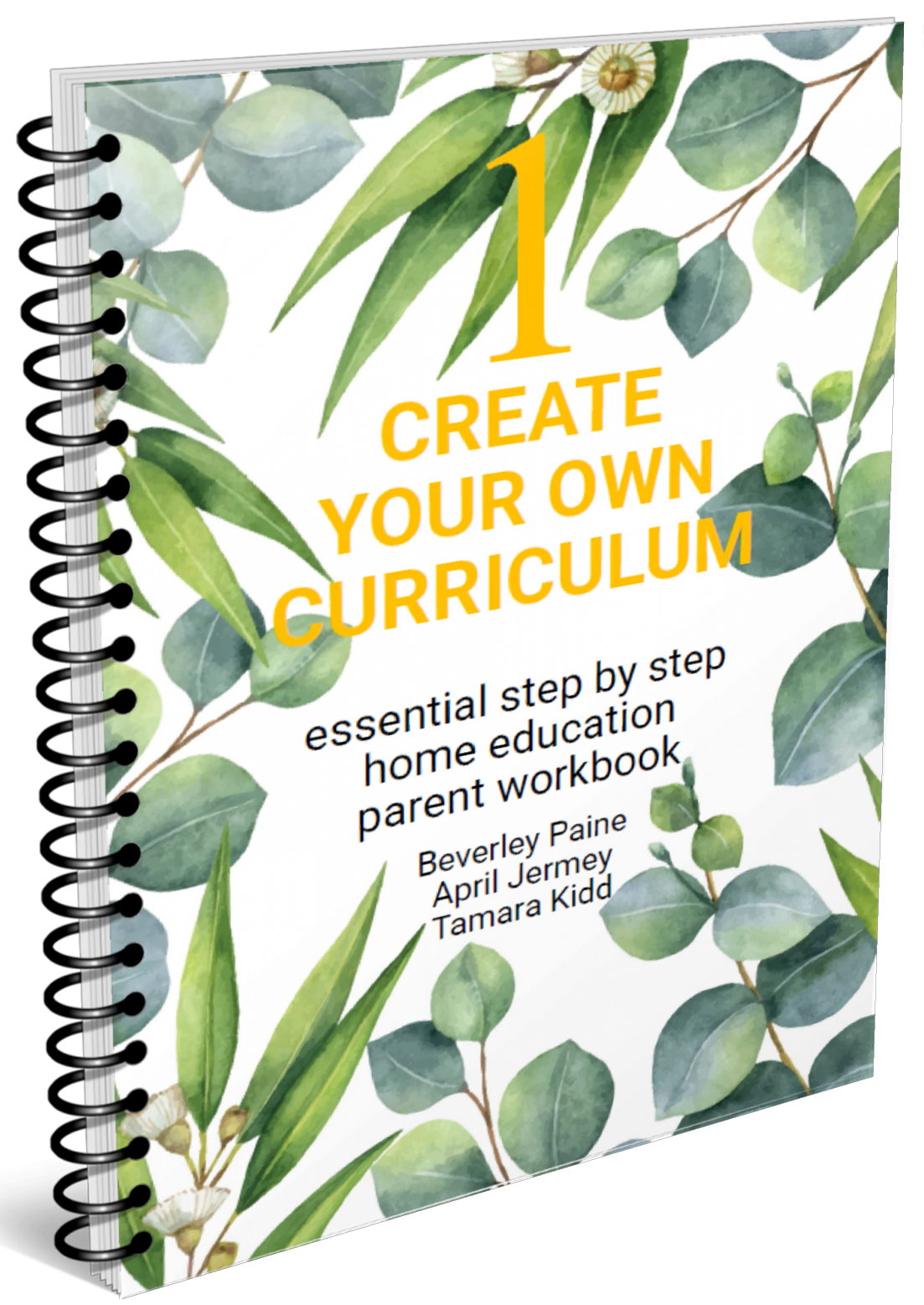
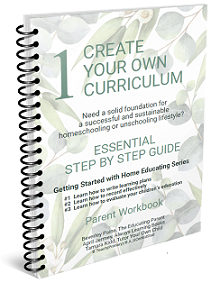
Comprehensive 3 workbook 'how to home ed' course
covering the essential skills you need
successfully home educate your children
|
|
Welcome to the World of Home Education
and Learning without School!
We began educating our children in 1985, when our eldest was five. In truth, we had helped them learn what they need to learn since they were born. I am a passionate advocate of allowing children to learn unhindered by unnecessary stress and competition, meeting developmental needs in ways that suit their individual learning styles and preferences. Ours was a homeschooling, unschooling and natural learning family! There are hundreds of articles on this site to help you build confidence as a home educating family. We hope that your home educating adventure is as satisfying as ours was! Beverley Paine
3 ESSENTIAL STEP BY STEP GUIDES
Let experienced home educators Beverley, Tamara and April walk you through HOW to create a learning plan that builds on solid foundations that works for YOUR family AND ticks all the boxes for home educaton registration!
|
Tap into Beverley's
experience
through her books
"Your books, your blogs helped me beyond words... they helped me to find comfort in knowing it is ok to choose exactly what is best for my family." Nisha
"Your books and information are mind blowing and already I am feeling good about this new experience." Diane
"Your guidance, understanding, support & words of wisdom changed our lives." Leslie
"I feel specially inspired by Beverley's words and, the more I read her comments, the more inspired I feel, since my need for support, respect for different parenting styles, and information are fully met." Marijo
|
 |
|

The information on this website is of a general nature only and is not intended as personal or professional advice. This site merges and incorporates 'Homeschool Australia' and 'Unschool Australia'.
The Educating Parent acknowledges the Traditional Aboriginal and Torres Strait Islander Owners, the Custodians of Australia, and pay our respects to Elders past and present and extend that respect to Aboriginal and Torres Strait Islander people viewing this website.
Advertise on this site.






Home education is a legal alternative
to school education in Australia.
State and Territory governments are responsible
for regulating home education and have different
requirements, however home educating families
are able to develop curriculum and learning programs
to suit the individual needs of their children.

Without revenue from advertising
by educational suppliers and Google Ads
we could not continue to provide information
to home educators. Please support us by letting
our advertisers know that you found them on
The Educating Parent. Thanks!
|
 About
About
 Thank you for visiting!