|
About Home Education
by Beverley Paine, revised April 2015
Recognised by all state and territory governments, home education is a rewarding and challenging endeavour enjoyed by thousands of Australian families.
There are many reasons families begin to consider seriously the option of home education. It could be that the individual needs of their child aren't being adequately met by the school he or she attends. For some, finding a suitable school that is affordable and within reasonable distance from home can be difficult. Others come to home education because it is the only remaining solution to intractable problems experienced in the school system by their children. Many find that home education provides an educational choice that better matches their family lifestyle and values.
A practical and successful alternative to school-based education for children, home education embraces learning within the whole community. Students regularly access libraries, educational and cultural institutions, parks, zoos, markets and shopping centres, sports and recreational clubs, religious facilities and much more. Home educating students aren't restricted to learning at home. The world is their classroom!
Their parents accept the legal responsibility for planning, implementing and evaluating the children's educational experiences. They are highly motivated individuals who believe that the education of children is primarily the right and responsibility of parents. They take this role very seriously and continuously educate themselves in order to maintain high educational standards for their children. Parents typically find that being involved in all aspects of their children's development is personally enriching and fulfilling.
The best teachers are those that respect children's individual learning styles, passions and interests, and care deeply about their health, well-being and development. Devoted and attentive parents are naturally placed to continue educating their children beyond the start of compulsory schooling age. Home education offers a life-style that builds and strengthens relationships within the family.
It is not the same as learning at school. Home education offers a freedom to develop individualised learning plans that teachers can only dream about... No two families home educate the same way. Each tailors their curriculum to suit the needs of individual children. Learning programs typically reflect such factors as family values, beliefs, interests, learning styles, and available resources. Home education can also embrace 'blended learning' which may involve part-time school attendance, accessing distance education courses, or ' e-learning' using a variety of educational programs available on the internet. This ability to be flexible with the delivery of education is a cornerstone of the success families experience as home educators.
How families begin home educating often looks very different to what they are doing a year or two later: the books, materials and approaches used continually adapt to the emerging needs and styles of each individual child, as well as the changing conditions in family and community life. Adaptable, responsive and resourceful, home education is capable of delivering the best education possible. Some children withdrawing from school rejoice in the increased responsibility for their own learning immediately, whereas others take a few months to adapt to the different pace, emphasis and motivation of learning at home.
Although many families follow a schedule, they find it isn't necessary for children to work through every page in each textbook, or to sit at a desk and do assignments for three or more hours a day to learn effectively. In addition to planned lessons and educational activities, children learn spontaneously and informally through conversation, play, hands-on activities, completion of family and personal chores, and the freedom to pursue hobbies, interests and passions for as long as they want without unnecessary or untimely interruptions.
A typical homeschooling day usually includes time spent reading, a couple of hours working on assignments or unit studies, free or structured play, chores, some kind of physical exercise, most of which will include social activity, either with parents, siblings, friends or members of the local community. Some families concentrate learning activities into two or three days each week, leaving other days for family activities and educational excursions.
There are tens of thousands of home educating families across Australia. They come together to form supportive networks which cater to the educational and social needs of their members and share a wealth of personal experience, information and research. Groups offer support and companionship for parents and children, as well as regular social and educational excursions and activities, concerts, dances, sports days, and camps. Home educating students also avail themselves of the many extra-curricular activities available to schooled children. Far from being socially isolated, studies repeatedly demonstrate that home educated children exhibit high levels of social skills and integrate easily into a variety of social situations.
This diversity of educational approaches and values is shared and celebrated by home educating families via conferences, newsletters, camps, magazines and support groups.
To help them plan quality educational programs families maintain student portfolios that record their children's educational and developmental progress. Graduates are able to access tertiary education and choose a variety of pathways to satisfying employment which suit their individual needs and personalities. Students can enter university by direct application or through entrance exams; others complete high school certificates or vocational courses through school attendance or distance education; some complete TAFE courses; and some start their own businesses or remain vital members of their families' businesses. Home education is a proven pathway to successful, full and satisfying adult lives.
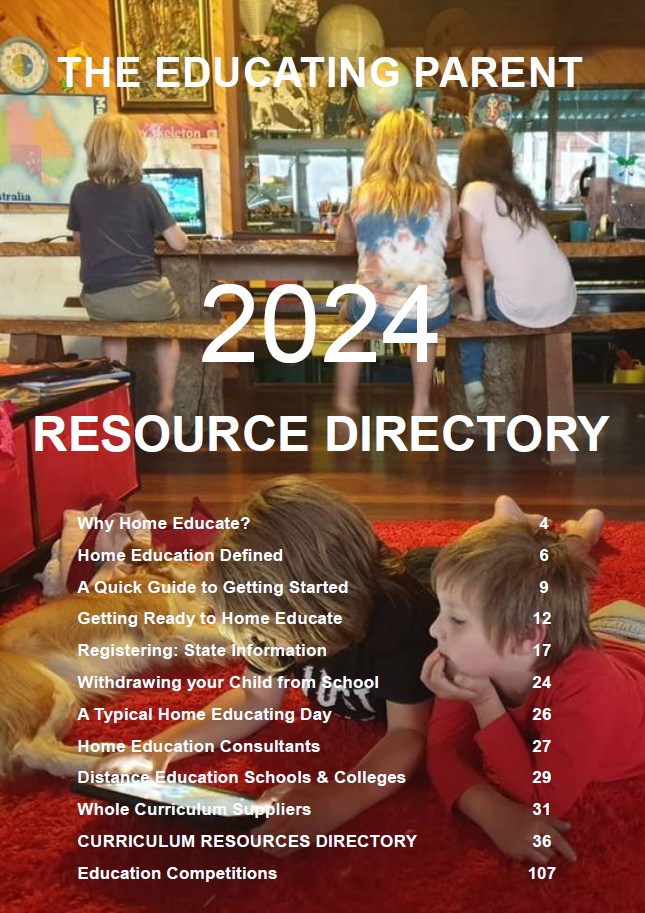
The regulations and laws governing home education differ in each state and territory and links to these, as well as local and state home education support groups and associations can be found in our free, comprehensive guideThe Educating Parent Resource Directory.
Home education is not new or radical. It is the oldest form of education practiced by humanity. Families educate their children at home for all kinds of reasons. The pluralistic nature of home educating families reflects the diverse nature of Australian society.
Families choose from an abundance of readily available educational materials and approaches, selecting only those elements which suit their individual children's educational profiles and family values. Homeschooling doesn't have to be fancy or expensive - often cost, beyond a collection of inexpensive text books, is determined by the educational interests and passions within the family. Basic educational supplies can be found in almost any home and with a few well chosen curriculum aids, texts and materials a comprehensive learning program can be cheaply put together.
For more information about the nature of homeschooling and unschooling, or how to begin, click on our Article Index, or download Beverley's Quick Guide to Getting Started in the Resource Directory. You may also like to read a couple of frequently asked question responses Beverley wrote in reply to some emailed questions:
Or read through some of the transcripts of interviews with Beverley about home education.
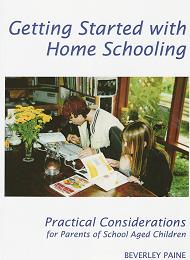
If you want to know more about how Beverley and Robin homeschooled their children their book, Learning in the Absence of Education.
Containing over 60 articles drawn from the first ten years of home educating her children, this book covers a range of issues, such as late readers, value of play, socialisation, learning maths, how to spell and write, testing, etc, and is an intimate, frank and honest look at day-to-day home educating life. The author's youngest child coined the title one day when he innocently asked, "Mum, I'm learning in the absence of education, aren't I?" - a reference to learning without using the traditional methods and resources employed in classrooms. This book shows the gradual transition the Beverley's family made from homeschooling to unschooling and natural learning, as well as answers many of the doubts and worries encountered in those early years.

Was this article helpful? Was it worth $1.00 to you?
Your gift of $1 or more helps to keep this site operating
offering encouragement
and reassurance to families
wanting
better outcomes for their children.
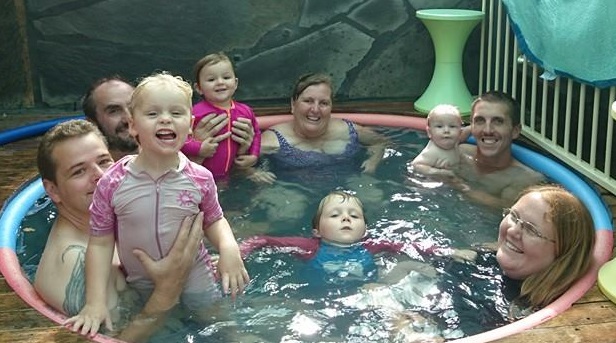
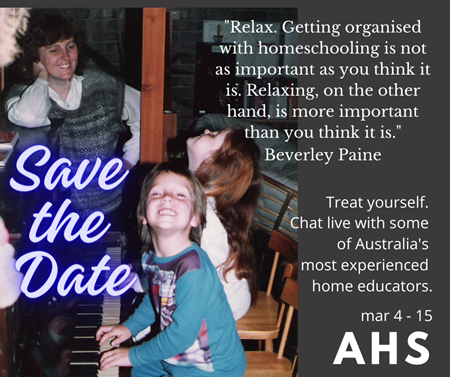
Beverley Paine with her children, and their home educated children, relaxing at home.
Together with the support of my family, my aim is to help parents educate their children in stress-free, nurturing environments. In addition to building and maintaing this website, I continue to create and manage local and national home educating networks, help to organise conferences and camps, as well as write for, edit and produce newsletters, resource directories and magazines. I am an active supporter of national, state, regional and local home education groups.
"You've been an inspiration to me, I love the way
you really listen to people." Vanessa
"Whenever I read your writing I always come away
with increased confidence in my ability to provide and
share a wonderful learning journey with my family!" Davina
"Your guidance, understanding, support and words of
wisdom changed our lives. We now offer support and
organise many homeschooling events for others." Lesley
"Thank you once again for your prompt and friendly service.
I am convinced that your books are going to add
quality and peace of mind to my journey of teaching my kids
at home! Just from studying your website, until almost
2am
in the morning, I 've been encouraged!" Louisa
"Thank you for all your many,many reassuring words
over many, many years. You probably don't know exactly how
valuable you are to the Australian Home Education community.
I've been reading your stuff for maybe 8 years or more now.
And I'm very grateful." Gythaa

CLICK HERE
if you want to learn
how to write your own education plans
to suit
your unique children's
individual learning needs?
Or you are looking for quality curriculum and teaching tips...
|
|
Welcome to the World of Home Education
and Learning without School!
We began educating our children in 1985, when our eldest was five. In truth, we had helped them learn what they need to learn since they were born. I am a passionate advocate of allowing children to learn unhindered by unnecessary stress and competition, meeting developmental needs in ways that suit their individual learning styles and preferences. Ours was a homeschooling, unschooling and natural learning family! There are hundreds of articles on this site to help you build confidence as a home educating family. We hope that your home educating adventure is as satisfying as ours was! Beverley Paine
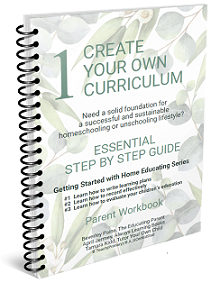
3 ESSENTIAL STEP BY STEP GUIDES
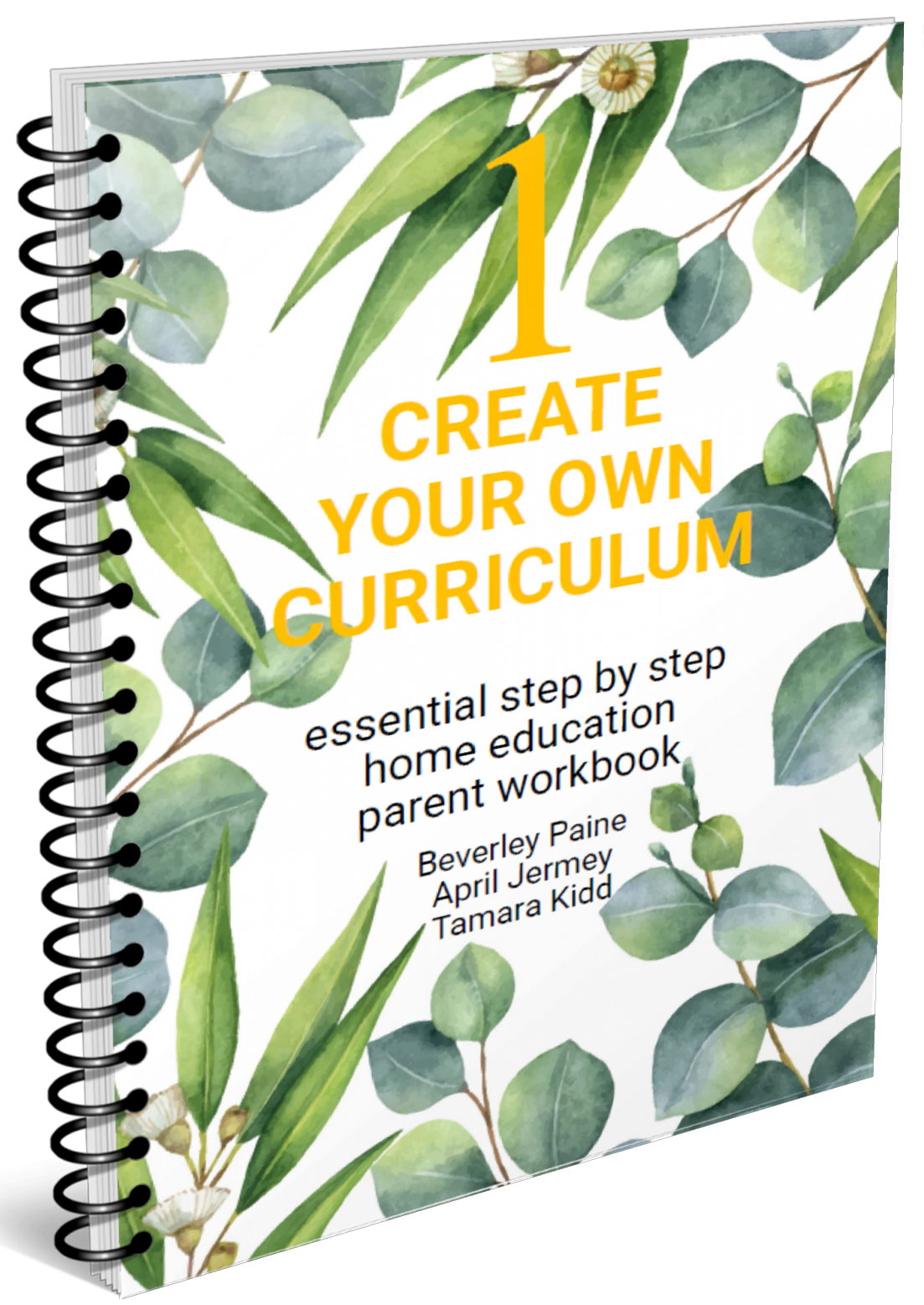
Let experienced home educators Beverley, Tamara and April walk you through HOW to create a learning plan that builds on solid foundations that works for YOUR family AND ticks all the boxes for home educaton registration!
|
Tap into Beverley's
experience
through her books
"Your books, your blogs helped me beyond words... they helped me to find comfort in knowing it is ok to choose exactly what is best for my family." Nisha
"Your books and information are mind blowing and already I am feeling good about this new experience." Diane
"Your guidance, understanding, support & words of wisdom changed our lives." Leslie
"I feel specially inspired by Beverley's words and, the more I read her comments, the more inspired I feel, since my need for support, respect for different parenting styles, and information are fully met." Marijo
|
 |
|

The information on this website is of a general nature only and is not intended as personal or professional advice. This site merges and incorporates 'Homeschool Australia' and 'Unschool Australia'.
The Educating Parent acknowledges the Traditional Aboriginal and Torres Strait Islander Owners, the Custodians of Australia, and pay our respects to Elders past and present and extend that respect to Aboriginal and Torres Strait Islander people viewing this website.
Advertise on this site.


Australia's premier online annual conferences, lifetime access to video and audio recordings, freebies, notes and associated resource guides.
EVERY SUMMIT IS UNIQUE!
$29 each  2023 2023  2022 2021 2022 2021
$25 each 2020 2019 2017
"Biggest and best Aussie homeschool event of the year!"
Home education is a legal alternative
to school education in Australia.
State and Territory governments are responsible
for regulating home education and have different
requirements, however home educating families
are able to develop curriculum and learning programs
to suit the individual needs of their children.

Without revenue from advertising
by educational suppliers and Google Ads
we could not continue to provide information
to home educators. Please support us by letting
our advertisers know that you found them on
The Educating Parent. Thanks!
|
 About
About

 Thank you for visiting!