|
Choosing Quality Toys
© Beverley Paine
At this time of the year we all begin to reflect on the wisdom of the toys given to our children at Christmas... Are they worth the money spent on them? Do they enrich the child's life? How long will they last or be played with? It's easy to choose toys with great lasting power once you learn what makes a quality toy. I worked on the principle that it is best to spend big dollars on toys with lasting play value than to spend money on cheaper versions or toys that rarely get played with or add no value to my child's life.
And it makes sense to buy quality toys. A craftsperson is only as good as her tools. For children, toys and playthings are the tools with which they learn about their world. As a young mum I soon discovered that there are some basic toys which serve children well, in the same way I have a set of basic clothes that form the backbone of my wardrobe. I judge the quality and usefulness of a toy in the same way I judge a piece of clothing: based on cost per wearing and how often I will wear it. I know that some basic toys are expensive and that brand name toys cost more than imitations, but it's always been worth it in exactly the same way that well made clothes that last the distance and still look good years later. Looked at in this way quality toys, like clothes, end up costing peanuts. Bargains can always be found. It pays to shop around and keep an eye on the second-hand market for toys that will wear longest, be most versatile and suit a broad range of ages.
It's important to watch children at play and see what they like and don't like, what they use over and again or go back to, and what they quickly grow tired of or discard. See how they use their toys and play props. That alone can save you hundreds of dollars. Some children will happily neglect expensive toys to rummage about in the kitchen cupboards for hours, or swish about in the mud ignoring the fancy plastic sandpit.
Visit the best toy store in your area and notice what the customers, especially the children, are drawn to. If there is a section set aside for children to play, make a note of the toys there: these have been deemed by the store to be durable and of high interest to children.
Another important thing to consider when purchasing toys is where, and in what, it will be stored. Toys need to be accessible and easy to put away. Each toy needs a place of it's own. Dumping everything in a toy box decreases the value of your investment through lost parts, broken toys and encourages disrespect for belongings in general.
Your children and their belongings deserve the same time and attention that you give to yourself and your belongings. Caring for people and things is taught by example. Children do what you do, not what you say they should do. Consider helping your children understand why they need to care for their belongings as part of their education. This teaches respect for the resources our planet provides and develops their appreciation of quality, craftsmanship and beauty.
How do you recognise quality toys? They:
- Have as little detail as possible, are simple;
- Involve participation by the whole child: body, mind and spirit.
- Encourage imagination and creativity.
- Stimulate the child to do things for herself: watching it on TV isn't the same as doing it yourself!
- Encourage involvement. A large dump truck can carry large and varied loads and/or passengers; a specialized vehicle, like a backhoe, can do one thing. Toys with batteries rob a child of do-it-himself opportunities.
- Are open-ended and versatile: great toys can be used many ways and all of them are "right".
- Encourage cooperative, dramatic play: two or more kids see a baby doll with a doll's bed and soon an entire household is created. A truck, a couple of hard hats and some dirt or sand becomes a building project that engrosses them all afternoon. Add animals, people and vehicles to blocks and half a dozen children of different ages are suddenly building a freeway system, a farm or an entire town.
- Work as expected, are durable and safe: this characteristic is what makes quality toys worth the expense. Often, this means paying for the real thing rather than a cheaper knockoff. Knowing the real thing from the imitators requires some willingness to do your homework, just as you do when you buy a big ticket item for your home.
- Are made of material that is warm and pleasant to touch. Natural materials such as wood, natural fibres, water, sand, and clay are a pleasure to the senses; satisfying to the touch and soothing to the spirit.
- Generous in proportions and quantity: there's nothing cheesy about a good plaything. They are big enough, easily manipulated, and solid-feeling.

Was this article helpful? Was it worth $1.00 to you?
Your gift of $1 or more helps to keep this site operating
offering encouragement
and reassurance to families
wanting
better outcomes for their children.
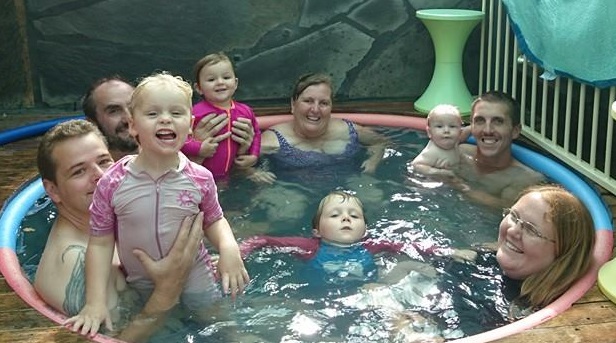
Beverley Paine with her children, and their home educated children, relaxing at home.
Together with the support of my family, my aim is to help parents educate their children in stress-free, nurturing environments. In addition to building and maintaing this website, I continue to create and manage local and national home educating networks, help to organise conferences and camps, as well as write for, edit and produce newsletters, resource directories and magazines. I am an active supporter of national, state, regional and local home education groups.
"You've been an inspiration to me, I love the way
you really listen to people." Vanessa
"Whenever I read your writing I always come away
with increased confidence in my ability to provide and
share a wonderful learning journey with my family!" Davina
"Your guidance, understanding, support and words of
wisdom changed our lives. We now offer support and
organise many homeschooling events for others." Lesley
"Thank you once again for your prompt and friendly service.
I am convinced that your books are going to add
quality and peace of mind to my journey of teaching my kids
at home! Just from studying your website, until almost
2am
in the morning, I 've been encouraged!" Louisa
"Thank you for all your many,many reassuring words
over many, many years. You probably don't know exactly how
valuable you are to the Australian Home Education community.
I've been reading your stuff for maybe 8 years or more now.
And I'm very grateful." Gythaa

CLICK HERE
if you want to learn
how to write your own education plans
to suit
your unique children's
individual learning needs?
Or you are looking for quality curriculum and teaching tips...
|
|
Welcome to the World of Home Education
and Learning without School!
We began educating our children in 1985, when our eldest was five. In truth, we had helped them learn what they need to learn since they were born. I am a passionate advocate of allowing children to learn unhindered by unnecessary stress and competition, meeting developmental needs in ways that suit their individual learning styles and preferences. Ours was a homeschooling, unschooling and natural learning family! There are hundreds of articles on this site to help you build confidence as a home educating family. We hope that your home educating adventure is as satisfying as ours was! Beverley Paine
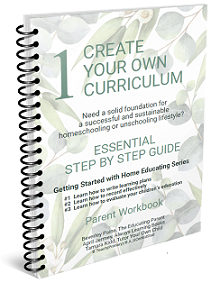
3 ESSENTIAL STEP BY STEP GUIDES
Let experienced home educators Beverley, Tamara and April walk you through HOW to create a learning plan that builds on solid foundations that works for YOUR family AND ticks all the boxes for home educaton registration!
|
Tap into Beverley's
experience
through her books
"Your books, your blogs helped me beyond words... they helped me to find comfort in knowing it is ok to choose exactly what is best for my family." Nisha
"Your books and information are mind blowing and already I am feeling good about this new experience." Diane
"Your guidance, understanding, support & words of wisdom changed our lives." Leslie
"I feel specially inspired by Beverley's words and, the more I read her comments, the more inspired I feel, since my need for support, respect for different parenting styles, and information are fully met." Marijo
|
 |
|

The information on this website is of a general nature only and is not intended as personal or professional advice. This site merges and incorporates 'Homeschool Australia' and 'Unschool Australia'.
The Educating Parent acknowledges the Traditional Aboriginal and Torres Strait Islander Owners, the Custodians of Australia, and pay our respects to Elders past and present and extend that respect to Aboriginal and Torres Strait Islander people viewing this website.
Advertise on this site.




Australia's premier online annual conferences, lifetime access to video and audio recordings, freebies, notes and associated resource guides.
EVERY SUMMIT IS UNIQUE!
$29 each  2023 2023  2022 2021 2022 2021
$25 each 2020 2019 2017
"Biggest and best Aussie homeschool event of the year!"
Home education is a legal alternative
to school education in Australia.
State and Territory governments are responsible
for regulating home education and have different
requirements, however home educating families
are able to develop curriculum and learning programs
to suit the individual needs of their children.

Without revenue from advertising
by educational suppliers and Google Ads
we could not continue to provide information
to home educators. Please support us by letting
our advertisers know that you found them on
The Educating Parent. Thanks!
|
 About
About

 Thank you for visiting!