|
Overcoming the Natural Learning Homeschooling Recording Blues...
© Beverley Paine
It is really sad when, as natural learners, we begin to lack confidence and look for solutions that we know to be less than satisfactory because we have to 'prove' to others that what we are doing is okay and will work out just fine, thank you very much! It is extremely frustrating to have to reassure professionals, especially health care professionals who can wield disproportionate power in our lives.
There are many natural learners and unschoolers who have no need to record to bolster their confidence that not doing 'school at home' will prove to be a successful education pathway for their children. I wasn't one of them.
Recording and translating into school subject language convinced me, better than anything else, that when my children resisted school methods of instruction and didn't do the work or activities I'd set them, that what they chose to do instead was still learning and much the same thing at about the same stage of development as their schooled peers. I needed to record the learning process at home. My confidence as a natural learner comes from that experience.
It takes a while to get the hang of translating everyday life into educational jargon, and lots of people will 'knock' you for doing it, saying things like 'you shouldn't have to do that' (and that's true, but in your particular situation you find it helpful and necessary); 'that's too much work' (which it isn't, not when you consider the purpose - to convince yourself, your husband, family, your daughter's doctors and health care workers - recording is more effective at doing this than endless repeated debates); or comments such as 'it takes too long', 'couldn't be bothered pandering to the education authorities, they have no rights to dictate to me' etc.
When you read or hear these comments remember that whatever works for others isn't necessarily going to work for you. You need to assess your own particular situation at this point in time and ask 'what are MY family needs? What do I need to do in order to feel confident homeschooling my daughter? What do I need to do (or get) to feel confident and assertive to insist that my daughter obtains the care she needs while at school?
Always bring it back to the centre. You, your family. What is it you all need? Forget what others do. Work from YOUR centre.
Most people forget that families with physically or intellectually disabled children often already have a history with the education department. This makes it harder for these families to negotiate the freedom to make choices that others take for granted. When a child has a disability the education authorities seem to apply super glue to their hold - it's really hard to get our children back!
Part of the reason is a misguided, uninformed but usually sincere and genuine concern for our disabled children's welfare; but we can't discount the fact that schools receive extra funding and staff for those children, which are often utilised for purposes other than the care of that particular child...
In the early days of homeschooling and recording what our children are doing and learning it's easy to try too hard to translate daily life into educational jargon. If we put too much emphasis on that aspect of recording the whole thing can become a chore or overwhelm us. Try this: simply record, in your own words, as much as you can about what your child is doing, how she is doing it, what she is discovering, new skills and knowledge she is acquiring. Instead of trying to write up something for each subject each day, pick one thing that stands out in each day and write half a page or more about that particular activity.
It could be a conversation you had about friendship. It could be relating how your daughter made her lunch. When you write up the activity, consider using the following framework and information as a guide [taken from my Home Education Reports and from Chapter 7, Getting Started with Homeschooling, both available from Always Learning Books ], to 'train' you to think like an educator or teacher would:
[print these out and use as guide when you are writing. Think of ways your child demonstrates these goals: eg if when baking a cake, she says she'd like to ice it and then using different coloured food dyes, makes patterns, declaring the finished image to be a field of flowers - this shows the first thinking skill on the list. During the activity she may have asked for directions from you, and then followed them, told you what she was doing and why, or used cooking-related vocabularly confidently for the first time. She may have volunteered, without a reminder, to wash her hands first, or clean up afterwards. Record that - especially that this is a 'first', or even that 'at long last, she is doing this automatically, without me nagging...' ]
Thinking [includes day dreaming, imagination, planning, reflecting]
- Demonstrates creative, intuitive and imaginative thinking skills.
- Poses and tests hypotheses and assumptions logically.
- Confidently questions, explores and investigates.
Communication [verbal and non-verbal, speaking, listening, reading, writing, performing (singing, dancing, moving, acting)]
- Participates in discussions.
- Is an effective oral communicator.
- Follows verbal instructions and directions.
- Listens attentively and courteously.
- Reads and comprehends subject related literature.
- Uses appropriate writing forms and conventions.
- Edits written work.
- Communicates clearly in writing.
- Writes legibly and fluently.
- Use audience appropriate communication strategies.
Information [asking questions, looking things up, checking accuracy, comparing]
- Collects, analyses and organises information.
- Confidently accesses a variety of information sources.
- Working in Teams Interacts effectively with others.
- Demonstrates leadership skills.
- Works as an effective team member.
Organisation [functional tidiness? - mental and physcial realms]
- Is prepared and organised for learning activities.
- Maintains study materials in good order.
- Begins work promptly.
- Negotiate learning tasks and activities.
- Reviews own performance.
Problem Solving [asking questions and working out how to answer them]
- Shows evidence of critical thinking.
- Is creative in achieving outcomes.
Attitude
- Maintains a positive and enthusiastic approach to studies.
- Demonstrates responsibility for own learning.
- Perserveres.
- Works productively and sensibly.
Cooperation
- Works effectively with others.
- Listens attentively and responds appropriately.
Time Management
- Is able to set priorities.
- Cooperatively negotiates timetable for learning tasks and activities.
- Completes tasks on time.
Commitment
- Displays initiative.
- Demonstrates interest and desire to learn.
Independent Work
- Develop independent study habits.
- Able to work without supervision.
Quality of Work
- Produces work of appropriate and consistent quality.
- Demonstrates care in preparation and presentation of work.
Activity/Subject Objectives Met
- Understands skills and concepts of the activity/course.
In addition ask your daughter what she thought and felt about what she did; ask about specific aspects of the activity, how she managed this or that, or what she thought about a particular part, or the materials used; whether she could have done things differently or used different materials; did she need help or was the help she received adequate, too much, the wrong sort of help? Was she happy with how long it took, did she need more time? Would she like to do it again? Why? And what did she think she learned, and was that what she expected to learn.
It's important not to drill your child when asking evaluative questions like this. You can pick one or two for this activity and then ask the others for different activities. Over time you will learn a great deal of information about what kind of learner your daughter is, and what her learning needs are, and without trying you will find yourself automatically organising homeschool life to meet those needs. Information is power - it's our job as parents and educators to seek that information and then put it to work.
Remember: education is a process, not a product. We are not recording how and what our children are learning to please others or get their approval, but to educate ourselves about that process, and to feel confident when talking to 'experts'.
You don't need to use jargon. Use your own words. Keep it simple. Keep it real. When you come across a word you aren't sure of the meaning, have a guess, then look it up in the dictionary. Most people don't use the word 'spherical' - they say 'shaped like a ball'. As home educators we are free to use both! Use whatever terminology makes you feel most comfortable.
Take half an hour a day, each day, for a month, to write up just one activity or happening in your child's life and I guarantee you will feel more confident about meeting her educational needs and answering your critics.
You may wish to continue with this format. I like the idea of recording in short bursts - a week or a month here and there, as a 'sample' of the overall educational process that happening at home. That turns it into a 'project' for me, something I can feel enthusiastic about, put a lot of energy and creativity into, and produce a document that I can look back on in years to come - a snapshot of my children's lives complete with their artwork, photographs, video or audio recordings, writing, a diary, comments, etc.
Work out what type of recording works best to bolster your confidence as a home educator, and how the records you keep serve learning at home best.

Was this article helpful? Was it worth $1.00 to you?
Your gift of $1 or more helps to keep this site operating
offering encouragement
and reassurance to families
wanting
better outcomes for their children.
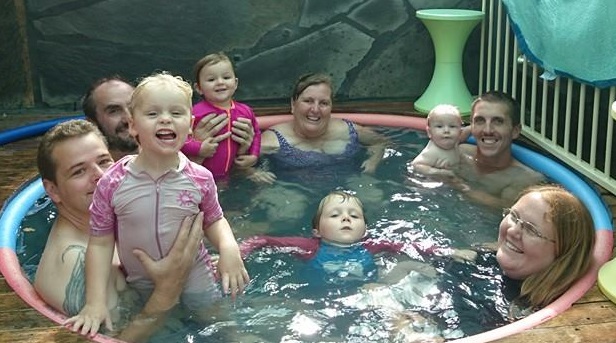
Beverley Paine with her children, and their home educated children, relaxing at home.
Together with the support of my family, my aim is to help parents educate their children in stress-free, nurturing environments. In addition to building and maintaing this website, I continue to create and manage local and national home educating networks, help to organise conferences and camps, as well as write for, edit and produce newsletters, resource directories and magazines. I am an active supporter of national, state, regional and local home education groups.
"You've been an inspiration to me, I love the way
you really listen to people." Vanessa
"Whenever I read your writing I always come away
with increased confidence in my ability to provide and
share a wonderful learning journey with my family!" Davina
"Your guidance, understanding, support and words of
wisdom changed our lives. We now offer support and
organise many homeschooling events for others." Lesley
"Thank you once again for your prompt and friendly service.
I am convinced that your books are going to add
quality and peace of mind to my journey of teaching my kids
at home! Just from studying your website, until almost
2am
in the morning, I 've been encouraged!" Louisa
"Thank you for all your many,many reassuring words
over many, many years. You probably don't know exactly how
valuable you are to the Australian Home Education community.
I've been reading your stuff for maybe 8 years or more now.
And I'm very grateful." Gythaa

CLICK HERE
if you want to learn
how to write your own education plans
to suit
your unique children's
individual learning needs?
Or you are looking for quality curriculum and teaching tips...
|
|
Welcome to the World of Home Education
and Learning without School!
We began educating our children in 1985, when our eldest was five. In truth, we had helped them learn what they need to learn since they were born. I am a passionate advocate of allowing children to learn unhindered by unnecessary stress and competition, meeting developmental needs in ways that suit their individual learning styles and preferences. Ours was a homeschooling, unschooling and natural learning family! There are hundreds of articles on this site to help you build confidence as a home educating family. We hope that your home educating adventure is as satisfying as ours was! Beverley Paine
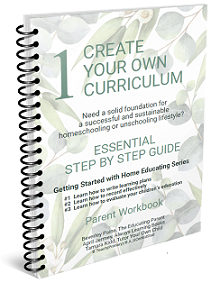
3 ESSENTIAL STEP BY STEP GUIDES
Let experienced home educators Beverley, Tamara and April walk you through HOW to create a learning plan that builds on solid foundations that works for YOUR family AND ticks all the boxes for home educaton registration!
|
Tap into Beverley's
experience
through her books
"Your books, your blogs helped me beyond words... they helped me to find comfort in knowing it is ok to choose exactly what is best for my family." Nisha
"Your books and information are mind blowing and already I am feeling good about this new experience." Diane
"Your guidance, understanding, support & words of wisdom changed our lives." Leslie
"I feel specially inspired by Beverley's words and, the more I read her comments, the more inspired I feel, since my need for support, respect for different parenting styles, and information are fully met." Marijo
|
 |
|

The information on this website is of a general nature only and is not intended as personal or professional advice. This site merges and incorporates 'Homeschool Australia' and 'Unschool Australia'.
The Educating Parent acknowledges the Traditional Aboriginal and Torres Strait Islander Owners, the Custodians of Australia, and pay our respects to Elders past and present and extend that respect to Aboriginal and Torres Strait Islander people viewing this website.
Advertise on this site.





Australia's premier online annual conferences, lifetime access to video and audio recordings, freebies, notes and associated resource guides.
EVERY SUMMIT IS UNIQUE!
$29 each  2023 2023  2022 2021 2022 2021
$25 each 2020 2019 2017
"Biggest and best Aussie homeschool event of the year!"
Home education is a legal alternative
to school education in Australia.
State and Territory governments are responsible
for regulating home education and have different
requirements, however home educating families
are able to develop curriculum and learning programs
to suit the individual needs of their children.

Without revenue from advertising
by educational suppliers and Google Ads
we could not continue to provide information
to home educators. Please support us by letting
our advertisers know that you found them on
The Educating Parent. Thanks!
|
 About
About

 Thank you for visiting!