|
The Advantages to Belonging to a Support Group
© Beverley Paine, Nov 1999
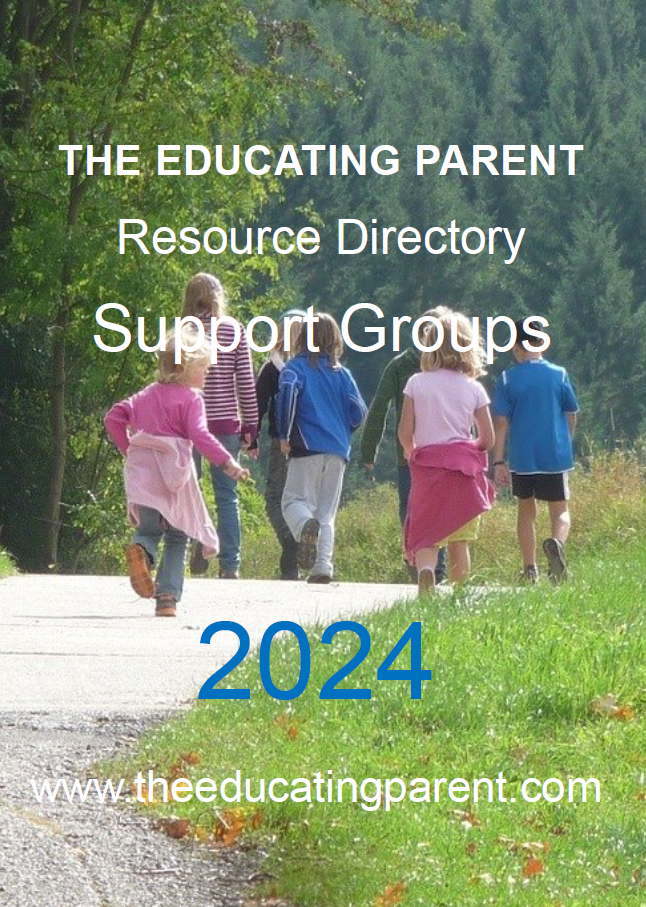
There are many advantages to belonging to a homeschooling support group. The most obvious is the opportunity for children to benefit from contact with other children and to help them cope with being different. Because no matter how we look at it home educated children are different from school children, and can feel this keenly. Children need contact with other children to grow and develop socially. I am not talking specifically here about socialisation but about learning social skills, learning how to communicate and express themselves confidently and assertively. This is first learned in the home but as children grow they need others to practice on and to refine their skills to wider social settings. Homeschooling support groups offer the kind of environment to allow this to happen safely in.
Another important advantage of a support group is the confidence it brings to the homeschooling parent. Groups allow the opportunity to share experiences, ideas and resources. Often parents are the ones who feel most different from their peers, shut off from many of the usual avenues of support available in the community, especially if there are specific health or learning problems in the family. Just hanging out with like minded others and realising that we all share the same trials, tribulations, joyful and insightful moments with our children help us to feel more 'normal'.
Homeschooling support groups get together for a variety of reasons, the most popular being simple social groups. Anything can bring people together - a regular sporting or cultural activity, a regular picnic, chat session, shared educational activity. The activity is often the least important aspect of the support group - people need contact with others with similar concerns, commitments and goals in order to support and affirm one another.
Often groups are formed to work together to promote a more favourable climate for homeschooling in the local and wider community. Such groups involve a commitment to working toward a common goal, but this goal and commitment binds people together, which often result in the formation of long and lasting friendships. Networks exist to disseminate information and activities such as devising promotional displays for touring libraries and shopping centres, producing regular informative newsletters, legal information gathering and support or annual conferences or workshops. Such networks come in really handy during times of adversity, such as when regulations that restrict homeschooling opportunity, freedom and rights are proposed by authorities.
One of the outcomes of regular attendance with a support group is growing self reliance and confidence. Over time the group will rely on the abilities, experience, commitment and history of its members and not on outside experts. As a result, everyone becomes better educated. An offshoot of this is the fact that authorities and other people in the community treat homeschoolers with more respect - responding to the growing assertiveness expressed by the individual members of the support group. Having other people support our views, sharing a common vision and practice, gives us strength to protect our rights and demand a fair go whenever we need to.
Most groups are set up primarily for children, with planned activities in advance, such as educational excursions, arts and crafts, games, sports and guest speakers. Some may emphasise parental interests, such as legal issues, alternative approaches to learning or provide opportunities to share experiences and concerns. Others publish a newsletter. A phone tree makes communication rapid and effective and helps to share responsibility.
Few support groups last more than a couple of years and it seems that burn out and moving on are the principle causes. A few groups have lasted many years, the secret of success being in the underlying organisation of the group. It is important for any group to include as many people in leadership roles as possible, rotating important roles so that everyone becomes skilled in them. Then if one member of the group drops out for any reason the group can survive.
Having clear expectations and roles within the group is also essential. If people are expected to do something they need to know beforehand! Clear and effective communication is essential. The group doesn't have to take on a formal organisational structure, but all members do have to be aware of the 'ropes' and to respect each other. New people into the group will have to be informed, but not overwhelmed, about how the group operates, shown how things are done and indoctrinated into the process slowly. At first it is hard just coping with the social assimilation, let alone assuming responsibilities for organising activities, newsletters, etc. If there is ever any conflict or doubt people should be encouraged to voice their concerns in whatever way feels safe for them, and for more experienced members to take up the cause and help everyone find solutions.
To assess whether a support group is actually functioning as a support group for you there are some questions you can ask, as well as relying on 'gut' feeling:
- Are you getting accurate and complete information concerning issues or do you feel left out about important matters?
- Do you feel empowered through your contact with the group?
- Has participation helped you obtain the opportunity, resources and encouragement to do something that made a difference?
- Does the group encourage people to work from self confidence and positive purposes or does it rely on fear and insecurities?
- How many of these reflections, if responded to in the negative are your responsibility?
Many homeschooling families don't realise they actually have many support groups around them they can draw on. Promoting homeschooling in the community is one way of making sure these families are given the opportunity to find out about support groups in their area. All of us belong to a huge support group - the vast collection of home educating families steadily expanding both here, in the US, the UK and other areas in the world. I started the Fleurieu group for a purely selfish reason - I wanted to find a like minded homeschooling family with a male child about the same age as Thomas. Well, on our first gathering we found one! But I didn't stop my activities organising our group... I wanted other people to know the satisfaction of contacting with other families and having their needs met in the same way.
The newsletters I started grew out of a need to keep families scattered over a very large geographical area informed about events. The Fleurieu Home Based Learners Network was primarily set up to facilitate fortnightly gatherings. Camps and excursions were a hope and a dream, and a few eventuated. The year 2000 will see the formation of new homeschooling support groups, as individuals band together to work on ensuring that the message that home education is viable and successful is enshrined in law. A key factor in this process will be ongoing publicity, promoting home education to the general public, highlighting the positives, both to home educating families and to society at large. Will you play a part? And what part will it be? Of course, quietly staying at home, and busily home educating your children is a very important role, and is appreciated, at least by me. But if you do get time, even if you don't want to be involved in activities, please let others know you appreciate the work they do. A short letter to your local homeschooling newsletter will help to lift someone's spirits, somewhere!

Was this article helpful? Was it worth $1.00 to you?
Your gift of $1 or more helps to keep this site operating
offering encouragement
and reassurance to families
wanting
better outcomes for their children.

Beverley Paine with her children, and their home educated children, relaxing at home.
Together with the support of my family, my aim is to help parents educate their children in stress-free, nurturing environments. In addition to building and maintaing this website, I continue to create and manage local and national home educating networks, help to organise conferences and camps, as well as write for, edit and produce newsletters, resource directories and magazines. I am an active supporter of national, state, regional and local home education groups.
"You've been an inspiration to me, I love the way
you really listen to people." Vanessa
"Whenever I read your writing I always come away
with increased confidence in my ability to provide and
share a wonderful learning journey with my family!" Davina
"Your guidance, understanding, support and words of
wisdom changed our lives. We now offer support and
organise many homeschooling events for others." Lesley
"Thank you once again for your prompt and friendly service.
I am convinced that your books are going to add
quality and peace of mind to my journey of teaching my kids
at home! Just from studying your website, until almost
2am
in the morning, I 've been encouraged!" Louisa
"Thank you for all your many,many reassuring words
over many, many years. You probably don't know exactly how
valuable you are to the Australian Home Education community.
I've been reading your stuff for maybe 8 years or more now.
And I'm very grateful." Gythaa

CLICK HERE
if you want to learn
how to write your own education plans
to suit
your unique children's
individual learning needs?
Or you are looking for quality curriculum and teaching tips...
|
|
Welcome to the World of Home Education
and Learning without School!
We began educating our children in 1985, when our eldest was five. In truth, we had helped them learn what they need to learn since they were born. I am a passionate advocate of allowing children to learn unhindered by unnecessary stress and competition, meeting developmental needs in ways that suit their individual learning styles and preferences. Ours was a homeschooling, unschooling and natural learning family! There are hundreds of articles on this site to help you build confidence as a home educating family. We hope that your home educating adventure is as satisfying as ours was! Beverley Paine
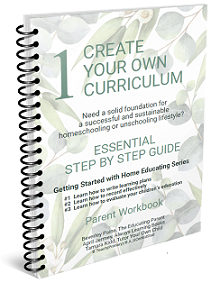
3 ESSENTIAL STEP BY STEP GUIDES
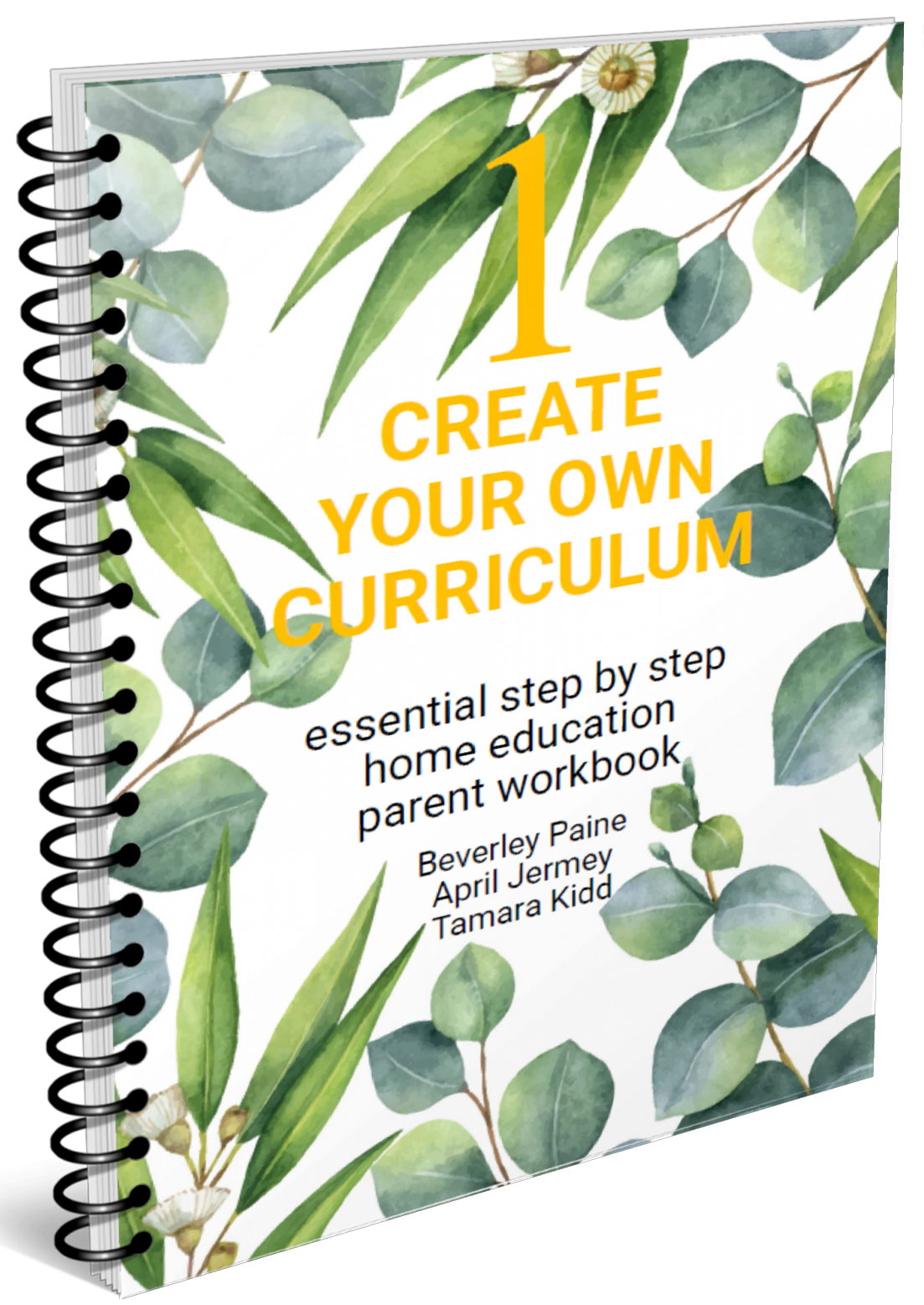
Let experienced home educators Beverley, Tamara and April walk you through HOW to create a learning plan that builds on solid foundations that works for YOUR family AND ticks all the boxes for home educaton registration!
|
Tap into Beverley's
experience
through her books
"Your books, your blogs helped me beyond words... they helped me to find comfort in knowing it is ok to choose exactly what is best for my family." Nisha
"Your books and information are mind blowing and already I am feeling good about this new experience." Diane
"Your guidance, understanding, support & words of wisdom changed our lives." Leslie
"I feel specially inspired by Beverley's words and, the more I read her comments, the more inspired I feel, since my need for support, respect for different parenting styles, and information are fully met." Marijo
|
 |
|

The information on this website is of a general nature only and is not intended as personal or professional advice. This site merges and incorporates 'Homeschool Australia' and 'Unschool Australia'.
The Educating Parent acknowledges the Traditional Aboriginal and Torres Strait Islander Owners, the Custodians of Australia, and pay our respects to Elders past and present and extend that respect to Aboriginal and Torres Strait Islander people viewing this website.
Advertise on this site.









Australia's premier online annual conferences, lifetime access to video and audio recordings, freebies, notes and associated resource guides.
EVERY SUMMIT IS UNIQUE!
$29 each  2023 2023  2022 2021 2022 2021
$25 each 2020 2019 2017
"Biggest and best Aussie homeschool event of the year!"
Home education is a legal alternative
to school education in Australia.
State and Territory governments are responsible
for regulating home education and have different
requirements, however home educating families
are able to develop curriculum and learning programs
to suit the individual needs of their children.

Without revenue from advertising
by educational suppliers and Google Ads
we could not continue to provide information
to home educators. Please support us by letting
our advertisers know that you found them on
The Educating Parent. Thanks!
|
 About
About

 Thank you for visiting!